



Nigeria’s transport system is becoming a place where travellers are expected to pay unofficial fees long before they reach their destinations.
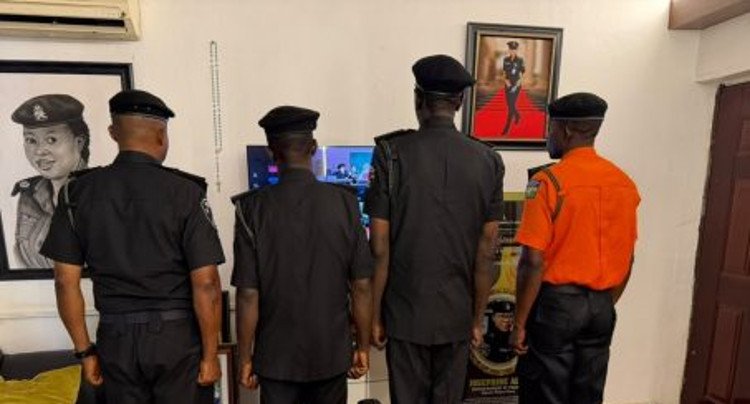
Development Diaries reports that four police officers in Abuja have been detained for allegedly extorting at least N50,000 from the Chairman of the Independent Corrupt Practices and Other Related Offences Commission (ICPC), Musa Aliyu, exposing how deeply roadside extortion has become normalised.
The allegation attracted national attention because it involved the country’s anti-corruption chief and reflected what millions of Nigerians already experience every day.
If the country’s anti-corruption chief can allegedly be forced to part with money at a checkpoint, ordinary commuters are left wondering who is protected from roadside extortion.
Around the same period, rival factions of the National Union of Road Transport Workers (NURTW) reportedly exchanged gunfire at motor parks in Osun State, prompting the Association of Local Governments of Nigeria to suspend transport union activities across the state.
Those incidents expose the same problem from different directions.
Travelling across Nigeria increasingly means navigating unofficial payments at checkpoints and compulsory levies inside motor parks while the institutions responsible for regulating both continue to struggle to stop them.
Freedom of movement becomes increasingly expensive when citizens must repeatedly pay people who have no legal authority to collect money from them.
Responsibility, therefore, rests with the Nigeria Police Force and the Police Service Commission over checkpoint extortion, while state governments and local authorities remain responsible for regulating motor parks and ensuring that transport unions do not become centres of violence and informal taxation.
Nigeria’s constitution guarantees every citizen the right to move freely throughout the country while protecting individuals against arbitrary deprivation of property.
Those protections lose practical meaning when commuters are routinely compelled to surrender money simply to continue their journeys, with the burden falling most heavily on people who travel because they cannot afford alternatives.
Market women transporting goods, commercial drivers, artisans and low-income commuters often encounter multiple checkpoints and motor parks in a single trip, turning unofficial payments into an additional transport cost that eventually finds its way into food prices and household expenses.
Drivers caught between rival transport union factions face another danger because disputes over control of park revenues frequently become violent, even though the people paying the levies have little influence over how those funds are collected or used.
Many governance analysts have argued that checkpoint extortion and illegal park levies now resemble a parallel tax system sustained by weak enforcement against those benefiting from it.
Commuters, traders and transport workers should continue to document cases of checkpoint extortion, illegal levies and violence while reporting them through official complaint mechanisms and civil society accountability platforms.
The Police Service Commission should publicly investigate the reported Abuja checkpoint incident and conduct a nationwide audit of police checkpoint operations, while state governments should place motor park revenues under transparent public management and ensure that transport union leaders are held accountable for violence linked to levy collection.
Travelling across Nigeria should not require paying unofficial taxes to the very people responsible for enforcing the law.