




A woman accused Equatorial Guinea’s vice-president of corruption online, and within days Facebook and TikTok were blocked, internet speeds restricted and the woman arrested, leaving citizens without an explanation for what looks like a serious response to a corruption allegation.
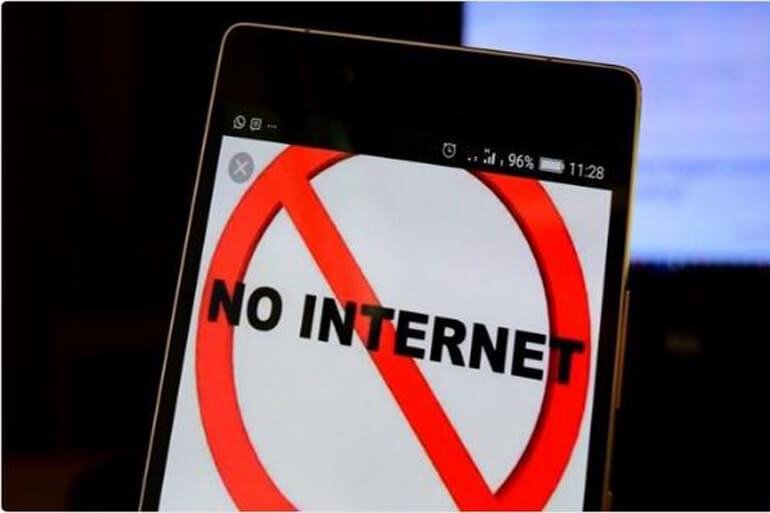
Development Diaries reports that Facebook and TikTok have been inaccessible in Equatorial Guinea for more than two weeks, while internet speeds have been restricted since 02 September.
WhatsApp and Instagram remain available, although with limitations, and the government has not publicly explained the restrictions or produced a shutdown order.
The sequence of events does not by itself prove that the government blocked the platforms because of the video, just as the video itself does not establish the corruption allegation.
However, it does leave the authorities with a straightforward responsibility to explain the legal basis for restricting access and arresting the woman who made the accusation.
The allegation concerns Vice President Teodoro Obiang, widely known as Teodorin, the son of President Teodoro Obiang Nguema Mbasogo, who has ruled Equatorial Guinea since 1979.
Teodorin was convicted in France in 2021 in a case involving ill-gotten gains, while his assets were frozen in the United Kingdom following corruption investigations.
That history makes the allegation politically sensitive, but sensitivity cannot replace evidence. If the accusation is false, authorities can establish that through a lawful process.
And if it has substance, an investigation can establish what happened. Neither outcome explains why citizens should lose access to social media without knowing who ordered the restriction, under what law and for what purpose.
Article Nine of the African Charter on Human and Peoples’ Rights protects the right to receive information and express and disseminate opinions.
The African Commission’s Declaration of Principles on Freedom of Expression and Access to Information in Africa also says restrictions on internet access must be lawful, necessary and proportionate.
If Equatorial Guinea has a legal order behind the shutdown, the authorities should publish it and explain the basis for the restrictions. If the shutdown was justified by a security concern, that concern should be disclosed, while telecommunications companies that acted on government instructions should also confirm what orders they received and from whom.
Telecommunications operators cannot simply disappear behind government orders when customers lose access to essential digital services. They should disclose whether they received instructions to restrict services and whether those instructions identified a lawful basis.
The platforms also have responsibilities, as Facebook and TikTok are major spaces for political discussion, business, and public information across Africa. When they disappear, traders lose customers, young people lose access to information, and citizens lose spaces for public debate.
Women can face an additional burden because the same platforms that allow women to speak about corruption and public affairs can expose them to harassment and intimidation.
The United Nations has repeatedly raised concerns about online abuse targeting women in public life, making transparent platform moderation and accessible complaint systems important alongside protection of lawful expression.
The immediate concern, however, is the woman who was arrested. Her identity, legal status and access to a lawyer should be established.
The African Commission on Human and Peoples’ Rights also has a role to play, as its mandate includes freedom of expression and access to information, while its Special Rapporteur can engage governments over restrictions on these rights.
The shutdown also shows how quickly a government can make public scrutiny harder. Once the platforms disappear, journalists lose access to sources, businesses lose customers and citizens have fewer ways to compare official accounts with what others are reporting.
Equatorial Guinea should therefore publish the legal basis for the restrictions, explain which authority ordered them, clarify the status of the arrested woman and restore full access to internet services.
Telecommunications operators should disclose government requests they received, while the African Commission should seek an explanation from the authorities.
A corruption allegation should be settled with evidence and due process, not by making the internet disappear.
Photo source: Media Foundation for West Africa