




Millions of Nigerians may soon become shareholders in Dangote Refinery, but owning ten shares will not suddenly give them a seat at the table where the company decides what it does, how it grows or how it treats the people around it.
In Part One, I established the numbers, with Dangote Refinery selling about 3.3 percent of itself for N2.15 trillion, roughly 2.5 percent left for other investors after an early institutional commitment, and Aliko Dangote retaining 84.34 percent, while also examining how listing the company could make it more powerful by giving its shares a new role as a currency for expansion even as the founder’s percentage falls slightly.
That brings us to the joke doing the rounds online, ‘Dangote, we need a board meeting’, and the question of what someone who owns just ten shares can actually do.
Shareholder rights
Shareholders have legal rights that include attending and voting at annual general meetings, including electronic meetings permitted under the 2023 amendment to Section 240 of the Companies and Allied Matters Act (CAMA), receiving audited accounts and other disclosures, questioning directors and, in certain circumstances, bringing derivative or unfair-prejudice actions and petitioning the Securities and Exchange Commission (SEC).
Under Section 404 of CAMA, a public company’s audit committee has five members, three of whom are shareholders, and any shareholder can nominate a member with the required notice before an annual general meeting, giving even a small investor a formal route into an important part of the company’s governance.
Put ten shares beside an 84 percent controlling stake, however, and the arithmetic changes the picture considerably. A contested vote can be settled by the dominant shareholder’s numbers before the meeting even starts, leaving small shareholders with little individual voting power while still giving them room to ask questions, nominate candidates and organise around issues that matter to them.
Nigerian shareholders have already shown that collective action can produce results. In 2017, two shareholder petitions against Oando triggered a SEC forensic audit and eventually led to five-year bans on the company’s two top executives, although Oando disputed the findings.
Dangote Refinery’s potential shareholder base could make such coordination easier, with WhatsApp groups, X threads and LinkedIn communities providing spaces where thousands of small shareholders can compare information, agree on questions, pool proxies or support a single audit committee nominee. Whether they will organise that way will depend on how seriously they take their rights as owners.
NGX Chairman Umaru Kwairanga has joked that Dangote Refinery may eventually need ‘a stadium for our yearly general meeting’ as investor interest grows, but the more useful question is what all those shareholders would actually be able to decide once they fill the stadium.
Employee ownership layer
Listed Nigerian companies can offer employees shares, options and share awards, subject to shareholder approval and SEC rules, while Kenya’s state pipeline company reserved five percent of its 2026 IPO for staff. There is currently no verified plan for Dangote Refinery to establish a similar scheme.
Such schemes can help workers build wealth and give them an additional interest in company performance, although a share does not replace collective bargaining, safety protections, union rights or the ability to negotiate working conditions.
Dangote Refinery’s recent labour history shows why ownership and worker power should be considered separately. After workers joined the Petroleum and Natural Gas Senior Staff Association of Nigeria (PENGASSAN) in September 2025, the company dismissed many of them, citing restructuring and alleged sabotage, leading to a national strike before a government-brokered agreement saw affected workers redeployed without loss of pay.
A worker who also owns shares can therefore approach the same company from two directions, as an employee demanding fair treatment and as an investor concerned about what poor labour relations, safety problems or reputational damage could do to the value of the asset.
That possibility becomes more interesting as Nigeria’s retail investor base grows and shareholders begin to look beyond dividends and routine annual general meeting matters.
In South Africa, for example, shareholders at Standard Bank backed the country’s first climate resolution in 2019 despite opposition from the board.
Nigeria’s shareholder associations have traditionally focused heavily on dividends and annual general meeting matters, and the Dangote IPO could test whether that culture expands to include questions about emissions, air quality, water, waste, worker safety, contractor relations, community impact, consumer interests, executive pay, related-party dealings and board independence.
Those questions become especially relevant where corporate decisions affect surrounding communities. Groups in Ibeju-Lekki have gone to court seeking records concerning the acquisition of land for the refinery, and a shareholder does not have to agree with those communities on every issue to recognise that land disputes, environmental concerns and community relations can become corporate risks.
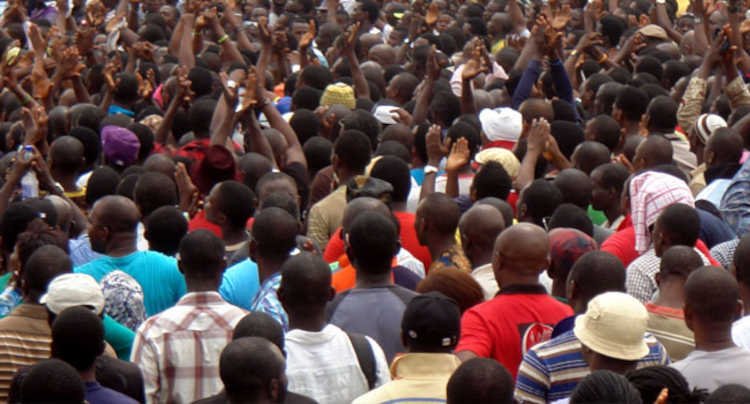
Millions of shareholders could eventually form an economic constituency around issues such as crude supply, fuel imports, pricing, taxation and competition, although that would still make them an economic constituency rather than a political one, with the same people remaining motorists, taxpayers and voters whose interests extend beyond the value of their shares.
That economic weight becomes more significant as Dangote Refinery’s market power grows. Nairametrics has estimated that the refinery could eventually account for about 29 percent of the NGX’s market value, while its expansion into fuel distribution has already generated resistance from marketers and unions.
Regulator role
For regulators, the question should therefore extend beyond whether Dangote is helping or hurting Nigeria. Under the Federal Competition and Consumer Protection Act 2018, qualifying mergers are subject to competition review, and as the refinery expands, regulators will have to keep examining how Nigeria can accommodate a powerful private company while preserving competition and protecting consumers.
The memes around the IPO may look like internet noise, but some are doing a useful job by making people curious about what a shareholder can actually do. A joke about needing a board meeting can lead someone to discover voting rights, while a viral argument about the IPO can push another person to learn how share ownership works.
The same online energy can also encourage poorly informed decisions, since social participation is different from informed participation and fear of missing out is certainly not due diligence.
This is where the idea of the ‘People’s IPO’ becomes more interesting, as Nigerians could move from being an audience for corporate announcements to becoming beneficiaries, participants, shareholders and, eventually, accountability actors.
Companies that invite millions of people to become owners cannot reasonably expect those owners to remain passive spectators, so investors need plain-language reporting on performance, risks, environmental impact, labour conditions and governance, while regulators need to make minority rights usable rather than merely available on paper. Government can also explore ways for citizens to have meaningful stakes in public assets and infrastructure without confusing participation with political patronage.
Citizens have a responsibility too, starting with understanding what a share gives them, what it does not give them, how voting works and how to verify the channels through which they invest. Owning a tiny part of a company may give someone little control, but it creates an opportunity to ask what that company does and how it uses the power that comes with its size.
They can move from access to participation, ownership, influence and accountability, while the corporation moves from listing to capital, expansion, greater corporate power and stronger stakeholder expectations.
The People’s IPO may therefore be less about how many Nigerians own a piece of Dangote Refinery than whether Nigerians learn what it means to be owners.
Editor’s note: Development Diaries does not provide investment advice, and nothing in this series is a recommendation to buy or sell any security.
If you own shares, work at the refinery or simply have a question about what mass ownership should mean, please tell us what you would ask at the first annual general meeting. We will publish the strongest questions.