




A woman leaves home for her usual morning run and ends up as one of nine women found dead across Ekurhuleni, South Africa, a grim pattern that should have moved the conversation beyond another police operation and another reward for information.
Development Diaries reports that Elizabeth Moselakgomo, 38, left her home in Kempton Park on 09 September for her usual run and never returned. Her body was later found in the same area.
Since July, eight other women have been found dead across Ekurhuleni, with five bodies discovered near the R21 highway and others in Rhodesfield, Olifantsfontein, Clayville, Springs and Dawn Park.
All nine were Black women in their 20s or 30s, and most were found partially or completely naked with visible injuries, with the police setting up a multidisciplinary team to investigate the cases.
The ninth body was found on 17 September in an open space on Lama Street in Villa Liza, Dawn Park, where police said the woman appeared to have been dumped.
Four victims have so far been identified as Moselakgomo, Itumeleng Kekana, 32, Gracious Nkomo, 28, and Dineo Evelyn Motapane, 38, a mother of two whose body was found in KwaThema, Springs, before her family had reported her missing.
That last detail exposes a gap in the response to how a woman can disappear, be killed and have her body found before the missing persons system has even started looking for her.
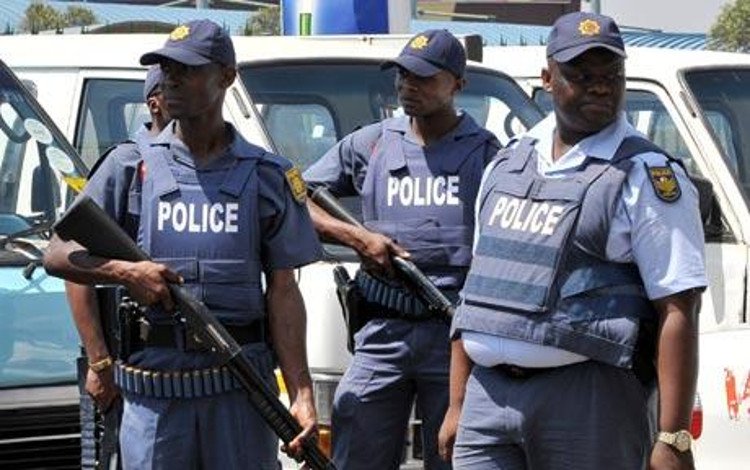
The state has responded with an expanded multidisciplinary task force, increased Operation Shanela deployments and a R400,000 reward, while Acting Police Minister Feroz Cachalia and Gauteng Premier Panyaza Lesufi have called for an intensified response. President Cyril Ramaphosa has also ordered police to leave no stone unturned.
The measures are necessary, but the cases also expose what happens when the machinery moves slowly. South Africa has no enforced national standard requiring a missing persons report to reach an investigating detective within a specified period, while forensic backlogs can delay DNA and other evidence.
Former South African Police Service (SAPS) profiler Professor Gérard Labuschagne has called for the killings to be treated as a serial investigation, requiring investigators to examine the victims, locations, injuries and forensic evidence together rather than allowing nine cases to become nine separate files.
That work is taking place inside a police service already dealing with an institutional crisis. SAPS is led by Acting National Commissioner Lieutenant General Puleng Dimpane while the substantive commissioner remains suspended and a judicial commission examines criminal infiltration of the service.
The killings are also unfolding against a national femicide crisis. South Africa adopted the National Strategic Plan on Gender-Based Violence and Femicide in 2020 with specific targets, while national crime statistics recorded 5,427 murders between April and June 2026, including 1,276 in Gauteng. UN Women figures put South Africa’s female homicide rate at around five times the global average.
The public should therefore be able to see what happened to those targets, including whether investigations are improving, where cases are being delayed and whether femicide convictions are rising.
As regards the legal commitments, Section 12 of South Africa’s constitution protects freedom and security of the person, including protection from violence, while the country has ratified the Maputo Protocol and the Convention on the Elimination of All Forms of Discrimination Against Women (CEDAW), both of which require effective action against violence against women.
But the continental response has been much quieter, with no visible African Union response to the Ekurhuleni killings, and the African Commission’s Special Rapporteur on the Rights of Women in Africa has not publicly engaged with the cluster.
For women living in informal settlements, the danger is also woven into everyday movement through poorly lit streets, long walks to taxi ranks and limited access to private transport, with the founder of Women For Change, Sabrina Walter, saying that women are terrified and have been changing how they live for years to survive.
Communities can help close the immediate identification gap by sharing only verified police descriptions through community, church and taxi networks. Residents can also ask their local SAPS station how long it takes to assign a detective after a missing persons report involving a woman and publish the response.
Women’s organisations can take that accountability further by publishing a monthly scorecard against the National Strategic Plan, while SAPS should disclose the detectives and forensic analysts assigned to the Ekurhuleni cases and the relevant laboratory backlog.
The Minister of Police should establish a national 24-hour standard for assigning missing women cases to detectives, the Department of Women, Youth and Persons with Disabilities should publish annual performance data including femicide conviction rates, and the African Commission’s Special Rapporteur should request a report from South Africa on its capacity to investigate femicide and place the Ekurhuleni killings before its next session.