

Nigeria’s basic education funding system still leaves billions of naira meant for schools unused while millions of children struggle to learn to read, write and count.
Development Diaries reports that the Universal Basic Education Commission (UBEC) recently disclosed that about N267 billion in released intervention funds remained unutilised as of August 2026, while more than N65 billion in state counterpart funding was yet to be accessed.
The commission also cited an estimate that about 70 percent of Nigerian children of primary school age cannot read and understand a text.
The figures come amid concerns that some states have failed to provide the counterpart contributions required to access available grants, while billions already released remain unused.
Under the Universal Basic Education (UBE) funding arrangement, states must provide counterpart contributions to access matching grants. Where a state fails to meet this requirement, the funds available through the arrangement cannot be accessed for planned interventions, leaving schools without improvements that could have been financed through the grants.
Funds already released can also remain unused when state authorities fail to move from approved plans to implementation. Procurement delays, weak planning and limited capacity to execute projects can hold up delivery, but UBEC’s figures do not show how much each problem contributes to the outstanding balances.
These delays come at a time when millions of children are struggling to acquire basic literacy skills. A child who cannot read with understanding is likely to encounter difficulties in other subjects, and those learning gaps can widen as the child progresses through school.
Where classrooms are overcrowded, teaching materials are scarce and trained teachers are in short supply, unused education funds can prolong conditions that make learning difficult.
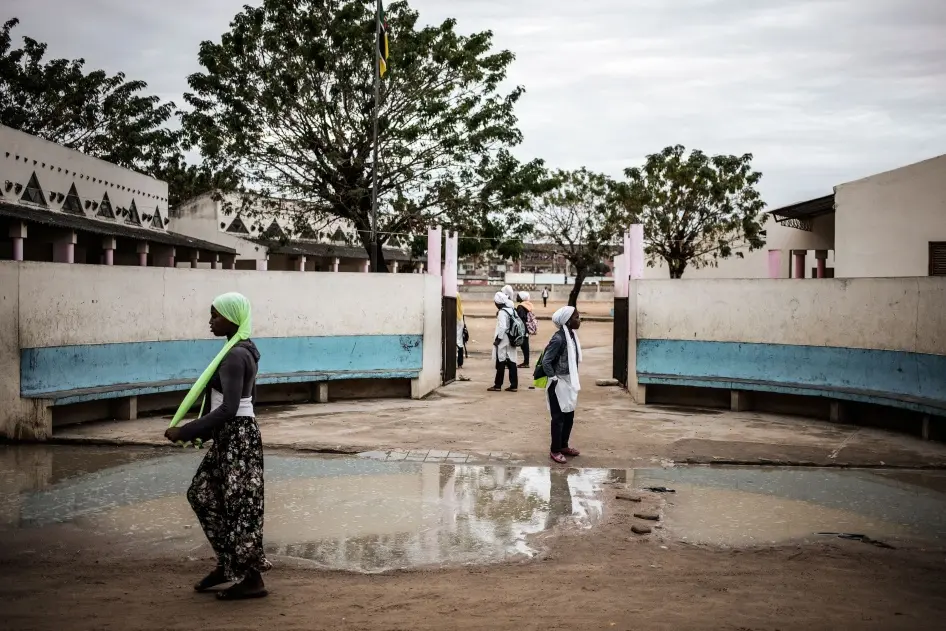
The burden is particularly heavy for children in rural and underserved communities, where schools often have fewer facilities and limited learning support.
Children with disabilities face additional barriers when schools lack accessible infrastructure and appropriate teaching materials. And for families unable to afford private education or extra lessons, the failure of public schools to provide adequate learning support leaves few alternatives.
Section 18 of Nigeria’s constitution directs the government towards equal and adequate educational opportunities and the eradication of illiteracy, while the Universal Basic Education Act 2004 provides the legal framework for free, compulsory and universal basic education.
Those commitments remain difficult to fulfil when funds intended to support schools go unused and children continue to face gaps in access to education and learning outcomes.
UBEC has introduced the Basic Education Action Plan Management System, a digital platform intended to improve the preparation and tracking of state education plans, and announced a ten-year strategic roadmap covering 2026 to 2035.
The initiatives could help track whether approved plans translate into completed projects, provided the information is made public and updated to reflect what is happening in schools.
Parents should be able to establish what their schools were promised, how much was allocated and whether the work was completed. Records of reported projects, including classroom blocks, toilet facilities and supplies of learning materials, should be available for communities to verify.
And where projects remain unfinished, the responsible authorities should explain the delays and provide completion dates.
UBEC should publish a state-by-state breakdown of the outstanding funds, the projects they were intended to support and the reasons for non-utilisation, while state governments should explain delays in providing counterpart funding and implementing projects financed by money already released.
As regards the Federal Ministry of Education and state education ministries, they should also account for their roles in ensuring that education plans are implemented, while the Auditor-General and other authorised oversight bodies should examine unexplained balances and discrepancies between reported spending and completed projects.
Parents, school-based organisations and civil society groups can request education spending records, document unfinished projects and compare official reports with conditions on the ground.
The findings can help to establish whether public funds are reaching the schools and children for whom they were intended.
Nigeria cannot measure progress in basic education by the funds allocated or released alone. Those funds must be accounted for and translated into better schools and improved learning outcomes for the children who depend on them.