




Nigeria cannot end terrorism by imprisoning gunmen alone if the people financing them remain beyond the reach of justice.
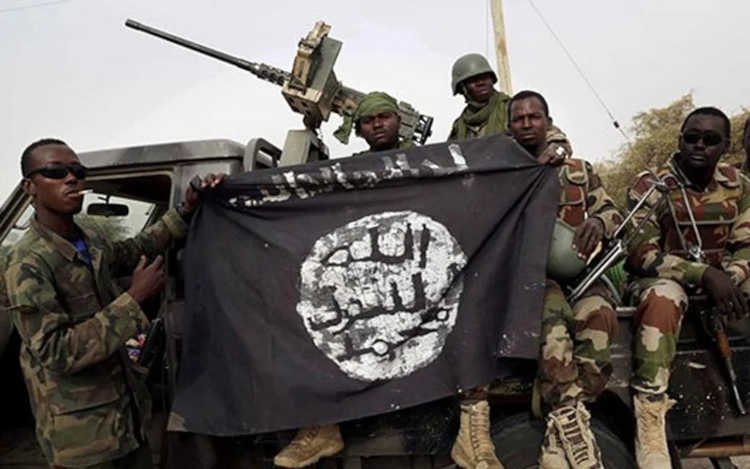
Development Diaries reports that a Federal High Court in Abuja recently sentenced two commanders of the Al-Qaeda-linked terrorist group Ansaru, Abubakar Abba, also known as Abu Bara, and Mahmud Usman, to life imprisonment after they pleaded guilty to a 32-count terrorism charge filed by the Department of State Services (DSS).
The DSS has already indicated that it will appeal the judgment, arguing that life imprisonment does not sufficiently reflect the gravity of the offences.
The convictions are significant in a country where terrorism prosecutions often struggle to conclude.
But another case unfolding in the courts suggests that defeating terrorism requires more than securing convictions against those carrying the weapons.
Earlier this month, the Economic and Financial Crimes Commission (EFCC) arraigned the national president of Miyetti Allah Kautal Hore, Bello Bodejo, on a 12-count charge involving alleged money laundering and terrorism financing amounting to about $2.63 million.
The commission alleged that Bodejo received several cash payments from former Bauchi State Accountant-General Sa’idu Abubakar between January 2022 and March 2024 without processing the transactions through financial institutions as required by law.
A court has since granted Bodejo bail of two billion naira, while his trial has been adjourned until October. He has, however, denied the allegations and remains entitled to the constitutional presumption of innocence.
The convictions move the focus from the gunmen to the people accused of financing them, where the fight against terrorism is often won or lost.
Nigeria has demonstrated that it can prosecute those accused of carrying out terrorist attacks; it must now show that the same determination applies to those accused of financing them.
It is understood that armed groups do not sustain themselves through ideology alone, as somebody pays for vehicles, weapons, fuel, logistics and recruitment, and terrorist networks become far more difficult to dismantle when investigations stop with those pulling the trigger instead of following the money that keeps the violence alive.
Responsibility, therefore, rests with the DSS, the EFCC, the Nigerian Financial Intelligence Unit (NFIU) and the courts, all of which have roles in ensuring that terrorism financing is investigated, traced and prosecuted.
Communities devastated by Ansaru’s attacks deserve justice, while everyone accused of terrorism financing remains entitled under the law to due process and a fair trial.
The consequences of terrorism continue to fall most heavily on communities across northern Nigeria, where women and children remain vulnerable to kidnappings, sexual violence, displacement and the collapse of livelihoods.
If public resources are ever found to have entered terrorist financing networks, those communities would have been deprived twice, first of the schools, healthcare and infrastructure the money should have funded, and again through the violence those same resources allegedly sustained.
Civil society organisations should continue to monitor terrorism financing prosecutions while demanding regular public reporting on investigations, convictions and recovered assets linked to terrorism financing.
The EFCC and the NFIU should publish periodic data showing how terrorism financing cases progress through the justice system, while the attorney-general should ensure that prosecutions pursue financiers and complicit public officials with the same urgency applied to those accused of carrying out terrorist attacks.
Nigeria will weaken terrorism most effectively when the money behind the violence becomes as dangerous to keep as the weapons used to carry it out.