





Guinea-Bissau has approved a constitution that gives the president more power, shrinks parliament and redraws constituencies after the main opposition told voters to stay away from the referendum.
Development Diaries reports that voters in Guinea-Bissau have approved a new constitution that strengthens presidential powers ahead of the December 2026 elections meant to restore civilian rule after last year’s military coup.
Provisional results released by the National Electoral Commission showed 70 percent of votes cast in favour, with almost 60 percent turnout, although reports from Bissau described low participation in the capital and confusion among some voters about the referendum.
The main opposition African Party for the Independence of Guinea and Cape Verde (PAIGC) boycotted the vote, arguing that the process lacked political and institutional safeguards.
The new constitution gives the president greater control over government by strengthening the presidency’s authority over the prime minister and cabinet and allowing the dissolution of parliament during a serious political crisis.
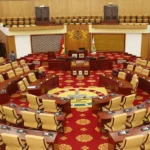
Parliament will also shrink from 102 to 65 seats, while electoral constituencies will fall from 29 to 12, while the five-year presidential term and two-term limit remain.
That is a sizeable redistribution of power, especially for a constitution being introduced by a military-led transitional authority that came to power after the November 2025 coup interrupted the country’s previous electoral process.
The authorities say the changes are necessary because the old semi-presidential system repeatedly produced conflict between presidents and prime ministers.
Under the previous arrangement, power was shared between the presidency and government headed by a prime minister who depended on the parliamentary configuration.
The bigger concern is how the constitution was produced, with Guinea-Bissau’s transitional authorities emerging from the 2025 military takeover, and opposition parties and civil society groups saying they were excluded from the drafting process.
The main opposition then boycotted the referendum, while critics said the ‘no’ campaign was not given the same space to operate, with human rights observers also questioning the environment in which voters were asked to approve the text.
The African Charter on Democracy, Elections and Governance says constitutional amendment or revision should rest on national consensus, obtained where necessary through a referendum.
A referendum can therefore be part of achieving consensus, but a ballot held after the main opposition has withdrawn from the process leaves an obvious question about how broadly that consensus was built.
There is another problem with treating the 70 percent figure as the whole story. The National Electoral Commission reported that about 544,060 people voted, representing almost 60 percent of registered voters.
That is an official turnout figure, but the low participation reported in Bissau and the opposition boycott make turnout and participation important parts of the legitimacy question.
Publishing full station-level results would allow citizens and observers to examine the numbers rather than simply accepting the headline percentage.
The timing also deserves attention, as the constitutional changes come only months before the December elections, while Guinea-Bissau remains suspended from ECOWAS and the African Union following the 2025 coup.
The ECOWAS Supplementary Protocol bars substantial changes to electoral laws within six months of an election unless a majority of political actors consent, although that provision applies specifically to electoral laws and does not automatically settle the legality of the entire constitutional revision.
The reduction of constituencies and other electoral changes therefore deserve a specific regional legal assessment rather than a broad claim that the entire referendum violates the protocol.
Guinea-Bissau has spent decades cycling through political crises, coups and disputes between presidents, governments and parliament. The desire for a system that actually functions is understandable. The danger is assuming that concentrating authority in one office automatically produces stability.
Accountability now begins with the records. The National Electoral Commission should publish full station-level referendum results, the verified turnout and the registered voter figures so that the official 70 percent approval can be independently assessed.
Civil society groups should also publish accessible summaries of the constitution in Guinea-Bissau Creole and national languages before the December election, so voters are not asked to make another major constitutional choice with limited information.
The constituency changes need the same treatment. Electoral authorities should publish the new boundaries, maps and population data used to create the 12 constituencies from the previous 29.
Political parties and community organisations should then have enough time to examine the changes before candidate nomination and the December polls.
Regional accountability should follow the evidence, with ECOWAS, despite Guinea-Bissau’s suspension, clarifying its legal position on the electoral changes against its six-month rule, while the African Union Peace and Security Council should assess the constitutional revision against the African Charter’s requirements on constitutionalism, political pluralism and national consensus.
For citizens, the most useful question is therefore whether the people who were asked to approve the new rules had enough freedom, information and political choice to make that decision meaningfully theirs.
Photo source: AFP/Getty Images