


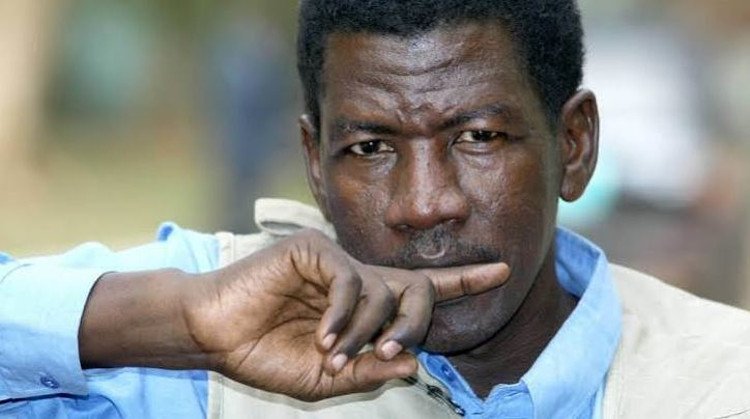
Prominent Nigerien journalist Moussa Kaka left his office in Niamey, Niger, after a military uprising and never reached home, while the authorities remain silent about where he is.
Development Diaries reports that Kaka has been missing since leaving the Radio Télévision Saraounia offices in Niamey at about 7:00 pm on 31 August, days after an attempted military mutiny in the capital was contained with support from Russia’s Africa Corps.
Reporters Without Borders has called on Nigerien authorities to investigate his disappearance and establish his whereabouts, while Kaka’s family and colleagues say they have received no information about what happened to him.
It is understood that his vehicle is also reportedly missing.
Kaka is the director-general of the aforementioned radio station and a former Radio France Internationale correspondent who has previously faced pressure from Nigerien authorities.
In October 2025, he was arrested with other journalists after they publicised a briefing linked to the government’s Fund for the Safeguarding of the Homeland and was later released on bail.
One of those detained with him, Ibro Chaibou, was released only on 28 August, three days before Kaka disappeared. Kaka was present at his release.
That history makes the silence around his disappearance harder to treat as an ordinary missing-person case. Niger had just experienced an attempted mutiny by soldiers frustrated by conditions inside an army fighting persistent jihadist attacks, exposing fresh tensions within the military government led by General Abdourahamane Tiani.
The government has accused France of involvement without presenting detailed evidence, while Russian personnel helped loyalist forces regain control of the strategic airbase at the centre of the uprising.
The authorities have not publicly said that Kaka is in state custody, and that leaves his family in the worst category of uncertainty, because a person who is arrested can be located, represented by a lawyer and brought before a court, while a person whose whereabouts are concealed can simply disappear from the legal record.
Niger ratified the International Convention for the Protection of All Persons from Enforced Disappearance in 2015. The convention defines enforced disappearance around the combination of deprivation of liberty by state agents, followed by a refusal to acknowledge the detention or concealment of the person’s fate or whereabouts.
It also requires states to prevent secret detention and maintain official records of people deprived of liberty.
The African Charter on Human and Peoples’ Rights also remains binding on Niger. Its Article 5 protects human dignity and prohibits cruel, inhuman or degrading treatment, Article 6 protects liberty and security of the person, Article 7 guarantees access to justice and Article 9 protects freedom of expression and the right to receive information.
Niger ratified the Charter in 1986 and remains a state party.
For Kaka’s family, these provisions determine whether there is an authority they can approach, a record they can demand and a person who can be held responsible for finding him.
But every day without an official account stretches that uncertainty further.
His colleagues also have reason to pay attention, as a journalist who disappears shortly after a military uprising sends a message to every newsroom, especially where the government has already shown a willingness to use criminal and cybercrime laws against journalists.
Kaka’s previous arrest was part of a wider case involving six journalists, with some spending months in detention before their eventual release.
The family therefore needs more than expressions of concern from press freedom organisations. Nigerien authorities need to let the family know whether Moussa Kaka is in state custody, and the answer should come with evidence.
If he is being detained, the authorities should identify the legal basis, location and responsible institution and allow access to his family and a lawyer.
But if he is not in custody, they should investigate his disappearance as a serious criminal matter and make the findings public.
The African Commission on Human and Peoples’ Rights still provides a regional accountability route because Niger remains bound by the African Charter, even after Niger, Mali and Burkina Faso formally left ECOWAS.
That makes the African Commission one of the institutions that should be pressed to act. West African press organisations can file a communication with the Commission’s Special Rapporteur on Freedom of Expression and Access to Information, while African media organisations can keep a public count of the days since Kaka was last seen and continue publishing his photograph and case details.
The longer-term response also belongs in the newsroom. Media organisations across the Sahel should establish a standing protocol for journalists who disappear, covering immediate legal representation, financial support for families, coordinated reporting and engagement with regional human rights bodies.
For Niger’s authorities, however, they must find Kaka, establish what happened to him, and tell his family where he is.
Photo source: Seyllou/AFP