


Two babies died in Boko Haram captivity before 360 Nigerians were rescued from the Mandara Mountains, and the government now faces questions over the five billion naira reportedly paid to secure their release.
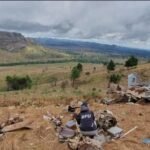
Development Diaries reports that the Nigerian army announced in June that it had recovered 360 people held by Boko Haram in the hills along the Cameroon border.
The victims had been taken from Ngoshe, a village in Gwoza area of Borno State, in March during an insurgent attack on a nearby army base. Most of those recovered were women and children, and the army confirmed that two babies died from exhaustion and the conditions of their captivity.
The Nigerian army described the operation as a rescue, but The New Humanitarian reported on 07 September that three people with contacts among Boko Haram members, including senior figures, independently said a truce had been in place since June and that the villagers’ release involved a five-billion-naira ransom payment by the government.
But the Nigerian government has denied the payment amid controversy over the alleged diversion of some of the money, while officials have acknowledged negotiations involving the Office of the National Security Advisor (NSA) and the Department of State Services (DSS).
Questions about the operation were referred to the defence ministry, which did not respond, while the security advisor’s office has not publicly confirmed the reported truce.
Nigerians are therefore left with an official account of the negotiations and a disputed account of what those negotiations secured.
Ransom often means selling land or livestock, emptying savings and abandoning other household needs to raise whatever kidnappers demand, and a five billion naira government payment would place the state in a different position from those families.
It would mean that public money had allegedly entered a market in which armed groups already have a financial incentive to keep abducting people.
That is why the Terrorism Prevention and Prohibition Act 2022 contains offences relating to terrorism financing and the provision of funds for terrorist purposes. A claim that billions of naira reached Boko Haram therefore requires financial and legal scrutiny, not a dispute conducted mainly through statements and counter-statements.
The 360 Nigerians from Ngoshe spent months in captivity, and two infants died before they could return, with women emerging from Boko Haram captivity needing medical care, psychosocial support, family reunification and livelihood assistance.
Also, children who have missed months of schooling may need help returning to the classroom, just as families in Gwoza have spent years absorbing the cost of insurgency through displacement, lost livelihoods and repeated abductions.
If government negotiated the release, Nigerians should know what was agreed and what support was provided afterwards. If the reported truce exists, people living in communities exposed to Boko Haram also deserve to know what it means for their security.
The National Assembly has the constitutional authority under Section 88 to investigate matters connected with the administration of public funds. Its committees on defence, national security and intelligence can summon the relevant officials and demand records of the negotiations and any associated expenditure.
The Nigerian Financial Intelligence Unit can also establish whether a transaction corresponding to the reported ₦5 billion payment occurred.
Citizens can keep the question alive by submitting Freedom of Information requests to the Office of the Accountant-General of the Federation and the Ministry of Defence for relevant security disbursement records for the period surrounding the Ngoshe operation, and publishing the response or refusal.
Senators and members of the House of Representatives should also be asked whether they will support a public hearing on ransom payments and negotiated releases.
For the Ngoshe returnees, civil society organisations in Borno can document access to healthcare, education, psychosocial support and livelihoods and use that evidence to press for a structured reintegration programme.
For its part, the Federal Ministry of Humanitarian Affairs and Poverty Reduction should publish a costed framework for supporting survivors of mass abduction, including maternal healthcare, psychosocial care and school re-entry for children.