


Nigeria’s education system is losing millions of children between primary school and junior secondary, and the gap is leaving girls, children with disabilities and poor families to carry the cost.
Development Diaries reports that the country has almost 25 million children enrolled in primary school but only about five million in junior secondary, according to 2024–2025 Annual School Census data presented by the Minister of Education, Tunji Alausa, raising fresh questions about where roughly 20 million children go after primary school and why the government has not produced a dated plan to close the gap.
More than 18 million Nigerian children are already out of school, according to UNICEF, while insecurity is making attendance harder in some communities.
In May 2026, about 30 students and teachers were abducted from three schools in Oyo State, followed a month later by the abduction of 36 students from Government Day Secondary School in Lassa, Borno State, as they sat for examinations.
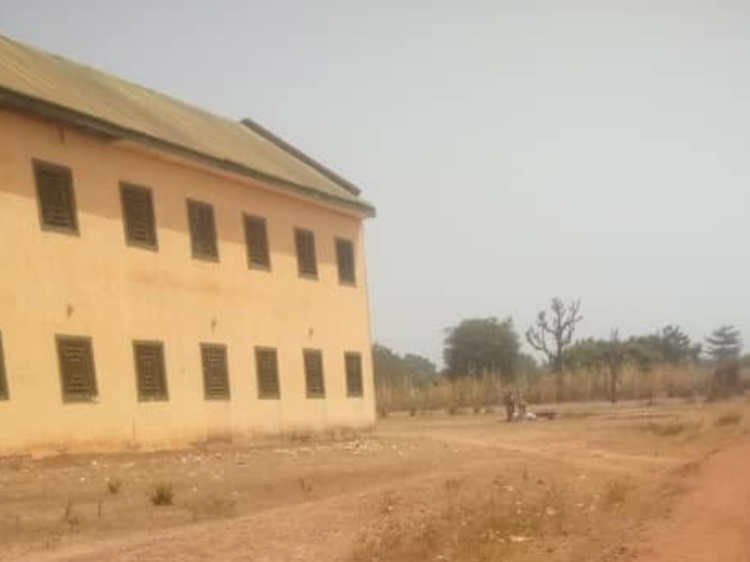
The minister has attributed the sharp fall in enrolment to inadequate junior secondary facilities and called for an end to Nigeria’s disarticulation policy, which separates junior secondary from senior secondary education and splits responsibility across different institutions.
Nigeria’s basic education system is designed to cover six years of primary and three years of junior secondary education. In practice, a child can complete primary six in a ward without a nearby junior secondary school (JSS) and disappear from the education statistics.
Primary completion can then be counted as an achievement even when there is no school available for the next stage.
That is how millions of children can disappear between two levels of a system that is supposed to provide nine years of free and compulsory basic education.
Money is already being spent on basic education, as between January 2025 and January 2026, states accessed more than N106 billion in the Universal Basic Education Commission (UBEC) matching grants, alongside N22 billion for teacher development, the renovation of more than 10,000 classrooms and the distribution of 7.8 million textbooks.
The missing figure is how much of that N106 billion went into JSS infrastructure and how much states left unaccessed. If inadequate JSS facilities are driving the transition gap, that breakdown should show which states are building classrooms and which are leaving available funds untouched.
The problem is also reaching children through charges that should not exist. The Compulsory, Free, Universal Basic Education Act 2004 guarantees free basic education, but parents at a nomadic school in Nasarawa have reported levies and teacher absenteeism.
For pastoralist and migrant fishing communities already struggling to keep children in school, an illegal charge can push a child out of the system entirely.
Girls are especially exposed when a primary school has no JSS place nearby. A girl who finishes primary six without a secondary school within reach is more likely to be absorbed into domestic work, petty trading or marriage, particularly in communities where poverty and early marriage are already common.
Government programmes such as the Adolescent Girls Initiative for Learning and Empowerment (AGILE) have helped more than one million girls return to school through cash transfers and learning materials, but those interventions cannot solve a shortage of classrooms.
Children with disabilities face a different form of exclusion because Nigeria does not publish a national basic education enrolment figure disaggregated by disability. The country therefore cannot say how many children with disabilities are in school, how many complete basic education or where the largest gaps are.
Pastoralist children face another gap because a school system built around fixed locations and enrolment cycles does not easily accommodate families that move, while children in communities affected by conflict carry the burden of insecurity, with school abductions making attendance a question of safety before it becomes a question of learning.
Section 18(3)(a) of Nigeria’s constitution provides for free, compulsory and universal primary education, while the Child’s Rights Act 2003 guarantees free, compulsory and universal basic education.
Nigeria has also ratified the Convention on the Rights of the Child, whose Article 28 requires free and compulsory primary education and accessible secondary education, and the Convention on the Rights of Persons with Disabilities, whose Article 24 requires inclusive education at all levels.
The Safe Schools Declaration, which Nigeria has endorsed, also commits the country to protecting education from attack and maintaining education during conflict.
Responsibility for fixing the transition gap cuts across the Federal Ministry of Education, UBEC, State Universal Basic Education Boards (SUBEBs), the National Commission for Nomadic Education and the National Senior Secondary Education Commission.
The minister has called for disarticulation to end, but no public roadmap has set out the infrastructure, financing, administrative changes and deadline required to make that happen.
That gap should now be measured at the level where children actually disappear from school.
The first step is to find out where the children are being lost. School-Based Management Committees should ask their SUBEBs for ward-level primary six enrolment and junior secondary classroom figures and publish the ratio.
That local evidence should be matched with the cost of providing the missing places, with civil society organisations asking UBEC for the state-by-state breakdown of the more than N106 billion in matching grants accessed between January 2025 and January 2026, showing how much went to primary and JSS infrastructure and how much each state left unaccessed.
The same scrutiny should extend to children who are already missing from the figures. Parents and community groups should ask state education authorities for enrolment and completion data for children with disabilities and publish any gaps in the records, while communities should report illegal levies in public basic schools to their state UBE boards, Houses of Assembly and UBEC, citing the CFUBE Act and publishing the responses.
For children in nomadic communities, accountability needs to reach the classroom itself. The National Commission for Nomadic Education should establish a phone and SMS complaints channel for reports of illegal levies and teacher absenteeism and publish quarterly complaint and resolution figures.
All of this should feed into a decision at the federal level. The Federal Ministry of Education should publish a dated national roadmap for ending disarticulation, with state-by-state JSS infrastructure targets, financing arrangements and a completion date before the 2027 budget is laid.
UBEC should support that roadmap with annual state-level data on accessed and unaccessed matching grants and make JSS infrastructure a stronger condition for future funding in states with the widest transition gaps.
Nigeria cannot claim to be providing nine years of basic education while millions of children disappear between year six and year seven.