



When the state takes away a person’s freedom, it also takes responsibility for keeping that person alive and healthy, but Uganda’s prisons are leaving families to raise money for the medical care of detainees.
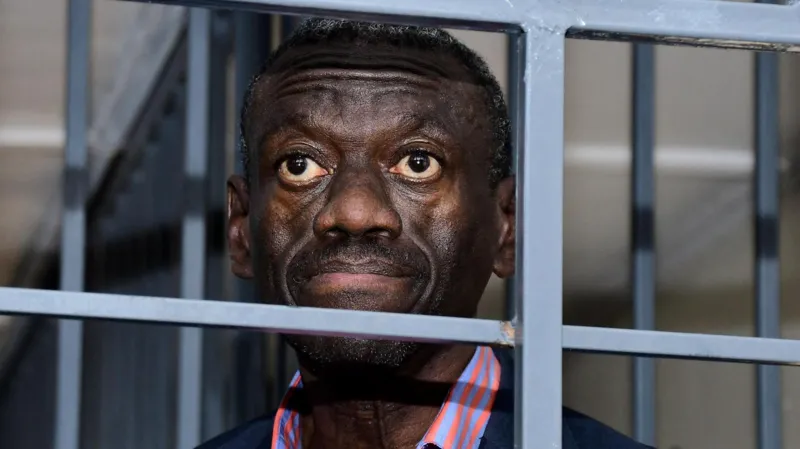
Development Diaries reports that Ugandans have raised Shs22 million of a Shs100 million target for jailed opposition leader Dr Kizza Besigye as concerns over his health grow during his treason trial at the Kampala High Court.
The #StandWithKizzaBesigye campaign, organised by human rights activist Agather Atuhaire and others, is raising money for Besigye’s welfare and medical needs and those of other detainees held with him. The campaign has attracted contributions from politicians, activists and ordinary Ugandans.
The concern followed Besigye’s collapse in court after he protested against being tried without lawyers of his choice. His lead lawyer, Erias Lukwago, had also been detained and charged.
Besigye’s wife, Winnie Byanyima, said he became unconscious and unresponsive and was admitted to intensive care at Mulago National Referral Hospital. Before collapsing, he reportedly complained that he was being injured.
Besigye has been in custody since November 2024 after he was abducted in Nairobi and transferred to Uganda.
His case also raises questions about the fairness of the proceedings. A prosecution witness has alleged that Besigye attended a meeting in Nairobi in November 2024 where he arrived with two pistols loaded with live ammunition.
The witness said he unloaded them because he considered them unsafe. He also alleged that meetings in Geneva and Athens involved discussions about acquiring weapons and overthrowing the government, while testifying that he himself suggested poisoning Uganda Air Force pilots during one recorded discussion.
The allegations have not been independently verified.
Uganda’s Supreme Court has also ruled that military courts lack the independence and competence to try civilians. A seven-judge panel found the General Court Martial fundamentally flawed, while one justice said its structure could not guarantee an independent and impartial judgment. Besigye was among the civilians being tried before the military court.
The concern over Besigye’s case, however, extends to the people held in Ugandan prisons whose names will never trend on social media.
A person in state custody depends entirely on the state for healthcare because the state has taken away their freedom to seek treatment for themselves. That responsibility does not become smaller because the prisoner is poor or unknown.
Uganda’s prison system operates above its intended capacity, with many prisoners awaiting trial rather than serving sentences, and public data does not show how much is spent on healthcare per prisoner, how many prisons have resident clinical staff, or how many prisoners die from particular causes.
That leaves citizens with little way to know whether a detainee received adequate medical care, how many others died without it, or whether anyone was held accountable.
The fundraiser for Besigye exposes the gap because if supporters must raise Shs100 million to help sustain the welfare of one of the country’s most prominent detainees and others held with him, the same question should be asked about the 19-year-old on remand in a district prison whose family cannot afford bail and cannot raise Shs100,000, let alone Shs100 million.
Ugandan law already places strong protections around people in custody, with Article 23 of the constitution protecting personal liberty, Article 24 prohibiting cruel, inhuman or degrading treatment, while Article 28 guarantees a fair and public hearing and the right to a lawyer of one’s choice.
Also, Article 44 makes freedom from torture and cruel, inhuman or degrading treatment non-derogable, just as the African Charter also protects liberty, fair trial rights and freedom from cruel, inhuman or degrading treatment.
Its Article 7 specifically protects the right to defence by counsel of one’s choice. The Robben Island Guidelines require adequate medical care and prompt access to independent medical examination for people deprived of liberty, while the Nelson Mandela Rules make healthcare a state responsibility and require prisoners to receive the same standard of healthcare available in the community, free of charge.
A prisoner, therefore, should not need celebrity status, a famous wife, or a hashtag before the public notices whether the state is providing basic medical care.
Women in custody face additional problems, as they are held in fewer facilities, often farther from their families, which can reduce visits and the family support that frequently supplements prison food, medicine and sanitary supplies.
Pregnant women, mothers with infants and women needing menstrual health supplies also face needs for which public information is scarce.
The Uganda Prisons Service is responsible for custodial healthcare, while the Ministry of Health sets health standards, the Directorate of Public Prosecutions handles prosecution, the Judiciary handles the trial and the Uganda Human Rights Commission has constitutional powers to inspect places of detention and investigate rights violations.
Those powers provide enough authority to begin answering the questions raised by Besigye’s case without waiting for another scandal.
That accountability can begin with the Uganda Human Rights Commission, which should inspect and publish the state of healthcare in prisons holding remand prisoners, including staffing, access to treatment, deaths in custody and conditions in women’s facilities.
Healthcare is only part of the problem for people who remain in custody for long periods. The Directorate of Public Prosecutions should publish the timetable for Besigye’s trial and other long-running remand cases, while the Judiciary should make timely hearings a measurable standard for people awaiting trial.
The government should also comply with the Supreme Court’s ruling on military jurisdiction over civilians and publish the status of every civilian case affected by the judgment.
Public scrutiny should then move beyond official records. Prisoners’ rights organisations can request custodial healthcare data under Uganda’s access-to-information framework and publish whatever is provided or withheld, while families of remand prisoners should document medical-treatment denials and report them to the Uganda Human Rights Commission.
For women’s rights organisations, they should add the experiences of women in custody by documenting access to healthcare, maternal services and menstrual-health supplies.
The #StandWithKizzaBesigye campaign has shown that Ugandans will mobilise when a detainee’s name is known. That same attention should extend to the prisoners whose names nobody knows, because the state’s responsibility for their health should not depend on how many people are willing to raise money for them.
Photo source: Reuters