




Abuja, Nigeria’s capital, was planned with drainage corridors, but buildings, roads and estates now occupy some of those natural paths, raising questions about who approved the developments, whether drainage requirements were followed and whether existing infrastructure was maintained.
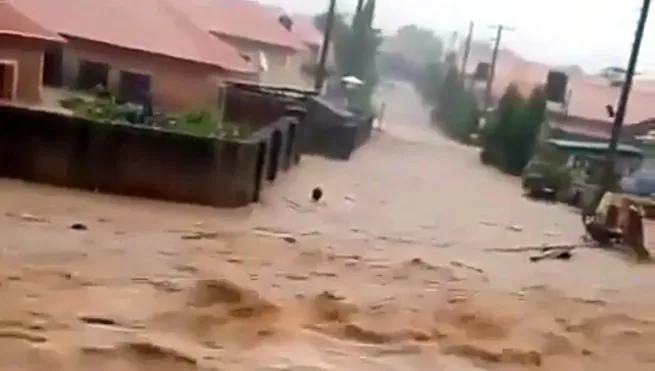
Development Diaries reports that the Nyesom Wike-led Federal Capital Territory Administration (FCTA) has opened a probe into flooding on Airport Road and in Lokogoma following heavy rainfall that submerged roads and homes and generated widespread footage on social media and local news platforms.
Abuja was planned with a master plan, designated drainage corridors and a development control authority responsible for enforcing them. When buildings, roads and estates are allowed along natural drainage paths, the flooding that follows points to a development control problem as much as a drainage problem.
The first question is who approved the developments now standing along drainage paths.
One obvious cause is construction along drainage alignments reserved in the master plan for stormwater. These corridors are often in commercially attractive locations, so building on them requires development approval. The approval should show when the structure was authorised, who approved it and what conditions were attached.
The FCTA’s own regulatory powers make this development even more concerning, as it can refuse approvals, enforce setbacks and drainage requirements and demolish unauthorised structures. In fact, the FCTA has repeatedly used those powers against informal settlements and roadside traders.
The question is whether those powers are being applied with the same force when the structure blocking a drainage path is a private estate. The authority that can clear an unauthorised market in a morning should also be able to explain why a development obstructing a drainage corridor was approved in the first place.
The second question is whether drainage requirements were followed when the developments were approved.
Lokogoma and the Airport Road corridor have seen extensive private development, replacing open ground with roofs, concrete and paved surfaces that send more rainwater into drainage channels. When estates are approved without drainage capacity that matches the additional runoff, the decision is contained in an approval file.
The National Environmental Standards and Regulations Enforcement Agency Act and the Environmental Impact Assessment Act also impose environmental requirements on major developments. Section 20 of Nigeria’s constitution requires the protection and improvement of the environment, while Section 16(2)(d) requires the state to ensure suitable and adequate shelter for citizens.
Nigeria has also ratified the International Covenant on Economic, Social and Cultural Rights, whose Article 11 recognises the right to adequate housing. That right includes safe and habitable living conditions, making the approval of residential development in known flood-prone areas a governance issue.
The flood probe should therefore examine the approvals that allowed these developments to proceed. If its terms of reference focus only on drainage and emergency response, it may explain where the water went without explaining why buildings were allowed to stand in its path.
The third question is whether existing drainage infrastructure was properly maintained.
Silted and blocked drains cannot carry their designed capacity, while desilting is paid for through public contracts with named contractors, contract sums and completion certificates. Those records should show the contract, payment and work completed.
The FCT Development Control Department holds the approval records, the Abuja Metropolitan Management Council handles municipal services and drainage maintenance, the FCT Minister oversees the administration, while the Federal Ministry of Environment and NESREA handle environmental compliance. The National Assembly committees responsible for the FCT provide oversight.
The FCTA has therefore opened a probe into a problem involving functions it already controls. The public should be able to see what the probe is examining, who is conducting it and when its findings will be released.
For women running businesses from their homes, a flood can destroy both the house and their source of income at once. A shop in the front room, food stock, a freezer, sewing equipment or other business assets can disappear with the same floodwater that damages the family home.
The health burden also grows when floodwater contaminates shallow wells and overflows pit latrines. Women often bear the additional work of finding clean water and caring for family members who fall sick, while children lose school days and face greater risks around open and flooded drains.
People with disabilities and older residents face further difficulties when evacuation plans assume everyone can move quickly or without assistance. Any serious flood response in Abuja should account for those needs.
Residents’ associations along Airport Road and in Lokogoma should request the building approval register for structures along the affected drainage corridors under the Freedom of Information Act. The records should include approval dates, approving officers and drainage conditions attached to each development, with any refusal to release them made public.
The probe itself should also be open to scrutiny that allows residents to request its terms of reference, panel membership and reporting date, with the responses then published so the process can be tracked before the next flood pushes the issue back into the news.
Communities downstream of the affected areas have another role to play by documenting flood damage with photographs, dates, locations and household-level losses, including destroyed business inventory. That evidence would show the cost beyond the estates whose flooding receives the most attention online.
For the Abuja Metropolitan Management Council, it should account for the condition of the drains by publishing desilting contracts for the affected corridors over the past three years, including contractors, contract sums and completion certificates.
At the same time, the FCT Development Control Department should publish approval records for the affected corridors and suspend new approvals in mapped drainage alignments while the probe continues.
Where approvals breached drainage requirements, the FCTA should identify the responsible officials and state the enforcement action that will follow.
The administration also needs to address the capacity problem exposed by the flooding by producing a costed plan for restoring and expanding drainage capacity and presenting it to the National Assembly committees responsible for the FCT, stating the design standard and storm return period used so the plan can be independently assessed.
The damage should then be counted properly, requiring the FCTA to publish a flood damage register covering planned estates and nearby unplanned settlements, including household losses and destroyed business inventory. Where regulatory failure is established, affected residents should have a clear mechanism for making claims.
Abuja was planned with drainage corridors before many of today’s buildings existed, so the question is who allowed development to obstruct those paths and increase the city’s flood risk.