






Nigeria is getting better at putting government paperwork online, but citizens still have to knock on the door to find out what government is spending their money on.
Development Diaries reports that the Bureau of Public Procurement (BPP) has made its Digital Submission Portal mandatory for all procurement requests and related details from ministries, departments and agencies, while the federal government has also begun moves to turn the Code of Conduct Tribunal (CCT) into a full-fledged National Anti-Corruption Court with seven judicial divisions.
Both measures have been presented as anti-corruption reforms, but neither gives Nigerians greater access to the information needed to scrutinise government.
A digital submission portal can reduce paperwork, create an internal audit trail and make it easier for the BPP to receive and review procurement requests. Nigerians, however, still cannot easily see which company won a contract, how much it was paid, why it was selected, whether it existed before the tender, whether the project was delivered or whether the amount paid matched what was delivered.
The information needed to answer those questions will now sit in a more organised digital system, but the government has not said it will publish it.
Africa’s most populous nation is therefore getting better at storing procurement data without making it easier for the public to examine.
Section 5 of the country’s Public Procurement Act 2007 gives the BPP responsibility for publicising and explaining the Act and maintaining a database of federal contractors and service providers, while Section 16(1)(b) requires public procurement to be transparent, timely and equitable. Section 25 requires invitations to bid to be advertised, and Section 38 provides for procurement records to be maintained.
Section 5(m) also requires the BPP to maintain a national database containing the particulars and classification of federal contractors and service providers. If that database included contract awards in a searchable public format, budget monitors would not have to spend hours piecing together information from budget documents, procurement notices and visits to project sites.
And with respect to the Freedom of Information (FoI) Act 2011, Section 2(3)(d)(v) requires public institutions to publish information about the procurement of goods and services, including particulars of contracts awarded.
Nigerians should therefore not have to file an FoI request for information the law already requires government institutions to publish.
The proposed National Anti-Corruption Court raises a similar concern. The Code of Conduct Bureau (CCB) receives asset declarations from public officers, while Paragraph 3(c) of the Third Schedule to the Constitution allows citizens to inspect those declarations on terms prescribed by the National Assembly.
More than two decades later, the National Assembly has not prescribed those terms. So turning the tribunal into a court without resolving this leaves citizens unable to exercise a constitutional right that was supposed to help them scrutinise public officials.
Nigeria already has an e-procurement system, an open treasury portal, a Treasury Single Account and several other digital fiscal systems. What citizens still cannot easily do is take a contract award, trace the payment, check the project and compare the amount spent with what was delivered.
Budget monitors continue to do that work manually, one project at a time, because the information is not released in a form that allows large-scale scrutiny.
That means citizens can end up with a primary health centre with a roof but no equipment, a borehole that was paid for but never drilled, a classroom block abandoned at lintel level or a road contract awarded more than once.
Community monitors in rural local governments often have to visit project sites to establish what government has actually built, working through community development associations and doing the verification voluntarily, without the contract figures needed to compare what they see with what government paid.
Give a community monitor the contractor’s name, the contract value and the completion date, and a dry borehole becomes a specific accountability case. Without those details, it remains another complaint about a failed project.
Rural women often carry these failures for the longest because they depend heavily on public water, health and agricultural infrastructure. When a project fails and another contract does not come for years, they spend more time fetching water, travelling farther for healthcare or coping with the loss of income that follows poor infrastructure.
Persons with disabilities face another barrier when public buildings are constructed without accessible features. A clinic with steps and no ramp may meet a construction milestone while remaining unusable for some people, and without published contract specifications, citizens cannot easily tell whether accessibility was included in the agreement.
Small businesses, particularly women-owned businesses, also lose when procurement awards remain hidden. Without an accessible record of who receives government contracts, citizens cannot easily see whether the same suppliers keep winning or whether women-owned businesses are being shut out.
Section 15(5) of the constitution requires the state to abolish corrupt practices and abuse of power, while Section 39 protects the freedom to receive information.
Nigeria has also ratified the United Nations Convention against Corruption, whose Article 9 calls for transparent procurement systems and public access to procurement information, as well as the African Union Convention on Preventing and Combating Corruption, which requires states to give effect to access to information needed to fight corruption.
The obligation is therefore to make those records useful to the people expected to hold government accountable.
Budget-tracking organisations should therefore start by asking the BPP to publish contract award information in the Open Contracting Data Standard and make its response public. They can also use the FoI Act to request the award register, contract value, contractor identity and completion status of the three highest-value federal health and education contracts in 2026.
Community development associations can strengthen that effort by documenting capital projects in their wards with photographs, dates and locations and sharing the records with civil society organisations tracking public spending.
Citizens should also ask their National Assembly representatives to prescribe the terms for inspecting public officers’ asset declarations and publish which lawmakers commit to taking up the issue.
The BPP should then publish quarterly contract award data in an open, machine-readable format, including the contractor, contract value, award date, procurement method and delivery status, alongside the national contractor database required under the Public Procurement Act.
The National Assembly should make open contract publication a requirement in any legislation establishing a National Anti-Corruption Court and finally prescribe the terms for citizens to inspect asset declarations, while the Auditor-General should publish procurement audit queries in a searchable format, with the responsible MDA identified.
A digital portal can make government faster but only public access can make it easier for Nigerians to see what government is doing with their money.
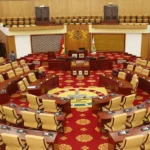
Photo source: Jeremy Weate