



When families in Dekera had to identify abducted relatives from a video posted by their attackers, Nigeria’s security failure had already become an information failure.
Development Diaries reports that an armed group released a video showing what residents described as about 600 women, children and older people abducted during an attack on a mosque in Niger State, while a Borgu district official said 30 people were killed and buried on Sunday.
Reuters could not independently verify the figure of 600, while the traditional head of Dekera reported that at least 2,000 residents had crossed into Benin Republic after the attack.
Here are five things the incident exposes about Nigeria’s response to mass abductions.
One, the attackers posted the faces of the abducted people while the government was still trying to establish how many people were missing, with the Niger State Commissioner for Information, Obed Nana, saying that authorities were working to verify the number of victims and avoiding speculation because of the sensitivity of the case.
That caution is understandable, but it also exposes a serious weakness, because Nigeria should not have to begin counting its citizens from a video released by their abductors after a mass kidnapping has already happened.
Two, the security presence in rural communities remains too thin to prevent attacks.
President Bola Tinubu has directed the Armed Forces, Nigeria Police Force, Department of State Services (DSS) and other security agencies to begin a coordinated rescue operation and ordered the service chiefs to provide regular updates until the abducted people are accounted for.
But the problem is that communities in Niger State have heard security promises before, with the state’s vast forests, including areas around Kainji National Park, and its borders with Kaduna, Zamfara and Kebbi having made several communities vulnerable to repeated attacks. Shiroro, Rafi, Munya and Mariga have faced raids on farms and schools, and Borgu has now joined that list.
While a presidential order can mobilise forces after an attack, it cannot substitute for the permanent intelligence, policing and rapid-response presence needed to stop the next one.
Three, Nigeria still has no reliable public system for counting people abducted in mass attacks.
Without a formal victim register, the government struggles to establish who is missing, verify who has been released and give families a reliable account of who remains in captivity.
That gap becomes even more dangerous when an attack involves hundreds of people, with families left comparing WhatsApp messages, videos and personal accounts while officials work to establish the same basic facts.
Responsibility for fixing that system cuts across the Office of the National Security Adviser, Defence Headquarters, the Nigeria Police Force, the DSS and the Niger State government.
Four, the attack has already created a displacement and humanitarian crisis.
The reported movement of at least 2,000 residents into Benin Republic means that the consequences have crossed Nigeria’s border. These are largely farming communities, and their displacement has come during the agricultural season.
For subsistence farming families, displacement can mean losing an entire harvest, income and food supply. Pregnant women, breastfeeding mothers, young children, older people and people with disabilities face even greater risks when entire communities are forced to flee.
The women and children shown in the attackers’ video also face particular risks in captivity, including sexual violence, forced marriage and long-term psychological trauma. Those who escape or are released will need more than a trip home.
Five, Nigeria keeps announcing successful rescues without explaining the failures that make the next abduction possible.
The country has seen major releases and escapes before, including 24 schoolgirls abducted in Kebbi in November 2025, 38 victims kidnapped in Eruku, Kwara State, and 50 students abducted from a Catholic school in Niger State.
But Nigerians are rarely told what happened behind those rescues, how much they cost, who negotiated the releases, how long the operations took or how many victims were never recovered. Without that information, each rescue ends with the victims coming home while the public remains no closer to understanding why the next community is still vulnerable to the same fate.
That silence leaves citizens with the victory announcement but none of the lessons. It also makes it harder to know whether the same approach can prevent another community from becoming the next Dekera.
Section 14(2)(b) of Nigeria’s constitution makes the security and welfare of citizens the primary purpose of government, while Sections 33 and 35 protect the rights to life and personal liberty.
Nigeria’s obligations under the African Charter on Human and Peoples’ Rights and the Kampala Convention also require protection and assistance for people affected by displacement.
The people of Dekera therefore need a government that can tell them who is missing, what is being done to find them and when they can expect the next update.
Community associations, mosque committees and affected families should compile a verified list of missing people and submit it to the Niger State Emergency Management Agency and National Human Rights Commission, keeping copies of their submissions and acknowledgements.
That citizen record should be maintained alongside the official response, with community and faith leaders publishing regular updates on the number of people still unaccounted for.
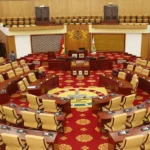
The National Assembly should also demand a briefing from the service chiefs on the rescue operation and investigate why communities in Borgu and other vulnerable parts of Niger State remain exposed to repeated attacks.
For those who have crossed into Benin Republic, the Nigerian and Beninese authorities should establish a coordinated humanitarian response covering shelter, food, healthcare, family tracing and eventual safe return.
The Office of the National Security Advisor should also establish a national abduction victim register with clear reporting timelines, because a country that cannot quickly say who has been taken cannot convincingly say it is in control of the crisis.