





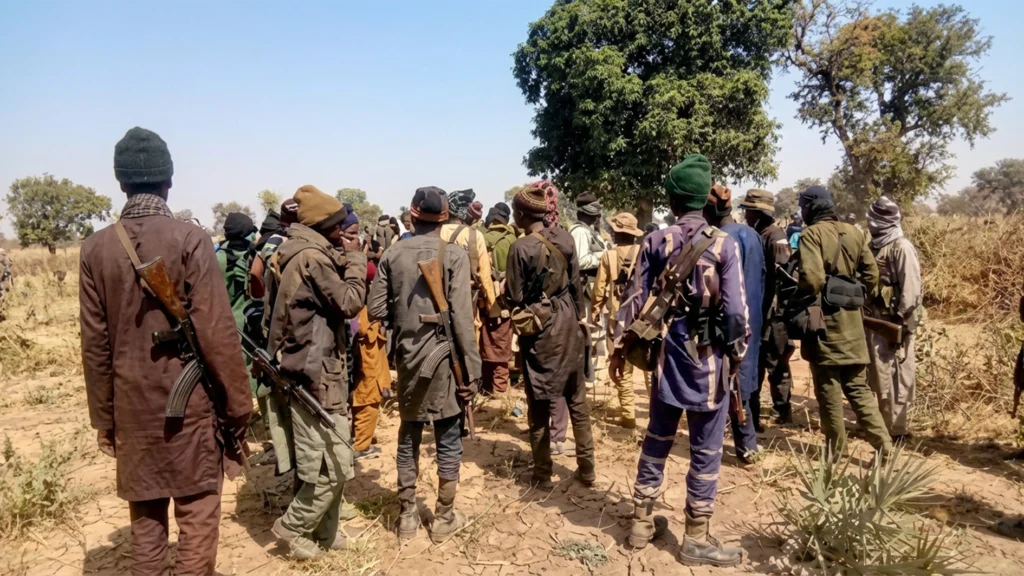
Bandit attacks are driving rural families across Sokoto out of their homes while the government keeps no clear record of who was displaced, what they lost or what they need to rebuild their lives.
Development Diaries reports that residents of Ungushi and neighbouring Gwandi fled to Kebbe town on the night of 15 August after armed men attacked their communities, rustling more than 300 cattle and seven camels and leaving at least two men receiving treatment for gunshot wounds.
Women, children and elderly people were among those who fled, with many spending the night in the rain, but no official figure has been published for the number of people displaced or the livestock lost in the attack.
More than 77 people were killed in separate bandit attacks across Sokoto between 29 June and 04 August, with Sabon Birni, Rabah, Bodinga and other local government areas recording killings, abductions and livestock rustling.
In Tsamaye, Sabon Birni, at least 21 people were killed and 37 abducted in an overnight attack that residents said came less than a week after another assault. Residents also said security personnel in the area admitted they lacked the equipment to confront the attackers despite receiving warnings.
Rabah has suffered similar losses, with residents of Gandi and Maikujera reporting more than N250 million in losses in a single day after attackers arrived on about 200 motorcycles and drove away more than 1,500 cattle.
There is no published figure showing how many households were displaced, no publicly announced shelter allocation and no clear mechanism for verifying and compensating livestock losses.
Families who arrived in Kebbe after fleeing at night and sleeping in the rain are therefore left without the records that would make them visible to government assistance.
That responsibility is split among the Office of the National Security Advisor (NSA) and Operation Fansan Yamma, the Sokoto State government, the State Emergency Management Agency, and the National Emergency Management Agency (NEMA).
The Sokoto State Police Command also owes residents an explanation, as attempts to obtain a response on the Kebbe attacks reportedly went unanswered, leaving communities to deal with the consequences while the public is left without an official account of what happened.
Section 14(2)(b) of Nigeria’s constitution places the security and welfare of citizens at the centre of government’s purpose, while the Kampala Convention requires states to register and assist internally displaced people and protect them from arbitrary displacement.
That responsibility becomes particularly important for women, children and older people who are often the first to suffer when a household is forced from its home and loses its main source of income.
Girls can pay another price when cattle that would have financed their education are stolen. In communities where livestock help pay school costs, losing the herd can quickly become a decision about which children remain in school.
Older people and persons with disabilities face an even greater risk of disappearing from the record because those who cannot flee quickly may never make it to the town where officials begin to count displaced residents.
The response should therefore begin with making the displaced visible. Households in Kebbe should register collectively through their district head with the Sokoto State Emergency Management Agency and demand a written record of the number displaced, the shelter available and the assistance provided.
Community associations, faith organisations and journalists can reinforce that demand by asking NEMA for the current number of registered internally displaced people in Sokoto and the date that figure was last updated, then comparing it with documented attacks since June.
As for the Defence Headquarters, it should report the number of women and girls rescued and the medical, psychosocial and reintegration support provided to them, while the Sokoto State government should develop a livestock-loss verification and compensation scheme with a clear budget and published criteria.
The cross-border nature of the attacks also demands a joint response from the Office of the NSA, Sokoto, Zamfara and Kebbi security authorities to address the movement of armed groups across their borders and publicly respond to residents’ claims that deployed security personnel lack adequate equipment.
When people flee their homes, lose their livestock and spend the night in the rain without appearing in any government register, they remain invisible to the assistance and compensation systems meant to support them.