


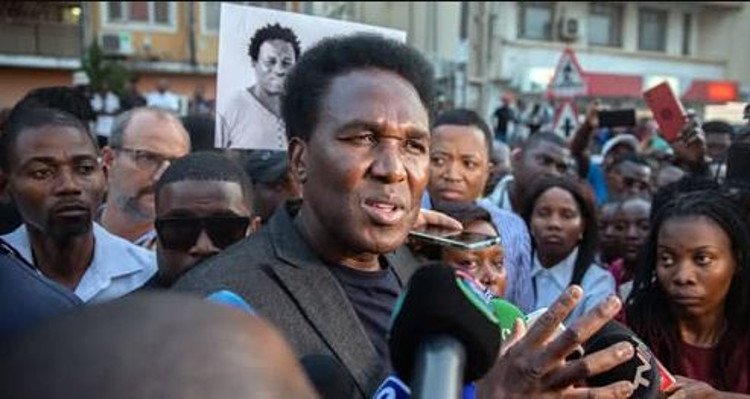
More than 300 people were killed in Mozambique’s post-election protests, but the country’s most prominent prosecution from the crisis is against the politician who says he won the election.
Development Diaries reports that Mozambican opposition politician Venâncio Mondlane is preparing to face trial before the Supreme Court over five charges linked to protests that followed the disputed October 2024 presidential election.
Prosecutors accuse him of public advocacy of crime, incitement to collective disobedience, public instigation to a crime, instigation to terrorism and incitement to terrorism, allegations he denies.
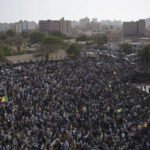
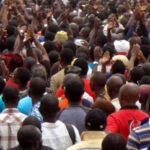
Mondlane, who finished second to ruling party candidate Daniel Chapo, rejected the result and claimed he had won, triggering months of protests in which more than 300 people were killed.
He left Mozambique after the election before returning in January 2025 and later met Chapo as part of efforts to address the political crisis. He subsequently joined the Council of State, but his immunity was suspended to allow the prosecution to proceed.
That sequence raises a question Mozambique cannot answer with another political meeting. Why has a crisis that left more than 300 people dead produced a prosecution of the opposition candidate without a comparable public account of who ordered or carried out the lethal response?
The three ordinary charges against Mondlane concern public order and political mobilisation, but the two terrorism charges change the character of the case.
Mozambique has an actual armed insurgency in Cabo Delgado, where its counter-terrorism framework is directed at organised violence. Applying the same framework to a politician accused of mobilising supporters after a disputed election risks turning political protest into a security offence and gives the state the heavier powers that come with terrorism proceedings.
Once that approach is accepted, it does not remain attached to one politician, as the next opposition figure, protest organiser or election challenger can inherit the precedent.
The Attorney-General has not publicly provided a clear account of how many investigations were opened, officers charged or cases were concluded. The public record instead has one highly visible prosecution arising from the crisis, and its defendant is the opposition candidate.
Mozambique’s constitution protects freedom of expression, assembly and demonstration, as well as the right to a fair trial. Article 9 of the African Charter on Human and Peoples’ Rights protects freedom of expression, while Article 11 protects peaceful assembly and Article 7 guarantees fair-hearing rights.
The African Commission’s Principles and Guidelines on Human and Peoples’ Rights while Countering Terrorism in Africa require counter-terrorism measures to be necessary and proportionate and warn against using terrorism laws to suppress legitimate political dissent or peaceful assembly, while the African Charter on Democracy, Elections and Governance also commits states to human rights, political pluralism, the rule of law and judicial independence.
While Mondlane’s trial takes centre stage, the families of those killed remain largely outside the story. More than 300 deaths have not produced a public victim register, compensation framework or clear schedule of entitlements.
Families that lost income earners have had to absorb those losses themselves, while women often carry the burden of caring for children, managing households and pursuing answers about relatives who were killed.
Those injured during the protests face another gap. Permanent disabilities caused by gunfire or other violence should produce rehabilitation and compensation, but there is no published national count showing how many survivors were injured or what assistance they have received.
The institutions responsible for addressing these issues are the Attorney-General’s Office, the Supreme Court, the police command, while the African Commission and Southern African Development Community (SADC) have regional responsibilities on human rights and electoral accountability.
The Attorney-General should publish the number and status of investigations into the more than 300 deaths. If investigations exist, the public should see their progress. If they do not, Mozambique should explain why the people killed during the crisis have received less investigative attention than the politician accused of fuelling it.
Legal organisations should seek observer status at the Supreme Court and publish proceedings summaries in Portuguese and local languages, with human rights groups compiling a public register of those killed, including their names, dates, locations and case status, so that ‘more than 300’ becomes a list of people rather than a statistic.
Families of victims should also be supported to document deaths, injuries and unresolved cases and take complaints to the African Commission, with disability organisations documenting survivors with permanent injuries and pressing for their inclusion in any future reparations programme.
As for the government, it should publish the status of every investigation into the post-election deaths before Mondlane’s trial concludes and establish a victim register and compensation framework within 90 days, while the African Commission should seek a state response on Mozambique’s use of counter-terrorism legislation against post-election political mobilisation.
The SADC, on its part, should publish a follow-up assessment of the deaths and accountability for them.