


Ghana’s new auditor-general takes office at a time when citizens are asking whether corruption investigations will follow the evidence or political affiliation.
Development Diaries reports that President John Mahama has sworn in Pamela Graham as Ghana’s new Auditor-General, describing accountability as a constitutional duty rather than a matter of political choice.
The president has also maintained that his government’s anti-corruption campaign is based on evidence and due process, not political vendetta, and will apply equally to members of his own administration.
Those assurances come as political rhetoric intensifies, with the government vowing to confront what it describes as acts of sabotage against its Reset Agenda.
Together, those developments place Ghana’s oversight system under fresh scrutiny because the country is testing whether an anti-corruption campaign can remain credible once politics enters the equation. A campaign that appears to target only political opponents quickly loses public trust, while one that shields allies loses its legitimacy. In both cases, citizens pay the price.
The stakes reach beyond arrests, as Ghana is emerging from a difficult economic period under the government’s Reset Agenda, which it says has financed major infrastructure through the Big Push programme without taking on new commercial borrowing. Whether public resources are protected, recovered and redirected to development depends on audit findings being trusted, enforced and applied consistently.
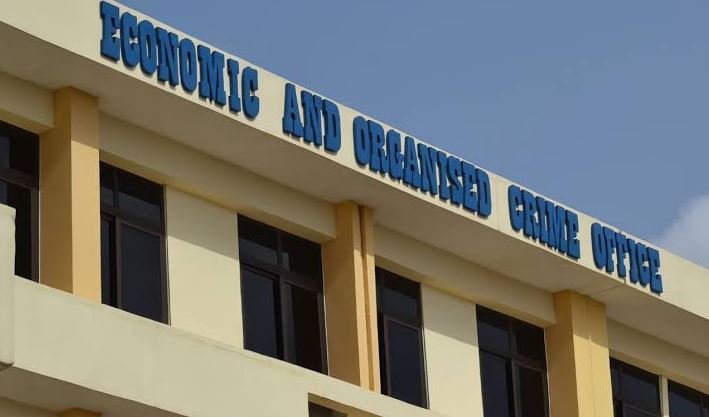
Responsibility rests with the Ghana Audit Service under the new auditor-general, the Economic and Organised Crime Office (EOCO), the Office of the Special Prosecutor and the Executive, which must protect these bodies from interference rather than direct their work.
Article 187 of Ghana’s constitution establishes the Office of the Auditor-General as an independent institution responsible for auditing public accounts, while other constitutional provisions require public officers to manage state resources in the public interest. That independence is fundamental because an auditor-general who answers to politicians instead of the Constitution cannot effectively safeguard public funds.
The people with the greatest stake in credible oversight are low-income families whose access to healthcare, education and other public services depends on whether public money reaches its intended destination. Every cedi recovered through audits matters only if it improves lives instead of producing headlines and political victories.
Citizens and civil society organisations should monitor prosecutions to determine whether investigations apply equally to government officials and political opponents, while also demanding public disclosure of how recovered public funds are spent.
The auditor-general should publish an annual dashboard showing the status of every major audit finding and the action taken on each one, while the executive should publicly guarantee the operational independence of EOCO and the Office of the Special Prosecutor by shielding both institutions from political direction.