
Nigeria’s budget cannot claim to fight poverty while spending priorities continue to ignore where the country’s deepest needs actually exist.
Development Diaries reports that the federal government has earmarked about N962.83 billion in the 2026 Appropriation Act for Sport Utility Vehicles (SUVs) and various empowerment programmes, while opposition figures have also questioned an additional N22 billion allocated to what they describe as unconstitutional palace projects and demanded that the identities of the beneficiaries be made public.
Those allocations come on top of another concern that goes beyond the figures themselves. Agencies with no mandate for infrastructure reportedly received funding to construct roads, classrooms, hospitals, solar streetlights, electricity projects and distribute motorcycles.
They include the Institute of Peace and Conflict Resolution, the Nigerian Press Council, the National Root Crops Research Institute and the New Partnership for Africa’s Development Office. Assigning projects to institutions without the technical responsibility or capacity to deliver them weakens accountability and increases the likelihood of abandoned or poorly executed projects.
The issue here is how public money is matched to public need and to institutions capable of delivering results. That system has repeatedly failed because projects are often inserted during the appropriation process and eventually signed into law even when they do not align with the mandates of the agencies expected to implement them.
This practice has survived successive administrations, with former President Olusegun Obasanjo rejecting the 2000 Appropriation Bill over inflated expenditure, while President Goodluck Jonathan resisted increases introduced by the National Assembly in 2011.
More than two decades later, the same concerns continue to resurface.
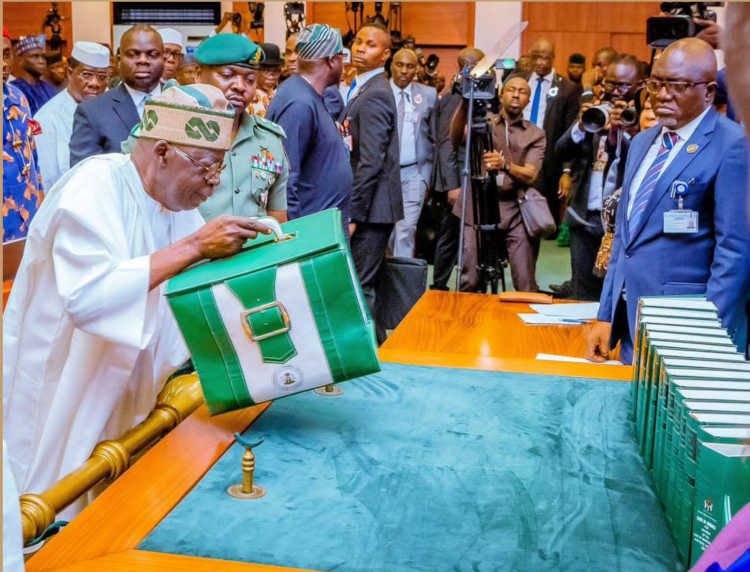
Responsibility rests with the Budget Office of the Federation, which prepares the estimates, the National Assembly appropriation committees that alter and approve them, and the executive, which signs the final Appropriation Act.
Each plays a distinct role in producing a budget that allocates billions for vehicles and discretionary projects while communities continue to struggle with underfunded health, education and nutrition services.
Chapter Two of Nigeria’s constitution directs the state to provide adequate healthcare, improve food security and promote education for all citizens. Those constitutional objectives should shape national spending priorities.
The consequences fall hardest on those already living at the margins. Roads, schools and health facilities promised to rural communities remain undelivered when they are assigned to agencies that cannot build them. Empowerment funds, often criticised for lacking transparency, seldom reach the poorest women and young people they claim to support.
Persons with disabilities continue to face inaccessible schools and healthcare facilities because essential infrastructure gives way to politically convenient spending. During one of Nigeria’s most severe hunger crises in recent years, those choices carry real human costs.
Citizens should use public budget-tracking platforms such as BudgIT to identify questionable allocations in their states, petition their representatives over projects assigned to agencies without implementation capacity, and demand that the National Assembly publish the beneficiaries of the N22 billion palace-project allocation.
The National Assembly should reassign infrastructure projects to agencies with the legal mandate and technical capacity to execute them before the next quarterly release of funds, while the Bureau of Public Procurement (BPP) should refuse approval for contracts awarded to institutions that lack the authority or expertise to deliver the projects assigned to them.