






A minister in Zimbabwe has finally admitted that the country’s elections have been compromised, and the response now on the table is to stop citizens from voting for a president altogether.
Development Diaries reports that the Justice Minister, Ziyambi Ziyambi, recently told parliament that the country’s elections had repeatedly been affected by rigging and violence and that public trust in presidential election outcomes had been seriously undermined, an admission that immediately set the tone for a controversial legislative push rather than a reform agenda.
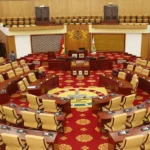
What followed that statement was the introduction of Constitutional Amendment Bill Number 3, which extends the tenure of President Emmerson Mnangagwa, parliament and local authorities by two years, shifts the next general election from 2028 to 2030, and replaces direct presidential elections with a system in which members of parliament elect the president instead of citizens.
What is being proposed is therefore a structural redesign of how power is transferred in the country, and it is being justified using the same elections that have just been described as compromised.
What the bill actually does
At its core, the Constitutional Amendment Bill removes the direct link between citizens and the presidency by transferring the power to elect the head of state from voters to parliament, while also extending the current political term by two years, effectively postponing the next opportunity for a national vote.
Under the current arrangement, Zimbabweans vote directly for their president, but under the proposed amendment that responsibility shifts to parliament, where the ruling ZANU-PF already holds a two-thirds majority, a majority built through electoral processes that the same minister has now publicly questioned.
Introduced in the lower house on 03 June, 2026, the bill, with the existing parliamentary arithmetic, can pass without opposition support, leaving the Senate and the Constitutional Court as the remaining institutional checkpoints before it becomes law.
The opposition’s response
Former opposition leader Nelson Chamisa responded by arguing that the minister’s admission confirmed long-standing opposition claims that Zimbabwe’s elections have been fundamentally flawed, insisting that electoral victories have already been secured by the opposition and would be secured again under free conditions.
The government’s position, however, is framed as a justification for redesigning the system itself, arguing that repeated electoral contestation has become disruptive to governance and national stability, a framing that now sits at the centre of the legislative push.
The tension between these positions creates a critical civic dilemma, because the acknowledgement of electoral flaws is being used to argue for removing direct elections altogether, leaving citizens to interrogate whether accountability is being repaired or replaced.
Constitutional question that determines everything
The immediate legal question now before Zimbabwe’s Constitutional Court is whether the proposed amendment requires a national referendum, particularly given that it alters the method of selecting the president, a foundational element of democratic participation.
The court’s decision will determine whether the bill proceeds through parliament alone or whether citizens themselves are required to approve such a fundamental constitutional change, and that ruling is expected in the coming days, placing the country on a compressed legal timeline.
If the amendment is approved and not blocked, it is expected that President Mnangagwa will sign it into law before the end of June 2026, effectively resetting the electoral calendar and embedding parliamentary selection of the president into the constitutional framework ahead of the 2030 cycle.
How the system works (and why it fails)
The failure exposed by this process is that the mechanisms designed to safeguard democratic standards in Southern Africa have largely remained observational rather than enforceable.
The Southern African Development Community (SADC) deployed election observers in 2023 and noted concerns about electoral standards, but no binding corrective action followed, while continental mechanisms under the African Union have similarly documented issues without triggering enforcement measures.
This has created a political environment in which electoral credibility concerns can be acknowledged without necessarily producing institutional consequences, allowing constitutional redesigns of this magnitude to proceed with limited external pressure.
What the law already says
Zimbabwe is a signatory to both the African Charter on Human and Peoples’ Rights and the International Covenant on Civil and Political Rights, both of which guarantee citizens the right to participate in genuine periodic elections through universal and equal suffrage.
A system that replaces direct presidential elections with parliamentary selection under conditions where electoral credibility has already been questioned raises immediate rights concerns, because it shifts political choice away from citizens and concentrates it within an already dominant legislative structure.
The question is therefore constitutional in the broader human rights sense, because it touches the core of how political legitimacy is generated and exercised.
Who pays the price
Women and young people stand to be most affected by any narrowing of direct electoral participation, particularly in contexts where political representation is already uneven and where civic participation depends heavily on the openness of electoral systems.
Women’s civil society organisations, which have played key roles in documenting governance concerns and advocating for electoral transparency, often operate in environments where political pressure and surveillance risks are already present, making any reduction in democratic space more consequential.
Young Zimbabweans, who form the majority of the population, face the additional implication of having their first or second opportunity to directly vote for a president potentially removed from the constitutional process altogether, while rural communities would also experience a further concentration of political decision-making within elite legislative structures.
What needs to happen
For citizens, the immediate task is to engage both domestic and regional accountability mechanisms by documenting parliamentary proceedings, submitting formal petitions to regional human rights bodies, and demanding clarity from elected representatives on their position regarding the proposed amendment before it advances further.
For institutions, the SADC and the African Union should move beyond observation and issue formal, time-bound legal and political assessments of the proposed amendment, while Zimbabwe’s Constitutional Court carries the responsibility of determining whether such a fundamental change can proceed without direct public approval.
The outcome of this process will ultimately shape Zimbabwe’s electoral system, signaling how far constitutional change can go when electoral credibility itself becomes part of the justification for rewriting how elections are held.
Photo source: Presidential Executive Office of Russia