


The architects of the global aid system are slowly removing the pillars, and everyone else is being asked to admire the building while it shakes.
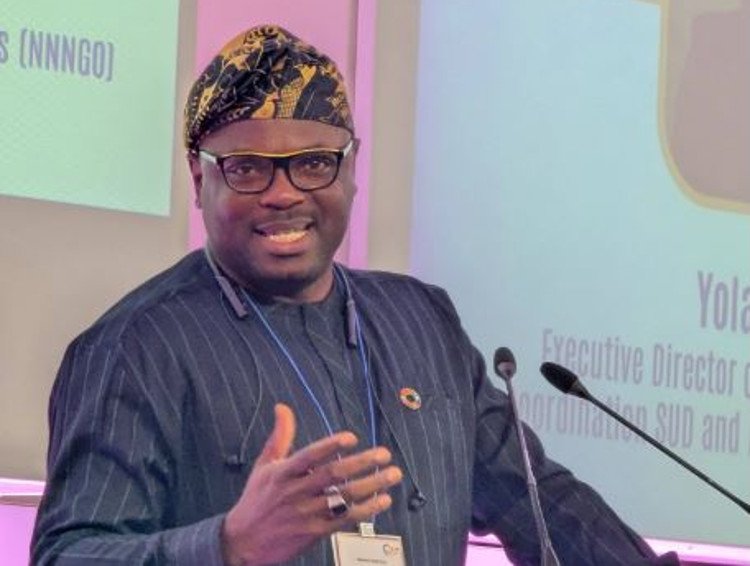
Development Diaries reports that the shift became more visible recently in Paris when the Nigeria Network of NGOs (NNNGO) Executive Director, Oluseyi Oyebisi, used the Civil 7 Summit platform to directly challenge G7 governments, arguing that global civil society is no longer asking for charity but for justice as aid budgets shrink, multilateral institutions weaken, and civic space tightens across regions, including Africa.
The moment captured a growing frustration among civil society organisations that the global development system they once worked within is changing shape without their consent and in ways that are now directly affecting their ability to function.
What Civil 7 Summit is and why this year felt different
The Civil 7 is the civil society engagement platform that feeds into the G7 process each year, giving NGOs from member and partner countries a chance to shape recommendations for global leaders. It is advisory, not binding, but it has traditionally been treated as an important space for dialogue between governments and civil society.
However, in 2026, the tone in Paris was noticeably sharper, as Oyebisi told participants that this year’s summit was a test of whether the G7 still believes in multilateralism beyond rhetoric, especially at a time when donor governments are scaling back commitments they have repeatedly signed up to in principle.
That concern is rooted in recent developments associated with the dismantling of USAID in 2025 that removed tens of billions of dollars annually from global development funding.
European donor countries have also reduced aid budgets, leaving major gaps in health, education, and humanitarian programming across Africa. At the same time, civil society organisations in multiple regions report increasing restrictions on how they operate, from funding controls to legal and digital surveillance measures.
For Nigerian civil society, organisations that rely on international funding for health and community programmes are already adjusting to reduced support while also operating in a domestic environment where civic space remains uneven.
The substance of the demand
The NNNGO used the platform to highlight four main concerns that civil society says define the current global moment.
The first is the decline in Official Development Assistance commitments, particularly the erosion of the long-standing 0.7 percent gross domestic product target. While the target is still referenced in global meetings, actual spending by most G7 governments has fallen below it in 2026, creating gaps that are visible in health systems, education programmes, and humanitarian response structures in countries like Nigeria.
The second concern is what civil society describes as the selective enforcement of international law, with the argument being that when global powers apply rules inconsistently, depending on political alliances or strategic interests, it weakens the credibility of those same rules when civil society actors use them to demand accountability in their own countries.
The third is shrinking civic space, as governments that publicly support civil society globally are, at the same time, maintaining relationships with states that restrict NGO operations, regulate funding flows, and criminalise certain forms of civic engagement. Civil society leaders say this contradiction weakens the protection framework they depend on.
The fourth concern is governance of global financial institutions, with civil society groups calling for reforms to institutions like the International Monetary Fund and the World Bank, arguing that African countries, which are heavily affected by their policies, do not have proportional influence in decision-making structures that shape debt, financing, and economic policy conditions.
Why NNNGO speaking at C7 matters
NNNGO’s presence at the opening session mattered because many of the pressures facing Nigerian civil society no longer originate only in Nigeria. Funding cuts abroad, changing aid priorities, and decisions taken in global financial institutions now affect local organisations as directly as decisions made in Abuja.
In that context, speaking in Paris is both about international visibility and recognising that decisions taken in global policy rooms are already shaping realities in local communities, from health programmes to civic freedoms.
The substance of the demands
NNNGO used the Paris platform to press G7 governments on four issues it believes can no longer be postponed. The organisation called for a return to long-standing aid commitments, including the target of allocating 0.7 percent of national income to development assistance.
It also urged governments to do more to protect civic space, warning that civil society organisations in many countries are increasingly operating under legal, financial, and political pressure.
Beyond that, it renewed calls for reforms to global financial institutions whose decision-making structures continue to give African countries limited influence despite the impact those institutions have on their economies.
NNNGO also argued that civil society organisations need more predictable and flexible funding, rather than short-term project grants that disappear long before the problems they are meant to address have been solved.
What citizens are expected to do with this
Civil society groups are now pushing for the public to track how global decisions translate into local outcomes, especially in areas like health, education, and civic space, where funding and policy shifts are immediately felt.
Citizens are also being encouraged to engage their own organisations and representatives to demand clarity on how international commitments are being implemented or ignored.
At the institutional level, the G7 governments are being asked to move beyond statements of solidarity and into measurable action on aid commitments, civic space protections, and financial governance reform.
The speeches in Paris celebrated global solidarity. The communities dealing with aid cuts, shrinking civic space, and underfunded public services will ultimately decide whether that solidarity still exists.
Photo source: NNNGO