


Women who survived conflict-related sexual violence in eastern Democratic Republic of Congo (DRC) have spent more than two decades collecting promises while the compensation they were promised continues to miss every appointment.
Development Diaries reports that the Congolese government recently established the Council for the Examination of Atrocities in the DRC, an advisory body bringing together senior Congolese and international legal experts to support the country’s pursuit of accountability and reparations for victims of atrocities committed during the conflict in the east.
The council, co-chaired by Congolese human rights activist Julienne Lusenge and former International Criminal Court judge Howard Morrison, will advise two state institutions responsible for advancing accountability and reparations for survivors.
Recognition has never been Congo’s biggest problem; payment has.
For years, survivors have appeared in reports, testified before commissions, spoken to investigators and been cited in international resolutions, with every new institution promising to move justice forward; yet many women who survived rape during the conflict are still waiting for compensation.
At this point, eastern Congo has almost as many mechanisms as it has unmet expectations.
That is why the success of the new council will be measured by whether survivors finally receive compensation they can actually use to rebuild their lives.
Congo already has a legal framework for reparations, with a national fund for victims of conflict-related sexual violence and other serious international crimes established by law in 2022 and becoming operational the following year.
The latest announcement therefore adds another institution to a system where the biggest gap has never been recognising victims but compensating them, and the conflict in eastern Congo continues to make that failure more expensive.
Fighting in eastern Congo has intensified over the past year as the AFC/M23 rebel group expanded its control across parts of North Kivu and neighbouring provinces. Millions have already been displaced or killed over decades of violence fuelled by armed groups and competition over mineral resources.
Women living in those same communities are now confronting another emergency.
Ituri Province, one of the regions affected by the conflict, is also battling an Ebola outbreak that has placed additional pressure on an already fragile health system.
Maternal deaths have reportedly doubled during the outbreak as fear, insecurity and collapsing healthcare services push more women to deliver babies outside health facilities.
Those waiting for reparations are often the same women now struggling to survive childbirth because hospitals and clinics around them never recovered from the wars that created the need for compensation in the first place.
Compensation requires money approved by parliament, released by government and paid to identified survivors, and advisory councils cannot transfer funds into bank accounts.
The delay also reflects how international attention often works. New institutions attract headlines while budget releases rarely do, meaning another mechanism generates diplomatic applause whereas quietly compensating survivors seldom attracts the same level of international interest, even though compensation is the entire point of the exercise.
International law leaves little room for ambiguity. The United Nations Basic Principles on the Right to a Remedy and Reparation recognise victims’ right to prompt and effective compensation. The Maputo Protocol obliges states to protect women affected by armed conflict, while the Rome Statute established a Trust Fund for Victims whose resources have never come close to matching Congo’s enormous caseload.
The consequences fall on people who have already paid the highest price, with women who survived conflict-related sexual violence continuing to bear medical costs, social stigma and the loss of livelihoods years after the violence occurred.
Many have also raised children born of rape without state support, while others live with permanent disabilities that make registration for assistance even more difficult because services rarely reach the communities where they now live.
Julienne Lusenge’s appointment gives the new council credibility among survivors because she has spent decades documenting abuses and advocating for women affected by the conflict.
That credibility now places an even greater responsibility on government to ensure the council becomes more than another well-written chapter in Congo’s long history of unfinished justice.
Parliament should create a dedicated reparations budget line in the country’s next finance law and publish a timetable showing when payments will begin.
The Ministry of Justice should also make public the council’s terms of reference, identify the institutions it advises and disclose how many survivors have already been registered for compensation.
Donor governments supporting accountability efforts should equally explain how much of their funding reaches survivors directly rather than remaining within institutions.
After more than 20 years of waiting, survivors in eastern Congo have earned more than another promise of justice.
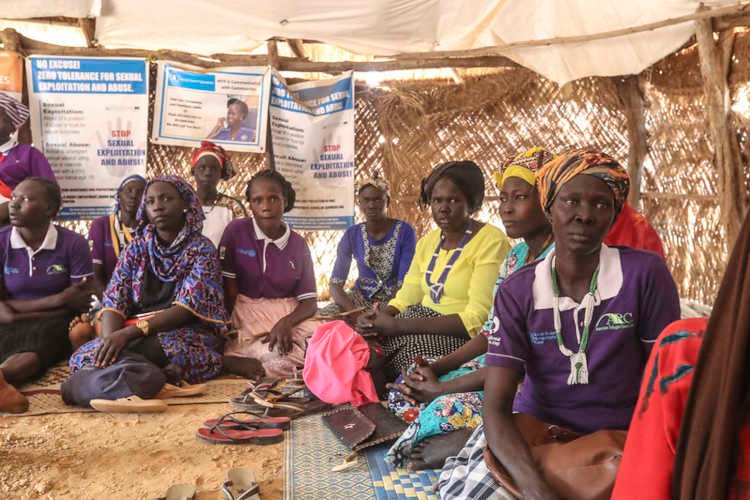
Photo source: UNMISS