



The Independent National Electoral Commission (INEC) proposing to test the reliability of its election technology before the 2027 general election without making provision for it in its budget raises concerns because election integrity is far cheaper to verify before citizens cast their ballots than after the results become disputed.
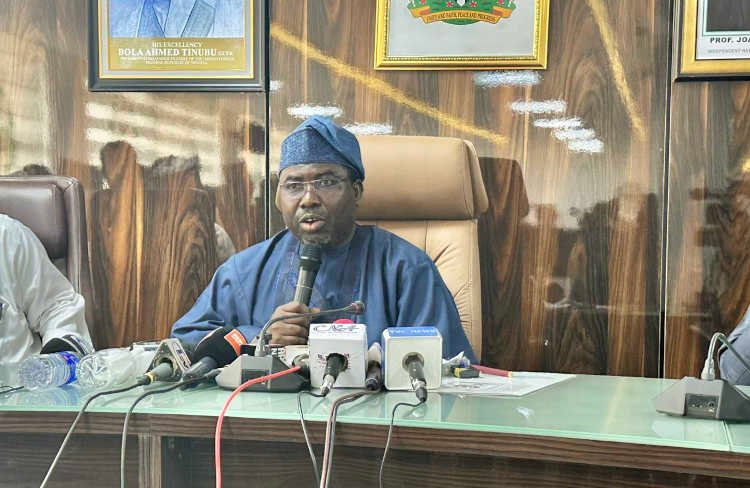
Development Diaries reports that the INEC Chairman, Joash Amupitan, recently disclosed during a meeting with the British High Commissioner to Nigeria, Richard Montgomery, that the commission is considering a mock presidential election and a comprehensive audit of its electoral technology systems before the 2027 polls.
He also revealed that neither exercise is included in INEC’s current budget.
That disclosure matters because Nigeria’s recent election controversies have centred less on ballot papers than on whether the systems supporting elections worked as expected.
Questions about the Bimodal Voter Accreditation System (BVAS), uploads to the INEC Result Viewing Portal (IReV) and cybersecurity have dominated post-election litigation and public debate.
A mock presidential election and an independent technology audit are intended to answer those questions before another nationwide election takes place rather than after another disputed outcome.
The problem is that integrity tests require funding before they can strengthen public confidence.
According to Amupitan, INEC intends to explore ways of implementing both exercises because of their potential to improve confidence in the electoral process.
He also said the commission is reviewing its cybersecurity architecture, including system redundancy, penetration testing and disaster recovery, while continuing to deploy BVAS and IReV.
Those plans come after another real-life test of Nigeria’s electoral system.
During the Ekiti State governorship election held on 20 June, 2026, INEC recorded 988,251 registered voters, with 384,940 accredited and 382,109 votes cast. Governor Biodun Oyebanji of the All Progressives Congress (APC) won with 319,224 votes, while the Peoples Democratic Party’s (PDP) Olumayokun Oluyede secured 40,533 votes.
INEC also reported that results from 2,379 of the state’s 2,445 polling units had been uploaded to IReV by 4 p.m., representing a 97.75 per cent upload rate.
The technology largely worked, but the bigger integrity questions came from what happened around it.
Election observers documented widespread vote-buying across several local government areas, including the collection of Permanent Voter Card and National Identification Number details in exchange for cash and food items.
Civil society organisations working under the European Union Support to Democratic Governance in Nigeria programme described the election as an important indicator of how the Electoral Act 2026 would perform ahead of the 2027 general election.
With fewer than four out of every ten registered voters participating in the election, the question now is whether Nigeria is willing to invest in testing the systems it expects citizens to trust.
INEC can identify the integrity measures it considers necessary, but only the National Assembly can appropriate the money required to implement them. At present, there is no publicly known process requiring lawmakers to respond within a defined period whenever the commission identifies new integrity safeguards requiring funding.
That leaves every proposed reform at the mercy of budget negotiations rather than electoral necessity.
Nigeria’s constitution states that sovereignty belongs to the people and requires government to abolish corrupt practices. The Electoral Act 2026 criminalises vote-buying and other forms of electoral inducement, while the African Charter on Democracy, Elections and Governance requires member states to strengthen independent electoral institutions and ensure transparent elections.
Those commitments become difficult to demonstrate when an electoral commission cannot finance the very exercises it considers necessary to verify its own systems before a national election.
The consequences also do not fall equally, as communities with weak internet connectivity have historically experienced slower publication of election results online, leaving voters with fewer opportunities to verify what happened at their polling units.
Persons with disabilities face another gap because while INEC has introduced accessibility measures over the years, the proposed technology audit does not yet include any publicly announced assessment of whether polling units remain accessible to voters living with disabilities.
The National Assembly should therefore make funding for both the mock presidential election and the independent technology audit part of the 2027 budget.
INEC should also publish a detailed implementation plan, including timelines, estimated costs and the scope of the proposed audit, while ensuring that accessibility standards form part of the assessment.
The Nigeria Police Force should equally publish the number of arrests and prosecutions arising from documented vote-buying during the Ekiti governorship election.