



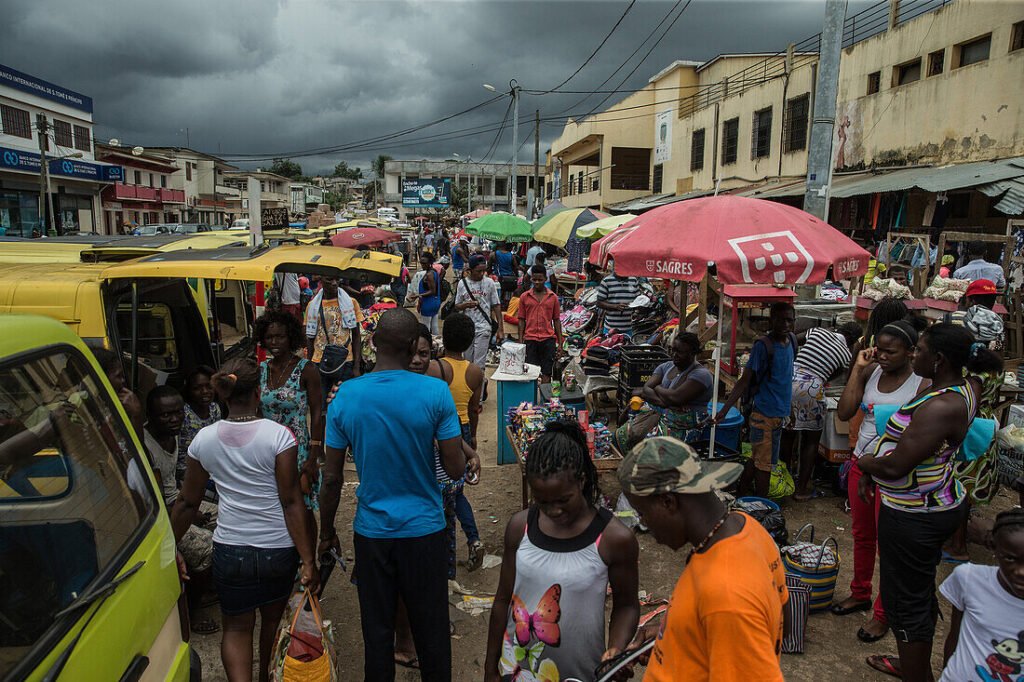
Africa has become so accustomed to hearing about disputed elections that credible ones now pass almost unnoticed.
Development Diaries reports that about 240,000 voters in São Tomé and Príncipe participated in last Sunday’s presidential election, in what will be the country’s eighth presidential election since the return to multiparty democracy, while its electoral system continues to rank among the continent’s freest for political participation, independent media and civic engagement.
African newsrooms, including ours, devote far more attention to coups, election violence, corruption and constitutional crises than to democratic institutions that actually work.
That imbalance distorts how citizens see governance across the continent, making institutional failure appear normal while credible elections receive little attention, even when they offer practical lessons for countries still struggling to build public trust in democracy.
São Tomé and Príncipe tells a different story. The country’s National Electoral Commission operates independently through appointments made by the National Assembly, opposition parties compete openly, journalists cover campaigns without fear of intimidation, and civil society organisations participate in the electoral process without being treated like enemies of the state.
Those are the same standards many African governments promise during election seasons, except São Tomé has quietly turned them into routine practice.
That record does not mean the country is free from security challenges, as four people were killed during an apparent coup attempt in November 2022, reminding citizens that democratic institutions require constant protection rather than permanent celebration.
Its location in the Gulf of Guinea also exposes it to maritime insecurity, organised crime and trafficking routes stretching from Latin America to Europe, prompting security cooperation with neighbouring countries, Portugal, the European Union and the United States.
Those realities, however, make Sunday’s election more significant, not less, because institutions demonstrate their strength when they continue functioning despite pressure rather than only during peaceful periods.
The larger governance failure lies within much of Africa’s information ecosystem, where institutional failure consistently attracts more attention than institutional success.
Newsrooms readily dispatch reporters when elections collapse but rarely when electoral commissions quietly do exactly what citizens expect them to do, leaving democratic success stories buried beneath an endless cycle of political crises.
Democracy has therefore become like electricity in many African countries.
That imbalance carries political consequences as citizens measure expectations partly through what they repeatedly see. When every election headline comes attached to violence, fraud or constitutional controversy, people gradually lower their expectations of what democratic governance should look like.
Governments benefit from those reduced expectations because citizens stop demanding institutions capable of delivering something better.
Article 13 of the African Charter on Human and Peoples’ Rights guarantees every citizen the right to participate freely in government, while the African Charter on Democracy, Elections and Governance requires states to establish independent and impartial electoral bodies.
São Tomé’s experience demonstrates that those commitments are not merely legal aspirations tucked away inside continental agreements; they can operate in practice under African institutions with limited resources but sufficient political commitment.
Population size cannot explain away electoral failures when one of Africa’s smallest nations continues organising competitive elections under conditions many bigger states claim are impossible to achieve.
Limited resources cannot permanently excuse weak institutions when a country of roughly 240,000 people repeatedly demonstrates that independence, transparency and public confidence are products of political choices as much as financial capacity.
African citizens should not allow functioning democracies to disappear beneath headlines about failing ones because examples of success often provide stronger accountability tools than endless catalogues of failure. It becomes much harder for governments to argue that credible elections cannot happen when another African country continues proving otherwise.
African newsrooms also owe citizens a more balanced democratic record by reporting functioning institutions with the same seriousness devoted to institutional collapse.
Accountability journalism should expose failure wherever it exists, but it should also document governance models worth replicating because reform becomes easier when citizens know successful African examples already exist.
Electoral commissions across the continent should study the institutional protections supporting São Tomé’s National Electoral Commission, while the African Union and the Association of African Electoral Authorities should actively document and circulate such examples instead of allowing democratic success stories to remain local knowledge.
Africa cannot build stronger democratic institutions if its own citizens rarely hear about the ones already working.
Photo source: Lookphotos /Jorda Christoph