



Nigeria cannot continue losing $2.5 billion every year to malnutrition while failing to account for the public money budgeted to prevent it.
Development Diaries reports that participants at the 2026 Strategic Policy Dialogue on Strengthening Legislative Action for Improving Nutrition in Lagos have been told that the country loses an estimated $2.5 billion annually to malnutrition, as lawmakers and development partners renewed calls for the speedy passage of the proposed National Nutrition Bill.
The figure is staggering, but it should surprise no one because Nigeria’s nutrition crisis has never been about a lack of policies or promises.
What should concern citizens even more is that approved nutrition budgets often disappear into the gap between appropriation and cash release, while nobody consistently publishes that gap for citizens to see.
The Lagos dialogue ended with participants agreeing to strengthen legislative oversight, institutionalise nutrition champions in parliament, improve budget tracking, organise regular accountability sessions and push for increased domestic financing alongside the passage of the National Nutrition Bill.
Those recommendations arrive as the World Food Programme (WFP) warns that more than 17 million people across northern Nigeria face worsening hunger, showing that the demand for nutrition interventions continues to outpace the country’s ability to deliver them.
Government has also shifted attention to local implementation. Vice President Kashim Shettima recently urged local government chairmen to drive the Nutrition 774 Initiative across Nigeria’s 774 local government areas, arguing that councils are closest to the communities where malnutrition is most severe.
Assigning implementation to local governments makes practical sense, but assigning responsibility without guaranteeing financing and public reporting simply relocates the problem. Local councils remain the weakest tier of government in fiscal transparency, making it difficult for citizens to know how much nutrition funding reaches communities or how it is spent.
The absence of the National Nutrition Bill compounds that weakness because nutrition still relies largely on policy rather than law.
Nigeria’s constitution directs government to provide adequate health facilities for citizens, while the Child’s Rights Act requires government to protect every child’s survival and development.
The country has also committed itself through international agreements, including the International Covenant on Economic, Social and Cultural Rights and the African Union’s Malabo Declaration, to improve nutrition and reduce hunger.
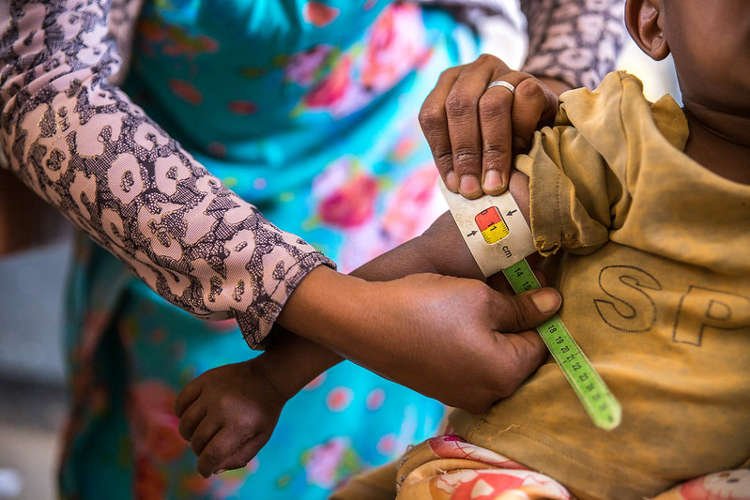
Children under the age of two and pregnant or breastfeeding women continue to bear the greatest burden, particularly across states such as Borno, Yobe, Sokoto, Kebbi and Zamfara, where food insecurity remains severe.
Adolescent girls face another layer of vulnerability because poor nutrition before pregnancy often produces low birth weight babies, allowing malnutrition to pass quietly from one generation to the next.
Children with disabilities are also routinely excluded from nutrition screening because many never reach the health facilities where those services are provided.
Citizens should begin to ask questions that government rarely volunteers answers to. Freedom of Information requests can seek approved and released nutrition budgets, while communities should ask local government chairmen to publish allocations received under the Nutrition 774 Initiative.
Women’s groups and community health committees should also document shortages of therapeutic foods in primary healthcare centres because public records created by citizens often survive longer than official assurances.
For the National Assembly, it should prioritise passage of the National Nutrition Bill before the current legislative session ends, while the National Council on Nutrition should publish quarterly reports showing approved and released nutrition expenditure at federal and state levels.
On its part, the Federal Ministry of Budget and Economic Planning should also disclose the quarterly cash-backing rate for nutrition allocations, and the Nutrition 774 Initiative should not proceed without a publicly available financing and reporting framework for local governments.