



Nearly 29 million Nigerians live with disabilities, but their presence in Nigeria’s political leadership is so rare.
Development Diaries reports that the conversation gained renewed attention when The All-Rights Foundation (TAF Africa) launched a dedicated hub to support persons with disabilities seeking elective office ahead of the 2027 general election.
The initiative was significant because it highlighted that millions of citizens are legally entitled to participate in politics, but the political system remains largely designed as though they do not exist.
Persons with disabilities account for more than 13 percent of Nigeria’s population, according to estimates from the National Disability Commission; still, there are no widely verifiable records showing meaningful representation in the National Assembly, among state governors, or across the country’s 774 local government areas.
The political exclusion is so deep that even the data needed to track it is often missing.
What TAF Africa’s intervention reveals is that the exclusion of persons with disabilities from political leadership is about a political system whose doors may be technically open but whose corridors remain difficult, and sometimes impossible, for many citizens to navigate.
Why the system excludes PWDs from political candidacy
Political party primaries remain one of the biggest obstacles for persons with disabilities because the process is largely designed around the assumption that every aspirant can move, communicate, and participate in the same way.
Delegate meetings, party consultations, campaign events, and nomination activities often take place in venues that are inaccessible to wheelchair users, while those with hearing impairments are expected to navigate critical political conversations without sign language interpretation.
Similarly, aspirants with visual impairments frequently encounter documentation and administrative processes that were never designed with accessibility in mind.
The result is that many persons with disabilities are effectively excluded before voters even have the opportunity to decide whether they are qualified for office. A political system that claims to be open to all citizens is still operating in ways that make participation easier for some Nigerians and significantly harder for others.
Money creates another layer of exclusion, as elections in Nigeria are expensive, whether one is contesting for councillor, legislator, governor, or president. Persons with disabilities already face significant barriers within the labour market and are more likely to experience economic disadvantage than the general population.
Asking candidates who often start with fewer economic opportunities to compete in one of the most expensive political environments in Africa creates a contest that is unequal before it begins.
Even electoral processes administered by the Independent National Electoral Commission (INEC) often raise accessibility concerns, with candidate registration procedures, documentation requirements, and engagement processes not always designed with the realities of persons with physical, sensory, or cognitive disabilities in mind.
What does the law require
The National Disability Commission Act, signed into law in 2019, guarantees the rights of persons with disabilities to participate fully in political and public life. It specifically recognises their right to contest elections and requires electoral processes, nomination systems, polling environments, and public information to be accessible.
The challenge is that laws do not implement themselves.
Several years after the law came into force, there is still no widely available political participation audit showing whether its provisions are being implemented across political parties, electoral institutions, and public offices.
This is the accountability gap that TAF Africa’s new hub is attempting to address as the organisation steps into a space that should already have been occupied by functioning public institutions.
System analysis
INEC is responsible for ensuring that electoral processes are accessible to all eligible Nigerians, including persons with disabilities, while political parties are responsible for creating nomination systems that do not exclude citizens because of physical, sensory, or communication barriers.
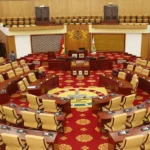
For its part, the National Disability Commission is responsible for monitoring compliance with disability rights protections, just as the National Assembly itself has a responsibility to confront the representation gap that remains visible within its own chambers.
The problem is that each institution can point to another whenever questions of accountability arise.
So the launch of a support hub by a civil society organisation is welcome, but it also raises a question about why citizens should require a specialised support structure from outside government simply to access rights that government has already recognised in law.
Citizens’ rights
Nigeria ratified the Convention on the Rights of Persons with Disabilities in 2010, with Article 29 of the convention requiring governments to ensure that persons with disabilities can participate fully in political and public life, including the right to vote and to stand for election on an equal basis with others.
16 years later, the evidence of meaningful political inclusion remains limited.
Therefore, the 2027 elections represent one of the first major opportunities to assess whether Nigeria’s disability rights commitments are translating into measurable political outcomes, and the main test is whether citizens with disabilities can move from being subjects of political discussions to becoming participants in political decision-making.
Gender and equity lens
Women with disabilities often find themselves excluded from public leadership more thoroughly than men in their group or women without disabilities.
This means any effort to support political participation among persons with disabilities must pay specific attention to gender, because treating disability as though it affects everyone in the same way risks overlooking the unique challenges faced by women aspiring to leadership.
The barriers are often even greater in rural communities, where limited transportation, inaccessible public infrastructure, distance from political centres, and weaker access to information combine to make political participation significantly harder for persons with disabilities.
What to demand
For citizens, the first step is to challenge the assumption that political leadership belongs only to people without disabilities. Nigerians who are considering elective office should take advantage of support structures such as the one launched by TAF Africa.
Communities should also actively encourage qualified persons with disabilities to seek leadership positions rather than treating political ambition as unrealistic.
As for institutions, INEC should publish clear accessibility standards for the 2027 elections, covering everything from candidate registration processes to accessible campaign information and polling arrangements.
The National Disability Commission should also conduct and publish a comprehensive political participation audit that measures how accessible political parties, electoral processes, and public institutions truly are.
Those actions must happen to ensure that Nigeria does not continue to celebrate democracy while quietly excluding millions of citizens from fully participating in it.
Photo source: Ebunoluwa Akinbo/Al Jazeera