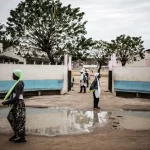







Nigeria’s failure to stop attacks on schools is now costing teachers and children their lives while accountability continues to lag behind every new incident.
Development Diaries reports that more than 30 captives, including a principal, teachers, pupils, and students, remain abducted in Oyo State, alongside more than 40 pupils taken from Mussa Primary and Junior Secondary Schools in Borno State.
The Nigeria Union of Teachers (NUT) recently directed teachers in Oriire Local Government Area to stay at home until further notice, warning that a nationwide shutdown could follow if the government fails to guarantee safety, while stressing that teachers cannot continue to work in an environment where kidnapping, maiming and killing have become part of the job description.
That warning should not be necessary in a country that signed the Safe Schools Declaration in 2019, committing itself to protecting learning spaces and strengthening school security.
For years, school attacks in Nigeria were treated as a northeast problem linked to Boko Haram, Chibok and Dapchi, but the Oriire attack in Oyo State has made that framing impossible to sustain because it happened in a southwest farming community with no insurgency history, showing how far the crisis has now spread beyond its original geography.
Amnesty International data shows that school abductions have now occurred in at least 15 states across Nigeria, and since 2014, more than 1,400 students have been abducted from schools, making it clear that what once appeared as isolated incidents has evolved into a national pattern.
The Safe Schools Declaration, which Nigeria ratified in 2019 after committing to the Lucens Guidelines for the protection of schools, requires clear security protocols, monitoring systems and implementation reporting, but those obligations have not produced a publicly verifiable national compliance record.
What the declaration required
The Safe Schools framework requires that schools are protected from military use, security measures are implemented and monitored, and affected communities are part of prevention systems.
However, UNICEF data indicates that more than 1,500 schools in northern Nigeria remain closed due to insecurity, while teacher incentives for deployment to high-risk areas are inconsistently implemented and key safety infrastructure such as fencing, alert systems and rapid response mechanisms remain uneven across the country.
Although Nigeria adopted the National Policy on Safety, Security and Violence-Free Schools in 2020, there is still no unified national tracking system that shows which schools are protected and which remain exposed, leaving implementation largely unverified in the public space.
System analysis
Responsibility for school safety is spread across the Federal Ministry of Education, the Office of the National Security Advisor, state governments and local education authorities, but this division of roles has created a situation where accountability becomes difficult to locate when failures occur.
The ministry is responsible for national reporting and policy coordination, security agencies are responsible for threat prevention, and states are responsible for implementation, but no single institution is required to publish consolidated, public-facing performance data on school safety outcomes.
This has produced a system where responsibility is distributed across institutions, but accountability is not clearly owned by any of them when attacks happen.
Citizens’ rights
The right to education in a safe environment is guaranteed under the United Nations Convention on the Rights of the Child, which Nigeria ratified in 1991, and reinforced by the Child Rights Act of 2003 and the Universal Basic Education Act of 2004.
A child who cannot attend school because it is unsafe and a teacher who cannot safely enter a classroom are both experiencing a denial of rights that is clearly established in law but inconsistently enforced in practice.
Gender and equity lens
Girls are disproportionately affected when schools are attacked or shut down because they are more likely to be withdrawn permanently due to safety concerns, more likely to be pushed into early marriage when schooling is disrupted, and more likely to lose long-term educational opportunities after prolonged insecurity.
Female teachers, particularly in early childhood and primary education, also face heightened vulnerability in insecure environments, where the absence of adequate protection systems turns classrooms into high-risk workplaces.
Demands for school safety
For citizens, the immediate demand is clarity from elected representatives on what Safe Schools Declaration measures have been implemented in their local government areas, because without verified information, accountability remains theoretical rather than real.
For institutions, the Federal Ministry of Education and the Office of the National Security Advisor must jointly produce and publish a comprehensive Safe Schools Declaration implementation report within 90 days detailing progress, gaps and responsible agencies.
As for state governments, they must conduct immediate security audits of all schools and make the findings public to ensure that school safety is treated as a measurable obligation rather than a policy promise.
Photo source: Arise News