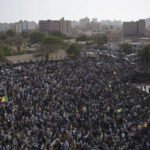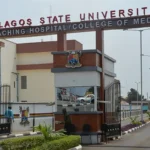
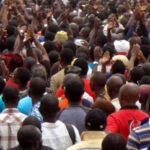


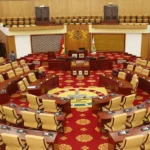


Africans keep dying in other African countries while regional organisations keep offering condolences instead of protection.
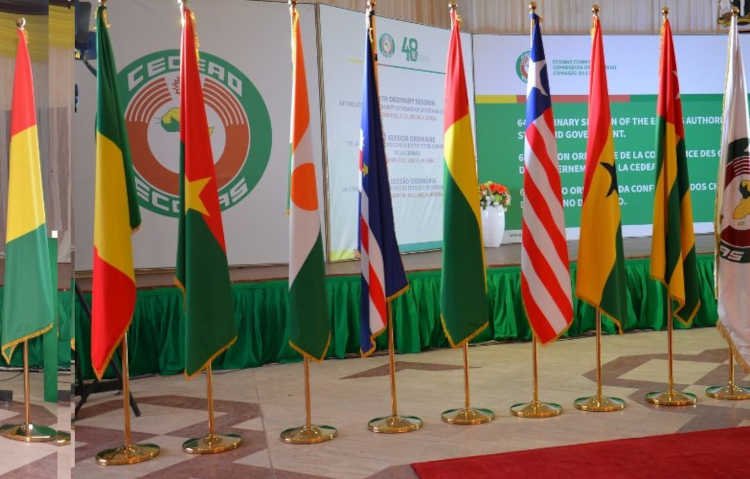
Development Diaries reports that leaders of the Economic Community of West African States (ECOWAS), at their 69th Ordinary Summit in Lungi, Sierra Leone, endorsed Ghana’s petition to the African Union over recent xenophobic attacks on Ghanaians and other African nationals in South Africa and agreed that the matter should be placed before the next African Union Summit.
Speaking at the meeting, Ghanaian President John Mahama said his country remained deeply concerned that Ghanaians, Nigerians and other Africans had been killed while many more now live in fear and uncertainty because of the attacks.
The gathering also produced a major leadership change, with Senegal’s former Minister of Defence and former Chief of the General Staff of the Senegalese Armed Forces, General Birame Diop, appointed President of the ECOWAS Commission and will assume office on 01 September, 2026, while Senegalese President Bassirou Faye succeeded Sierra Leone’s Julius Bio as Chairman of ECOWAS.
It is understood that leaders also reaffirmed plans to introduce the ECO common currency in 2027 and condemned terrorism and xenophobia.
The petition from Ghana had so much to do with the recent xenophobic attacks in South Africa and beyond, with Africans repeatedly being attacked, killed and displaced across the continent, and regional institutions still being unable to practically respond once violence begins.
The African Union condemned xenophobic attacks in South Africa in 2015. Eleven years later, another wave of violence has again ended with statements and another summit discussion, while permanent monitoring, mandatory reporting by affected states, rapid protection measures and consequences for governments that fail to stop repeated attacks remain absent.
ECOWAS guarantees the free movement of people within West Africa. However, once those same citizens leave the sub-region, the protection becomes far less certain.
The African Union has broader human rights institutions, including the African Commission on Human and Peoples’ Rights, where individuals and organisations can challenge violations, but many affected migrants have never heard of the mechanism, let alone used it.
General Diop’s security background may strengthen ECOWAS’ engagement with terrorism and instability across West Africa and the Sahel, but citizens still have no published benchmarks against which his performance will be judged, no parliamentary scrutiny of his appointment and no public commitment outlining what his administration intends to deliver before taking office.
Responsibility now falls on the African Union Commission, the African Union Peace and Security Council, the African Commission on Human and Peoples’ Rights, the ECOWAS Authority, the ECOWAS Parliament and the South African government, each with a role in ensuring that the rights Africans already possess on paper are protected in practice.
South Africa’s constitution guarantees equality before the law and the right to life for everyone within its borders, regardless of nationality. The African Charter on Human and Peoples’ Rights prohibits the mass expulsion of non-nationals, while the African Union’s Migration Policy Framework commits member states to protecting migrants from violence.
Similarly, the ECOWAS Revised Treaty commits member states to promoting the welfare of their citizens wherever they are. Those guarantees mean little to families who continue to bury relatives after every new outbreak of xenophobic violence.
Women traders from Ghana, Nigeria and other African countries are often the first to lose their livelihoods as markets close, customers disappear and intimidation keeps them away from work. Children from migrant families have repeatedly faced barriers to schools and healthcare, while undocumented migrants and persons with disabilities remain among those least able to escape attacks or access emergency assistance.
Many who eventually return home arrive without savings, documentation or any organised reintegration support, despite governments finding resources to evacuate them.
Diaspora organisations and migrant associations should document xenophobic attacks and submit complaints through the African Commission on Human and Peoples’ Rights instead of relying solely on summit declarations.
For their part, West African civil society organisations should publish measurable expectations for the incoming ECOWAS Commission president before he assumes office, while returnee groups should document reintegration needs and demand formal government responses.
As for the African Union Peace and Security Council, it should establish a permanent monitoring and reporting mechanism on xenophobic violence across member states, the ECOWAS Parliament should require the incoming commission president to publish measurable priorities within his first 90 days in office, while the governments of Ghana and Nigeria should introduce fully funded reintegration programmes for citizens returning from South Africa.
Regional integration will remain unfinished as long as Africans can cross borders more easily than African institutions can protect them.