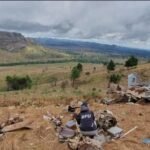




Uganda’s recurring hunger crisis is exposing a government that can predict drought, approve trillion-shilling budgets and still wait until people go hungry before responding.
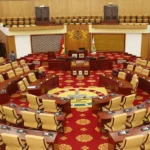
Development Diaries reports that Uganda’s parliament has unanimously called for urgent government intervention to address the worsening drought and hunger crisis affecting Northern Uganda, even as the country moves ahead with a proposed Shs84.4 trillion budget framework for the 2026/2027 financial year built around oil production, infrastructure, agriculture and industrial growth.
Finance Minister Henry Musasizi presented the budget framework with a projected economic growth rate of 10.2 percent, while President Yoweri Museveni separately returned the proposed Income Tax (Amendment) Bill 2026 and Excise Duty (Amendment) Bill 2026 to Parliament, warning that some of the measures could produce unfair outcomes.
A parliament approving one of Uganda’s biggest budget frameworks while simultaneously demanding emergency food assistance for part of the country exposes a distribution problem rather than a shortage of national resources.
Government agencies forecast Northern Uganda’s recurring droughts almost every year, but each failed season still depends on emergency appeals, supplementary funding and political approval before assistance reaches affected communities.
That keeps the country responding to hunger after crops have failed instead of preventing the crisis before it begins.
The Uganda National Meteorological Authority regularly issues seasonal weather forecasts, but those forecasts rarely trigger automatic funding for food reserves, irrigation, livestock protection or cash assistance before families lose crops, animals and income.
The issue therefore rests with the Office of the Prime Minister, the Ministry of Agriculture, Animal Industry and Fisheries, the Ministry of Finance, Planning and Economic Development, the Uganda National Meteorological Authority and district governments across Karamoja, Acholi and Lango, whose responsibilities cover forecasting, budgeting, food production, emergency response and last-mile delivery.
The budget framework also raises another issue because its projected growth relies heavily on sectors such as oil, infrastructure and industrial expansion without showing how drought-prone regions will benefit from those investments.
Without publicly available regional allocations, citizens cannot determine whether communities facing repeated hunger are receiving resources proportional to their needs.
Uganda’s constitution commits the country to pursue social justice, economic development and food security, while the National Objectives and Directive Principles require government to encourage adequate food production and maintain national food reserves.
Uganda is also a party to international agreements recognising access to adequate food as a fundamental right.
Those commitments carry little meaning when predictable hunger still depends on emergency motions before Parliament.
The burden falls most heavily on children under five, whose growth may never fully recover after prolonged malnutrition, pregnant and breastfeeding women facing increased health risks, girls withdrawn from school to search for food and water, and persons with disabilities who are frequently excluded because relief distribution centres remain physically inaccessible.
Food security specialists working across Karamoja have consistently argued that purchasing livestock before drought destroys their value costs far less than providing emergency food after pastoralist families have already lost their livelihoods.
Civil society organisations across Karamoja, Acholi and Lango should request and publish district relief schedules, monitor whether assistance reaches women, older persons and persons with disabilities, and ask their Members of Parliament to disclose how much of the national budget is actually allocated to drought-prone regions.
The Office of the Prime Minister should publish a fully funded Northern Uganda drought response plan with measurable nutrition targets and delivery timelines, the Ministry of Finance should establish automatic drought financing linked to meteorological forecasts rather than political decisions, and the Ministry of Agriculture should publicly disclose the status of Uganda’s strategic grain reserves together with protocols for livestock support in pastoralist communities.
A drought may be unavoidable, but hunger becomes a policy failure when government waits for empty granaries before acting.