






Changing election dates after winning an election allows those already in power to rewrite the democratic timetable in their favour, and Zimbabwe is now living with the consequences.
Development Diaries reports that Zimbabwe’s ruling ZANU-PF Harare Province has called for President Emmerson Mnangagwa to remain the party’s leader until 2037, days after he signed the Constitution of Zimbabwe Amendment (No. 3) Act into law.
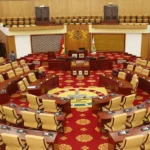
The amendment postpones Zimbabwe’s next harmonised elections from 2028 to 2030, automatically extending the tenure of the president, members of parliament and councillors by two years.
Harare provincial chairperson Godwills Masimirembwa said the province would present a resolution at the party’s next conference seeking to retain Mnangagwa beyond 2030, while opposition parties have already challenged the amendment before the Constitutional Court.
The amendment has intensified concerns because those who voted to extend public offices are among the people benefiting from the extension.
Opposition parties have also questioned changes introduced during the committee stage of the amendment process, arguing that a late provision requiring parliamentary candidates to declare their preferred presidential candidate on nomination forms could concentrate greater influence over future presidential succession within party structures.
The concern is now whether elected officials should be allowed to change the duration of the offices they currently occupy without first returning to the electorate.
Constitutional organisations, including the Law Society of Zimbabwe and Veritas, questioned the public hearings conducted before the amendment’s passage, citing procedural irregularities, venue disruptions and reports that some citizens feared participating freely.
Challenges questioning the amendment’s constitutionality have remained before the court since early 2026, but the law has already been signed and is now in force before those legal questions have been resolved.
The Parliament of Zimbabwe, the Constitutional Court, the Zimbabwe Electoral Commission, the Zimbabwe Republic Police, the Ministry of Home Affairs and ZANU-PF’s national leadership all have roles in determining how the country navigates the constitutional, political and security consequences of the amendment.
Zimbabwe’s constitution guarantees freedom of assembly and association under Sections 58 and 59, freedom of expression under Section 61 and the right to free, fair and regular elections under Section 67.
The country is also a party to the African Charter on Democracy, Elections and Governance, which discourages constitutional changes that undermine democratic transitions.
Young Zimbabweans stand to lose the most immediate democratic opportunity, as a citizen who turned 18 in 2024 voted once and, under the amended law, will not vote again until 2030, by which time many first-time voters will already be in their mid-20s.
Rural communities also lose one of their strongest accountability mechanisms because councillors responsible for decisions affecting schools, clinics, boreholes and local services remain in office longer without returning to the electorate.
Women elected under quota arrangements and Zimbabweans with disabilities, whose political participation often depends on sustained electoral reforms, also face a prolonged delay before another opportunity to influence representation through the ballot.
Constitutional lawyers in Zimbabwe have consistently argued that Parliament undoubtedly possesses the authority to amend the Constitution.
The unresolved question is whether elected officials should amend it in ways that directly prolong their own stay in office.
Residents’ associations, churches, labour unions, student organisations and other civic groups should continue to support the pending Constitutional Court cases while documenting arrests and detentions linked to planned demonstrations and placing their concerns on public record.
The Constitutional Court should urgently hear and determine the pending constitutional challenges, the Zimbabwe Electoral Commission should publish a revised electoral calendar explaining every postponed election, and the Zimbabwe Republic Police should publicly guarantee that peaceful assemblies will be protected in accordance with the constitution.
Constitutions protect democracy best when those benefiting from political power cannot rewrite the timetable that determines when voters may judge them again.