






In eastern Democratic Republic of the Congo (DRC), peace negotiations are beginning to look more valuable for the region’s minerals than for the people still dying there.
Development Diaries reports that international efforts to end the conflict in the area have failed to stop the violence despite a series of agreements brokered in Washington and Doha.
The United States helped broker a peace agreement between the governments of the DRC and Rwanda, while separate negotiations involving the Rwanda-backed M23 rebel group produced another framework intended to end fighting in eastern Congo.
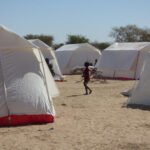
Months later, the violence continues, with more than 5.2 million people remaining displaced, ceasefire commitments repeatedly being violated, and M23 fighters still controlling key territories, including Goma and Bukavu, captured earlier in the conflict.
That reality is raising fresh questions about whether the negotiations were designed to end the war or simply to manage it.
The agreements placed significant emphasis on regional economic cooperation and access to the DRC’s critical minerals, a priority that many Congolese civil society organisations say has overshadowed the protection of civilians still trapped by the conflict.
The scepticism is understandable because eastern DRC has seen peace agreements announced before, only for the fighting to continue after the cameras disappear.
The continued presence of M23 fighters in territories they captured has only deepened those doubts. Rebel leaders have publicly indicated that the agreements do not require an immediate withdrawal, leaving many Congolese wondering how peace can succeed while armed groups continue controlling the same communities the agreements claim to protect.
The governments of the DRC and Rwanda, the M23 leadership and the international mediators all share responsibility for ensuring that agreements signed on paper translate into safety on the ground.
International humanitarian law requires the protection of civilians during armed conflict, while every peace agreement ultimately succeeds or fails on whether displaced people can return home safely and with dignity.
Women and children continue to bear the greatest burden because they make up most of those displaced across North and South Kivu, where communities already struggling with disease outbreaks and collapsing healthcare remain exposed to continuing violence.
Communities living under rebel control have little opportunity to influence negotiations taking place in distant capitals, leaving those most affected by the conflict with the smallest voice in determining how it ends.
Congolese civil society organisations should continue independently documenting ceasefire violations, demand representation in future negotiations and ensure that the experiences of displaced communities remain central to discussions about peace.
For their part, international mediators should link every economic commitment in the agreements to independently verified civilian-protection benchmarks, insist on meaningful participation by Congolese civil society and make the safe return of displaced people the clearest measure of whether the peace process is actually working.