




Long after the politicians responsible left office, Senegal’s hidden debt is now being repaid through unpaid teachers’ salaries and delayed student stipends.
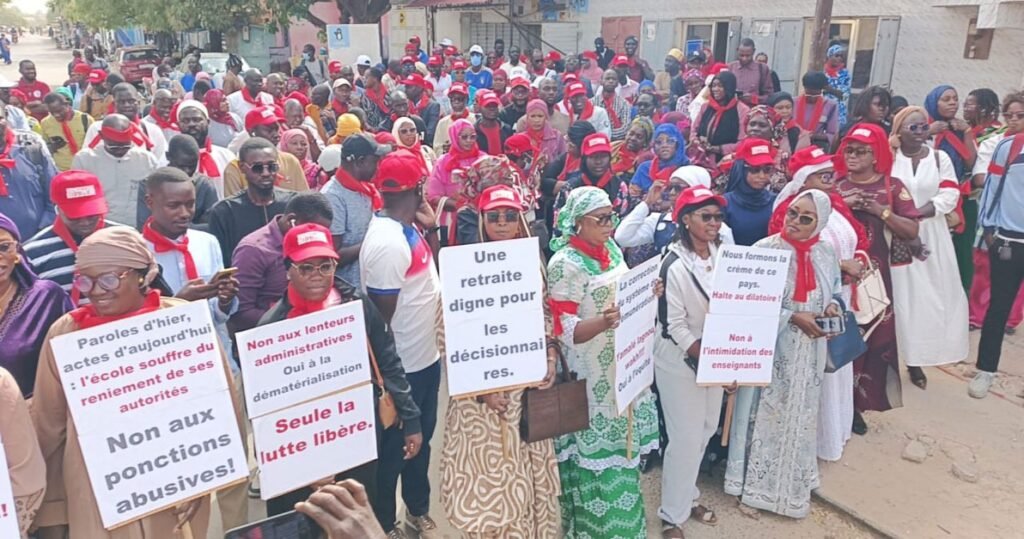
Development Diaries reports that strikes by teachers over unpaid salaries and protests by students over delayed stipends have continued across the country as the government struggles to manage a debt crisis that deepened after an audit revealed billions of dollars in liabilities allegedly concealed by the previous administration.
The controversy dates back to 2024, when President Bassirou Faye’s government ordered a review of public finances shortly after taking office.
The audit found that the former administration had failed to fully disclose the country’s debt, pushing Senegal’s total public debt above 130 percent of gross domestic product and prompting the International Monetary Fund (IMF) to suspend its $1.8 billion support programme.
The consequences are no longer confined to finance ministries or meetings with international lenders. They are now showing up in classrooms where teachers wait for salaries, campuses where students protest delayed stipends and households already struggling with rising living costs.
Credit-rating agency S&P Global Ratings estimated the undisclosed liabilities at about $13 billion, roughly one-quarter of Senegal’s economy. IMF officials have continued discussions with President Faye and Prime Minister Ahmadou Al Aminou Lo, but no agreement has been reached as pressure grows on the government to increase revenue and reduce spending.
The debt was accumulated under a previous administration, but the sacrifices needed to repair the damage are falling on workers, students and families who had no role in creating it. It is another reminder that governments can hide debt for years, but citizens eventually receive the invoice.
Senegal’s shrinking fiscal space also leaves few easy options, with the country having limited access to international borrowing, continuing to rely on short-term regional financing and facing repayment obligations that keep returning, while expected revenue from oil and gas production is unlikely to solve the immediate crisis.
The prime minister has ruled out restructuring Senegal’s debt, arguing that the country should avoid deepening dependence on external lenders.
That position will become harder to maintain as repayment pressures increase, especially if protecting public services requires difficult financial choices.
The Ministry of Finance now carries the responsibility of restoring confidence in the country’s finances, while the IMF’s proposed conditions will heavily influence how that recovery happens.
The former officials responsible for concealing the debt also remain central to the accountability conversation because repairing public finances without establishing responsibility risks repeating the same crisis.
Senegal’s constitution and its obligations under the African Union’s human rights framework recognise the importance of education and social welfare. Those commitments become difficult to honour when debt repayment begins competing directly with classrooms, hospitals and public services.
The burden is not shared equally, as low-income households absorb higher taxes more painfully, teachers lose income through delayed payments and prolonged strikes, while students risk abandoning their education when stipends disappear. Girls and young people from poorer families are often the first to leave school when public education becomes less reliable.
Teacher unions, student organisations and civil society groups should continue to demand full publication of the hidden-debt audit, monitor how proposed fiscal reforms affect education and ensure the human cost of spending cuts remains part of the national conversation.
The Ministry of Finance should publish a clear plan for restoring fiscal stability without sacrificing education and healthcare, while the government should pursue accountability for those responsible for concealing Senegal’s debt so that citizens are not left paying for misconduct they did not commit.
Photo source: Education International