





South Africa’s campaign against African migrants is exposing how much of its economy quietly depended on the people it wanted to remove.
Development Diaries reports that farms and factories across South Africa are facing growing labour shortages after more than 160,000 migrants reportedly left the country following months of anti-migrant mobilisation.
The shortages are already visible around Durban, where fruit remains unpicked and sugarcane fields wait for workers who are no longer there, while clothing factories in Newcastle have also struggled after losing migrant workers who quietly kept production running for years.
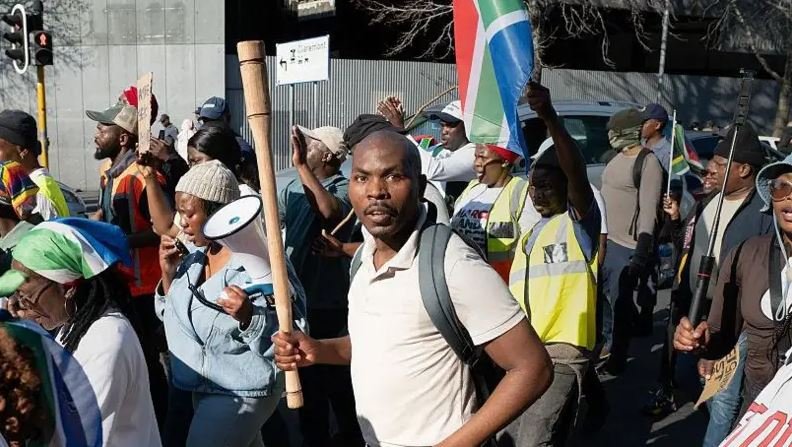
The development comes weeks after the March and March movement intensified its campaign against undocumented migrants ahead of its self-declared 30 June deadline for foreigners to leave South Africa.
Police arrested more than 900 people during the related protests, while reports documented activists moving from house to house identifying suspected undocumented migrants and handing them over to law enforcement. In Limpopo, police officers were accused of assisting vigilante roundups, while fresh violence in Jeffreys Bay led to dozens of arrests and the deployment of soldiers.
The empty farms now tell a story political slogans could not. If migrants were truly taking jobs away from South Africans, their departure should have made those jobs easier to fill.
Instead, crops remain on the farms because employers cannot find enough people willing to do the same physically demanding work under the same conditions. It turns out removing workers is much easier than replacing them.
That is why blaming migrants has never addressed South Africa’s unemployment crisis, which has been shaped for decades by structural inequality, weak economic growth and persistent barriers to decent employment.
The country’s migration system is where the failure becomes most obvious because reports of vigilante groups identifying suspected undocumented migrants and handing them over to police raise serious questions about whether immigration enforcement is gradually being outsourced to citizens instead of the institutions legally responsible for it.
South Africa’s constitution guarantees dignity, equality and due process to everyone within its borders, regardless of nationality, while regional and international human rights obligations require migrants and asylum seekers to receive equal protection under the law.
The people paying the highest price are often the least visible, with migrant women and children displaced by xenophobic violence having lost access to shelter, healthcare and education, while low-income workers who depended on seasonal farm jobs or factory employment have been forced to leave without savings, security or any clear idea of where they will rebuild their lives.
Researchers at the Institute for Security Studies have repeatedly warned that mass expulsions and anti-migrant campaigns often damage economies long after the political slogans have faded. South Africa’s farms and factories are now beginning to illustrate that warning.
Faith-based organisations and community groups supporting displaced migrants should continue to document abuses, countering misinformation with verified evidence and reporting rights violations to the South African Human Rights Commission.
The Department of Home Affairs should strengthen lawful migration management, the South African Police Service should stop recognising vigilante detentions as a substitute for lawful policing, and the National Prosecuting Authority should ensure xenophobic attacks and related violence are investigated and prosecuted without political interference.
Photo source: Rodger Bosch/AFP via Getty Images