





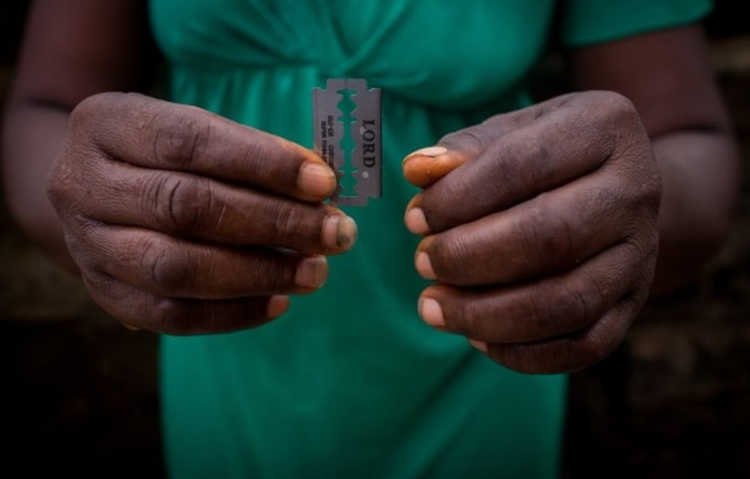
Every girl in The Gambia is waiting to find out whether the law protecting her from female genital mutilation (FGM) will survive.
Development Diaries reports that the Supreme Court in Banjul is hearing a constitutional challenge seeking to overturn Sections 32A and 32B of the Women’s Act, the provisions that criminalise FGM.
Filed by Almameh Gibba and seven others against the Attorney General, the case asks the court to decide whether the ban violates constitutional rights to culture and religion.
The government has rejected that argument and has begun defending the law, insisting that Parliament followed due process before passing the ban in 2015.
The judgment reaches far beyond the courtroom because it will determine whether thousands of Gambian girls continue to enjoy legal protection from a practice that has injured generations of women.
According to the 2019-2020 Demographic and Health Survey, 65 percent of Gambian girls undergo FGM before the age of five, while another 18 percent are cut between the ages of five and nine, with UNICEF also estimating that about three out of every four Gambian women have undergone the practice.
Despite those figures, enforcement of the ban has remained weak, with the first convictions caming only in 2023, and by 2024 only two cases had reached prosecution.
A weakly enforced law still tells communities where the country stands, while removing it tells them something else.
That possibility has already generated anxiety among women’s rights organisations, especially after Parliament rejected an attempt to repeal the ban in 2024 following nationwide protests.
The accountability question is whether every Gambian girl will continue enjoying legal protection from FGM or whether that protection can now be taken away.
The responsibility rests first with the Supreme Court, which will interpret the constitution, and with the attorney general defending the legislation.
It also rests with the Gambian government, which voluntarily committed itself to protecting women and girls by ratifying the African Charter on Human and Peoples’ Rights, the Maputo Protocol, the African Charter on the Rights and Welfare of the Child and, more recently, signing the African Union Convention on Ending Violence Against Women.
Those commitments recognise that culture and religion cannot justify practices that violate the rights and bodily integrity of children.
Girls facing FGM cannot consent, refuse the procedure or defend their rights in court, making the law the only protection many of them have.
The burden falls most heavily on girls in rural communities, where the practice remains deeply rooted and medical care is often far away when complications arise.
Human Rights Watch has also maintained that FGM has no medical justification and that performing the procedure in health facilities does not reduce the human rights violation.
The implications also extend beyond The Gambia, with legal experts warning that striking down the ban could encourage similar constitutional challenges elsewhere in Africa, making the Supreme Court’s decision a reference point for countries still working to eliminate FGM.
Women’s rights organisations should therefore continue to support survivors, documenting cases and engaging communities to separate the practice from religion, which many Islamic scholars say predates Islam.
Political leaders should publicly reaffirm their commitment to protecting girls regardless of the court’s eventual decision.
The government should also strengthen enforcement, expand survivor support services and equip health workers, law enforcement agencies and prosecutors to identify, investigate and prosecute violations.
The Supreme Court’s judgment will determine whether every girl in The Gambia continues to enjoy legal protection from FGM or loses one of the country’s strongest safeguards against the practice.