


Uganda allowing the government prosecuting an opposition leader to decide which lawyers can defend him raises serious concerns about whether fair trial rights still exist in practice.
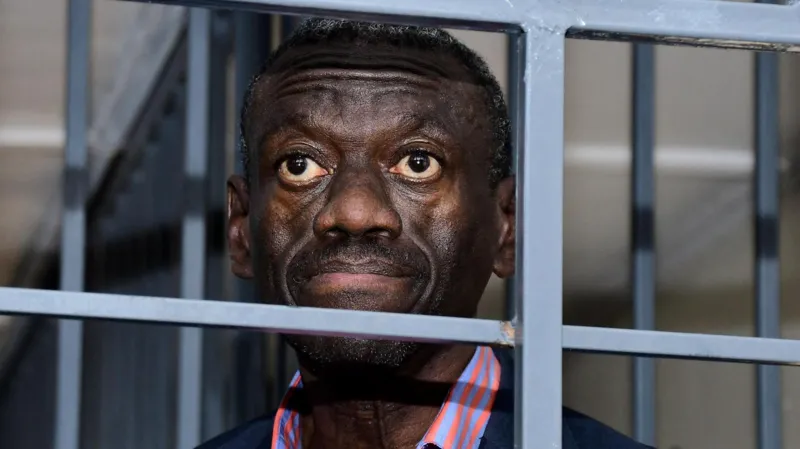
Development Diaries reports that Ugandan opposition leader Kizza Besigye recently refused to accept state-appointed lawyers when his treason trial resumed in Kampala, insisting that the same government prosecuting him had already dismantled the legal team he trusted.
The 70-year-old politician, who has remained in detention since he was reportedly seized in Kenya and taken to Uganda late last year, told the court he would not choose from a list of lawyers approved by the State, prompting the judge to adjourn the case until 29 July.
Besigye’s refusal stemmed from doubts that a fair trial is still possible after authorities reportedly detained his lead lawyer, former Kampala mayor Erias Lukwago, while barring Kenyan lawyer Martha Karua from entering Uganda to represent him.
The accountability issue is whether governments can prosecute political opponents while deciding which lawyers are allowed to defend them.
During the same week, journalists and media organisations reported increasing intimidation as Uganda’s military intensified pressure on independent media following President Yoweri Museveni retaining power for a seventh term in 2026 and the growing political influence of his son, Muhoozi Kainerugaba.
Besigye’s reported abduction in Kenya and transfer to Uganda, together with the decision to deny Karua entry at the border, has reinforced concerns that governments across East Africa are increasingly working together to restrict opposition figures, lawyers, journalists and civil society actors beyond their own borders.
Courts exist to restrain executive power, not to operate within it. When lawyers are detained, foreign counsel turned away and journalists intimidated during politically sensitive trials, confidence in judicial independence becomes increasingly difficult to sustain.
Responsibility therefore extends beyond Uganda’s judiciary to President Museveni’s administration, the country’s security agencies and neighbouring governments whose cooperation enables cross-border arrests, border restrictions and other actions against opposition figures and their legal representatives.
Uganda’s constitution guarantees the right to a fair hearing, while the African Charter on Human and Peoples’ Rights protects every person’s right to legal representation and a fair trial. The East African Community Treaty also commits member states to uphold democracy, human rights and the rule of law.
Those commitments lose meaning when lawyers are prevented from defending clients and journalists face intimidation simply for reporting politically sensitive cases.
The burden also falls unevenly, with women lawyers such as Karua often facing gendered attacks while representing politically exposed clients across borders, while women journalists increasingly endure coordinated online harassment designed to drive them out of public debate.
Communities with the least political influence ultimately pay the highest price because they lose both the lawyers willing to defend them and the journalists willing to expose abuses committed against them.
Regional bar associations and media organisations should seek observer status for Besigye’s trial through the East African Court of Justice while documenting every case involving detained lawyers, barred legal representatives and intimidated journalists across the region.
Uganda’s judiciary should guarantee Besigye unrestricted access to legal counsel of his choice, while East African Community member states should stop cooperating in actions that undermine cross-border legal representation, freedom of expression and the rule of law.
Justice cannot remain independent when governments decide which lawyers are allowed to defend the people standing against them.
Photo source: Reuters