




Nigeria’s ruling All Progressives Congress (APC) has just shown millions of citizens that contesting for president depends less on democratic competition and more on who can survive a political system.
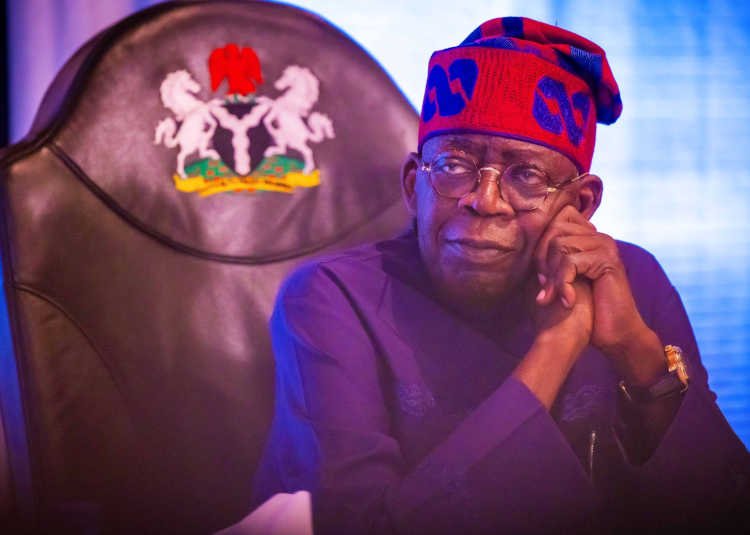
Development Diaries reports that President Bola Tinubu secured the APC presidential ticket for the 2027 election after a direct primary conducted across the country’s 8,809 wards, defeating Stanley Osifo, an Edo-based trader whose candidacy unexpectedly became one of the most symbolic political stories of the exercise.
Osifo had no governors campaigning for him or ministers lining up behind his ambition. What he had was reportedly community support, personal sacrifice, and enough determination to somehow raise the staggering N100 million required to buy the APC presidential nomination form.
In a country where millions of Nigerians cannot survive a month without borrowing money for food or transport, a trader raising N100 million just to stand on the same ballot as a sitting president sounded less like politics and more like somebody trying to enter a football match already fixed before kickoff.
The most revealing part of the exercise may not even be the victory itself but the financial gatekeeping built around it. For context, the legitimate salary a Nigerian president earns over four years is reportedly around N56 million. In other words, the form to apply for the job costs nearly twice the amount the job officially pays.
That reality alone tells citizens that nobody spends N100 million to pursue a job worth far less unless the real value of political office lies somewhere else entirely.
The APC attempted to soften criticism by offering discounts to women, youths, and persons with disabilities. But reducing a presidential nomination fee from N100 million to N65 million in a country battling unemployment and inflation felt less like inclusion and more like telling struggling citizens they were receiving a discount on a private jet they could never afford anyway.
Then came the issue of screening. The APC National Working Committee waived President Tinubu’s screening requirement, citing party rules and the fact that he had already been screened before the 2023 election cycle.
Legally, the party may have acted within its rules. Politically, however, the optics raised deeper questions about whether the process was ever designed to test candidates equally in the first place.
In fact, the same officials who waived the president’s screening are party figures whose political survival depends heavily on their relationship with him.
Women face even deeper barriers inside this structure. Nigeria has never produced a female president or vice president, and female aspirants continue to battle limited access to campaign financing, political gatekeeping, and weaker access to elite fundraising networks dominated by men.
As 2027 approaches, the APC primary may end up being remembered less for who won and more for what it exposed about the condition of Nigeria’s democracy.
Nigerians should begin to ask the Independent National Electoral Commission (INEC) and political parties for full financial disclosure of who funds presidential aspirants, how nomination fees are set, and why parties are allowed to impose financial barriers that effectively exclude ordinary citizens from contesting.
The National Assembly should also face growing pressure to introduce legal caps on nomination fees because democracy cannot continue operating like a luxury product reserved for the wealthy.
At the institutional level, INEC must develop stronger standards for monitoring party primaries, especially where incumbents are contesting under structures they already control.