





South Africa’s anti-misinformation campaign and withdrawn AI policy document have exposed a deeper governance problem after officials relied on questionable research claims.
Development Diaries reports that South Africa’s Department of Communications recently came under scrutiny after evidence used in one of its public campaigns against misinformation was found to contain claims that could not be properly verified.
The campaign had cited what appeared to be a dramatic global research finding claiming South Africans ranked among the world’s most misinformed populations.
The problem was that independent fact-checkers who tried to trace the original study ran into serious gaps, with parts of the methodology appearing questionable, while at least one major claim could not be linked back to the source that the government itself referenced.
Around the same period, South Africa was dealing with another uncomfortable embarrassment after its AI policy document was formally withdrawn because it reportedly contained fabricated research citations generated through artificial intelligence tools that were never properly verified before entering an official government document.
The issue goes far beyond public embarrassment because governments are trusted to make decisions, shape policies, and guide citizens using facts that have been carefully checked.
Across Africa, governments are increasingly communicating like social media influencers, with official communication now coming wrapped in flashy graphics, dramatic statistics, short videos, and emotionally charged captions designed to trend online within minutes.
The South African controversy exposes the absence of strict verification systems inside government communication structures. It is understood that, at the moment, there are no binding standards in the country requiring every statistic used in public campaigns to pass through independent evidence review before publication.
In practice, this means the accuracy of a government claim often depends entirely on how careful or careless one communications officer happens to be on a particular day.
Another concern is the growing use of artificial intelligence inside policymaking without proper safeguards. AI tools can produce polished documents, convincing summaries, and professional-looking citations within seconds, but they are also capable of confidently inventing research that does not exist.
The withdrawal of South Africa’s AI policy document exposed what happens when governments adopt AI-assisted drafting without equally serious investment in human verification systems.
The people most vulnerable to this kind of misinformation are ordinary citizens in rural communities where government announcements are treated as authoritative truth because there are few alternative information sources available.
This is why citizens cannot afford to consume official information passively anymore. When a government agency cites a statistic, ranking, or research finding, the public should ask for the original source.
If officials cannot provide the original study quickly and transparently, citizens have every right to question the claim. And in South Africa, the Promotion of Access to Information Act already gives citizens the legal right to demand those records.
The Government Communication and Information System in South Africa should immediately establish mandatory verification rules requiring every public statistic to carry a traceable primary source and independent research sign-off before publication.
The AI policy scandal should also trigger a wider audit of all AI-assisted policy documents produced across government institutions in recent years because the public deserves to know how many other official documents may already contain fabricated citations hidden beneath professional formatting and government logos.
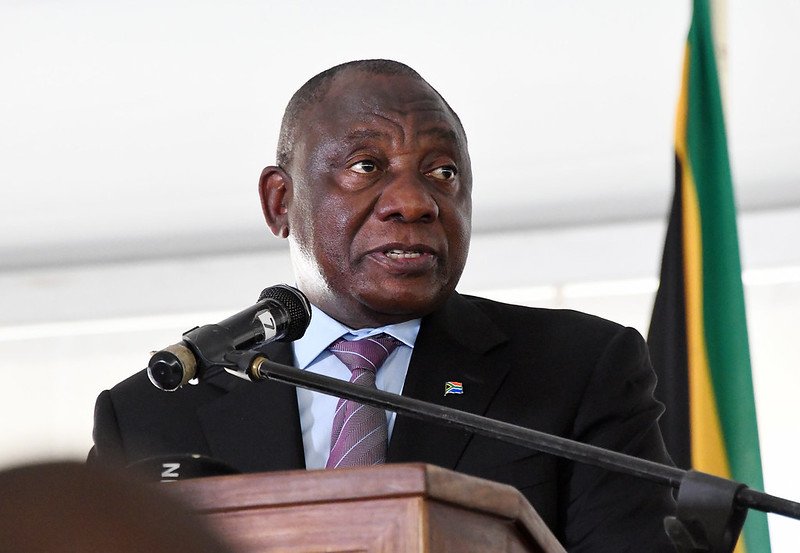
Photo source: GovernmentZA