



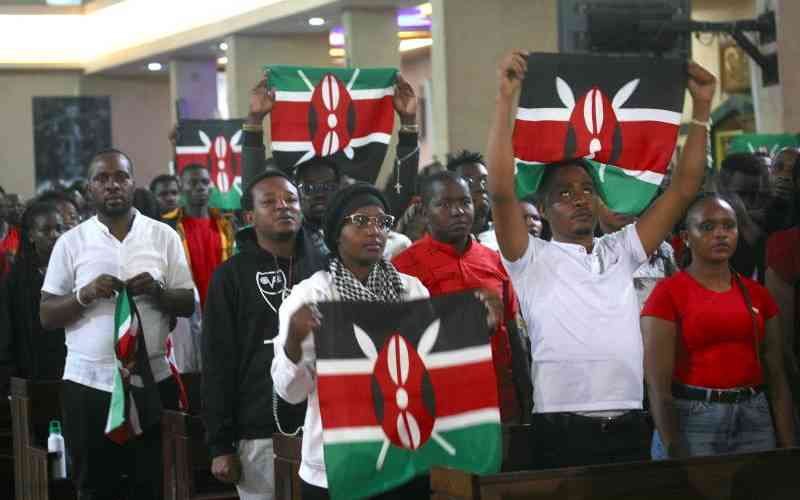
Heavy police deployments and blocked roads turned this year’s Saba Saba commemorations in Kenya and Tanzania into another reminder that peaceful assembly is becoming increasingly difficult across East Africa.
Development Diaries reports that authorities in Kenya and Tanzania deployed security personnel, blocked major roads and disrupted planned gatherings during the 07 July, 2026, Saba Saba commemorations.
It is understood that the police arrested some protesters in Kenya, while security forces in Tanzania prevented demonstrations from taking place.
Saba Saba carries different histories in both countries, with Kenyans commemorating the pro-democracy movement that challenged one-party rule in the 1990s, while Tanzanians mark the anniversary of the ruling party that led the country to independence.
Citizens gathered to remember those milestones, but governments responded as though the commemorations posed a security threat.
Roadblocks and armed officers cannot erase the reasons people wanted to gather in the first place, as Kenyans continue to demand accountability for police brutality, corruption and the rising cost of living, while Tanzanians are calling for democratic reforms after the disputed 2025 elections and the release of opposition leader Tundu Lissu, who remains in detention on treason charges.
Many families also continue waiting for answers about relatives who never returned home from earlier demonstrations, with Kenya’s police watchdog saying at least 127 people were killed during protests across 2024 and 2025.
Rights groups in Tanzania have also demanded accountability for thousands of deaths linked to post-election violence, although official figures remain far lower.
Those deaths remain largely unanswered, making every new restriction on peaceful assembly look less like crowd control and more like another attempt to prevent uncomfortable questions from reaching those in power.
Kenya’s National Police Service declined to authorise protest notifications submitted by civil society groups, while Tanzania enforced a nationwide rally ban that opposition lawyers described as unconstitutional.
Citizens therefore deserve to know why governments increasingly see peaceful gatherings as public order problems instead of democratic rights protected by law.
Kenya’s constitution guarantees the right to peaceful assembly, while Article 11 of the African Charter on Human and Peoples’ Rights protects the freedom of citizens to assemble peacefully. Both countries have accepted those obligations, making restrictions on peaceful gatherings difficult to justify without compelling evidence that violence was imminent.
Young people have become the main targets of these restrictions because they have also become the loudest voices demanding accountability. Many belong to a generation confronting unemployment, rising living costs and shrinking confidence that political leaders are responding to their concerns. Families who lost relatives during previous crackdowns are also being denied one of the few peaceful avenues available to demand justice.
Human rights organisations and political analysts have warned that repeated crackdowns in both countries are gradually turning protest policing into a normal feature of governance. Each new restriction lowers the threshold for the next one, making constitutional rights increasingly dependent on executive discretion rather than the law.
Citizens prevented from participating in peaceful gatherings should document incidents of intimidation and submit complaints to national human rights institutions and civil society organisations so those violations become part of the public record.
For the African Commission on Human and Peoples’ Rights, it should urgently seek explanations from both governments over the recent restrictions and assess whether the actions taken complied with Article 11 of the African Charter.
As for the Tanzanian authorities, they should also account for deaths linked to the 2025 election violence and review the continued detention of Tundu Lissu because constitutional rights lose their meaning when governments decide which citizens may exercise them.
Photo source: Denish Ochieng/The Standard