





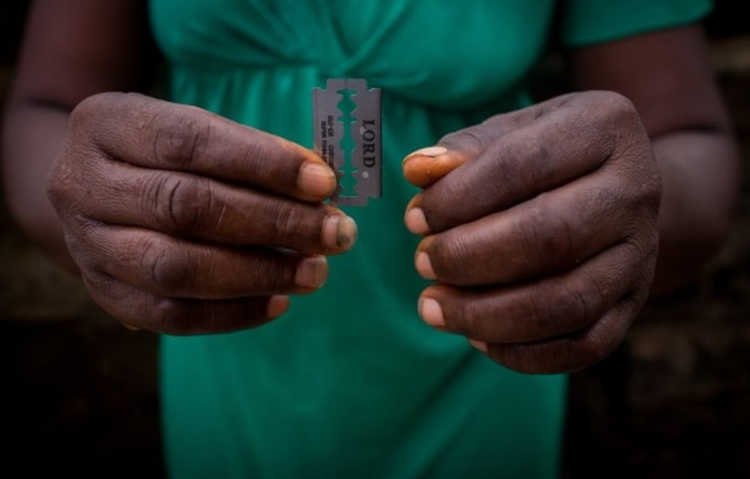
The Gambia’s Supreme Court is preparing to decide whether the law protecting girls from female genital mutilation (FGM) should remain in force, placing the future safety of thousands of children at the centre of a constitutional battle.
Development Diaries reports that the court is hearing a challenge to the country’s 2015 ban on FGM, following parliament’s 2024 rejection of an attempt to repeal the law.
Human rights organisations fear that overturning the ban could weaken one of the country’s strongest legal protections for girls.
For many the Gambians, the case is about whether the country’s girls will continue to have legal protection against a practice that has permanently affected millions of women and girls across Africa.
The danger became painfully clear in August 2025 when a one-month-old baby girl reportedly bled to death after undergoing FGM. She was too young to speak, understand what was happening and protect herself.
Her death has become a reminder of what is at stake whenever the practice is discussed as an abstract legal or cultural issue.
The World Health Organisation (WHO) has consistently maintained that FGM has no medical benefit and can cause severe bleeding, infections, complications during childbirth, long-term psychological trauma and death.
More than 230 million women and girls worldwide are estimated to have undergone the practice, with Africa accounting for about 144 million of those survivors.
Supporters of the legal challenge argue that the ban interferes with religious and cultural rights. But human rights experts and many Islamic scholars disagree, noting that FGM predates Islam and is not required by the Quran or the Sunnah.
At the centre of the case is whether cultural claims can justify a practice that causes permanent harm to children, not simply whether people may practise their culture. Those seeking to overturn the law must equally explain why legal protection should be removed from girls who cannot decide for themselves.
Gambia’s constitution recognises important rights, including freedom of religion and culture, but it also makes clear that those rights cannot be exercised in ways that violate the fundamental rights and freedoms of others.
Beyond its constitution, the country is bound by the African Charter on the Rights and Welfare of the Child and the Maputo Protocol, both of which require governments to prohibit harmful practices such as FGM.
Girls will bear the full weight of whatever the court decides, especially those growing up in communities where FGM remains deeply rooted. Many are children in rural areas with little ability to resist decisions made entirely by adults.
The one-month-old baby who died last year perhaps best illustrates who stands to lose if the ban is weakened because legal protection offers little comfort after irreversible harm has already occurred.
For years, women’s rights organisations across Africa have worked with communities, religious leaders and policymakers to show that protecting girls does not threaten culture but strengthens society.
A judgment overturning the ban could encourage similar legal challenges elsewhere on the continent, making the implications far larger than the Gambia alone.
Civil society organisations and Gambian diaspora groups should closely monitor the ruling, make the full judgment publicly accessible once it is delivered, and continue educating communities about the health and human rights consequences of FGM, regardless of the outcome.
The Supreme Court now has an opportunity to reinforce the legal protections already recognised in Gambian and African law. If the ban is overturned, parliament should move quickly to restore those protections through legislation firmly anchored in the constitutional rights to life, bodily integrity and freedom from cruel, inhuman, and degrading treatment.
As for the ministries of health and women’s affairs, they should continue enforcing measures that protect girls because no child’s safety should depend on whether adults can agree on a legal technicality.