





African governments accepting deportees from the United States are raising questions about whether the continent is helping to protect refugees or helping to move them from one uncertainty to another.
Development Diaries reports that Human Rights Watch (HRW) has warned that agreements allowing some African countries to receive deportees from the United States could violate international refugee law, particularly where those transferred cannot safely return to their own countries.
The concern extends beyond immigration policy because many of those affected are not ordinary immigration offenders but people with pending asylum claims or genuine fears of persecution if returned home. Instead of remaining in the United States while their protection claims are determined, they are being transferred to countries with which they often have no historical, legal or family connection.
HRW estimates that, by May 2026, the United States had transferred more than 19,000 third-country nationals to at least 23 countries through similar arrangements, including Ghana, Rwanda, Uganda, Eswatini and South Sudan.
Although presented as migration management, the policy raises concerns that responsibility for protecting vulnerable people is quietly being shifted to countries that played no part in the circumstances that forced them to flee.
The concern becomes even more significant because the principle of non-refoulement sits at the heart of international refugee protection. Under the 1951 Refugee Convention, countries must not return anyone to a place where they face persecution, torture or other serious harm, while African countries strengthened that commitment through the 1969 OAU Convention Governing the Specific Aspects of Refugee Problems in Africa, drawing on the continent’s own long history of displacement and forced migration.
Accepting deportees who may still have valid protection claims therefore creates responsibilities that cannot simply be transferred with the passengers’ luggage.
If an African government receives someone who cannot safely return home and later facilitates that person’s removal without proper protection procedures, it risks becoming part of the very chain of refoulement that international law was created to prevent.
Many of these arrangements have attracted further criticism because transferred migrants are frequently sent to countries where they have no personal ties and, in some cases, are detained while awaiting uncertain outcomes.
Governments in Ghana, Rwanda, Uganda, Eswatini and other participating states must therefore explain why they entered such agreements and whether they fully comply with their obligations under international and African refugee law.
The United States equally bears responsibility for policies that shift protection responsibilities beyond its borders, while the Office of the United Nations High Commissioner for Refugees (UNHCR) faces growing expectations to scrutinise these transfers more publicly.
The people paying the highest price have almost no influence over the decisions shaping their future. Having already fled conflict, persecution or instability, they now risk being transferred to countries where they know no one, have limited legal protection and often lack access to lawyers or support services.
Women and children remain especially vulnerable because prolonged displacement and uncertainty frequently expose them to exploitation, trafficking and abuse.
HRW and refugee rights organisations have therefore urged African governments to resist becoming instruments of migration policies that weaken refugee protection.
Africa understands forced displacement better than most regions because millions of its citizens have relied on asylum in neighbouring countries during wars, political crises and humanitarian emergencies. That shared history helped shape the continent’s refugee laws, making it difficult to defend policies that may now undermine them.
Civil society organisations in countries considering or implementing these arrangements should demand that their governments publish the full text of every agreement signed with the United States and submit them for independent legal assessment by the UNHCR and the African Commission on Human and Peoples’ Rights.
The African Union Commission should also determine whether these agreements comply with the African Charter on Human and Peoples’ Rights and the OAU Refugee Convention, while African governments should avoid participating in arrangements that risk violating the principle of non-refoulement.
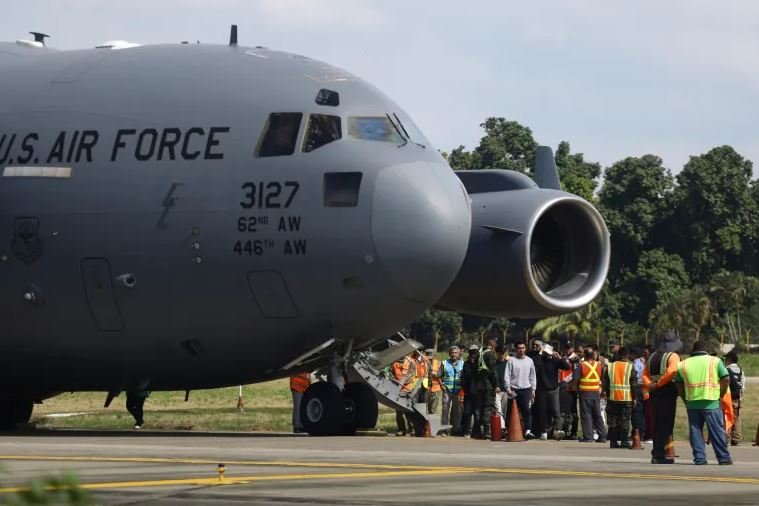
Photo source: Jorge Salvador Cabrera/Getty Images (file)