

Zambia’s next general election is raising fresh questions about whether the democratic institutions that delivered the country’s historic 2021 transition remain as strong today.
Development Diaries reports that the August 2026 general election will be the country’s first nationwide vote since President Hakainde Hichilema defeated an incumbent in the widely praised 2021 election, restoring confidence that political power could change hands peacefully through the ballot.
Five years later, Zambia approaches another election under far more difficult conditions. The country is grappling with economic pressure, a heavy debt burden and a weaker currency, while concerns have grown over shrinking civic space following developments such as the cancellation of the RightsCon technology and digital rights conference under reported diplomatic pressure.
Those developments do not automatically mean Zambia’s democracy is weakening, but they have intensified scrutiny of whether opposition parties, civil society organisations, journalists and ordinary citizens will enjoy the political freedoms needed for another credible election.
Much of that responsibility now rests with the institutions managing the process. President Hichilema and the governing United Party for National Development (UPND) will be judged on their record in office, while the Electoral Commission of Zambia will be expected to organise an election that inspires public confidence.
The government’s handling of freedom of expression, peaceful assembly and political association will also shape whether citizens believe the electoral environment remains genuinely open and competitive.
Those issues are rooted in democratic rights. Article 13 of the African Charter on Human and Peoples’ Rights guarantees citizens the right to participate freely in the government of their country, while credible elections depend on the freedom to organise, campaign, assemble and express political opinions without intimidation.
Ordinary Zambians have the greatest stake in whether those protections are upheld. Young people struggling with unemployment, families coping with rising living costs and rural communities that depend almost entirely on the ballot box to influence government decisions stand to lose the most if confidence in the electoral process declines.
Women and young voters who helped drive political change in 2021 also risk seeing their voices weakened if civic space continues to narrow because democracy becomes much quieter when only those with power can afford to speak loudly.
Many observers of African politics argue that democratic transitions are not judged only by how governments come to power but by whether those governments continue to respect the institutions and freedoms that made their own victories possible. Zambia’s 2026 election offers another opportunity to demonstrate that democratic credibility can be sustained beyond one successful transition.
Citizens should closely monitor voter registration, campaign freedoms, media access and the treatment of opposition parties throughout the electoral process. Civil society organisations can strengthen public confidence by documenting those conditions before voting begins, while citizens should register and participate because the strongest defence against democratic backsliding remains an active electorate.
The Electoral Commission of Zambia should publish a comprehensive election management plan well ahead of polling day, covering voter registration, polling arrangements, dispute resolution and result verification.
The government should also guarantee the freedoms of expression, association and peaceful assembly because credible elections depend as much on an open political environment as they do on the ballots themselves.
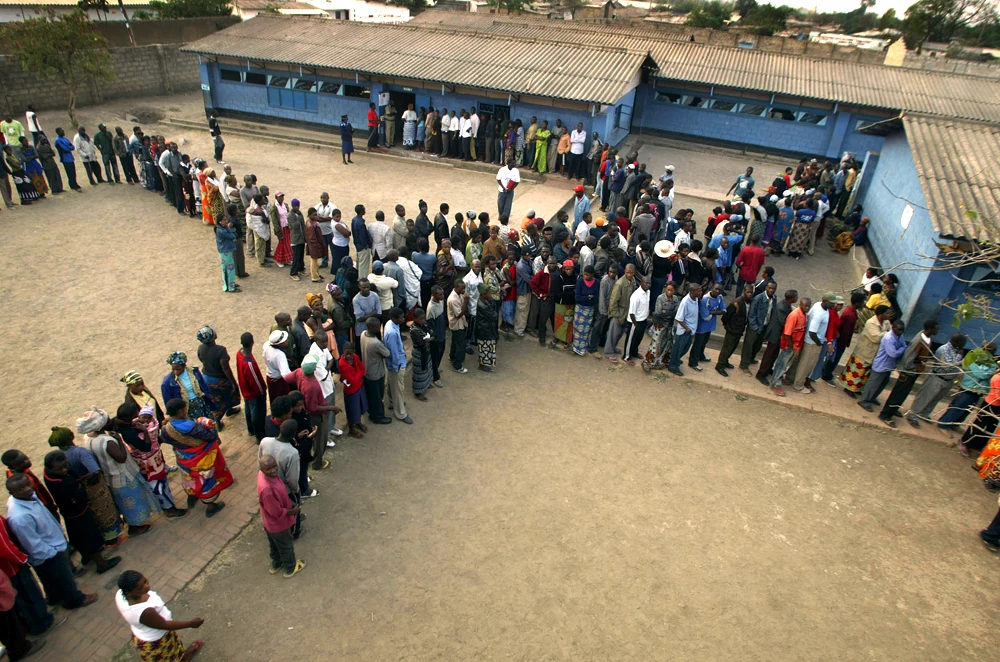
Photo source: Tsvangirayi Mukwazhi