




For many rural families in South Africa’s Eastern Cape, the constitutional right to water still exists more on paper than in their taps, forcing women and children to continue walking long distances for water while abandoned government pipelines stand nearby like monuments to promises that never quite arrived.
Development Diaries reports that a South African High Court recently ordered the relevant minister to ensure water access for affected Eastern Cape communities, placing renewed public attention on a crisis that many residents say has dragged on for years despite repeated government programmes, infrastructure budgets, and political promises.
In villages like Nqadu, the problem is no longer simply the absence of infrastructure because many communities can physically point to pipes, unfinished projects, broken facilities, and abandoned water systems scattered around them.
The deeper frustration is that citizens have watched governments announce projects, allocate funds, hold commissioning ceremonies, and leave communities with taps that either stopped running after a few months or never worked at all.
For many residents, the situation now feels like owning a television without electricity because the infrastructure exists just enough for politicians to take photographs beside it, but not enough for ordinary people to actually use it.
South Africa’s constitution, under Section 27, guarantees every person the right to access sufficient water and requires the state to take reasonable steps towards progressively realising that right.
In simple terms, the law does not expect government to solve every water problem overnight, but it does expect visible movement forward.
The Eastern Cape’s water crisis is not entirely about a lack of money, as the national government has repeatedly allocated funding through rural infrastructure programmes and conditional grants.
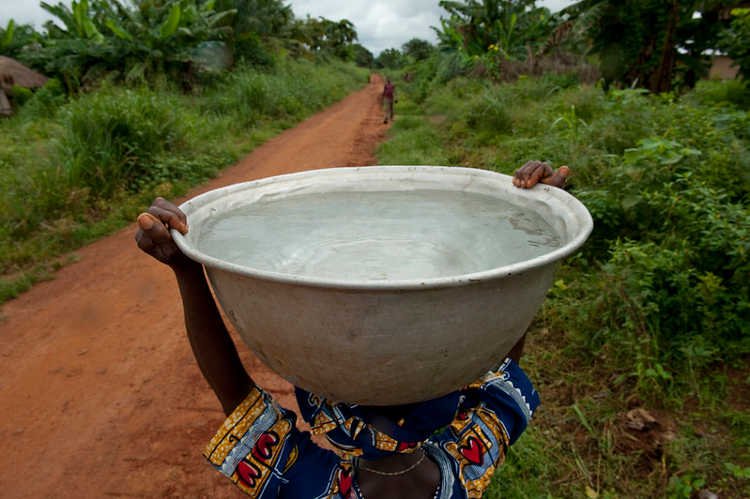
The main problem is the gap between money approved on paper and water actually reaching households. Communities have seen projects launched, contractors hired, and budgets announced, but many families still wake up before sunrise to fetch water from rivers and streams.
Women continue carrying the heaviest burden of that failure, with many in rural communities spending hours every day searching for water, reducing the time available for school, work, childcare, or income-generating activities.
For adolescent girls especially, poor water and sanitation infrastructure in schools directly affects attendance during menstruation, quietly pushing some students out of classrooms altogether.
In reality, the constitutional right to water and the constitutional right to education often become the same struggle because a child cannot concentrate in school while worrying about where the next bucket of water will come from.
The High Court order now places legal pressure on government officials to move beyond speeches and implementation plans that never fully materialise. But many residents remain cautious because South Africans have seen court victories before without always seeing corresponding changes on the ground.
That scepticism is understandable in communities where broken taps have existed longer than some politicians’ entire careers.
Citizens and civil society organisations are now being encouraged to monitor the implementation of the court order closely by reviewing the specific obligations imposed on government, the timelines attached to them, and the consequences for non-compliance.
Rights organisations involved in similar cases have also stressed that court orders only become meaningful when citizens continue demanding enforcement after media attention fades.
At the institutional level, pressure is mounting on the Department of Water and Sanitation to publish a detailed implementation plan identifying affected communities, responsible officials, timelines, and funding commitments.
Governance experts are also calling for a full public audit of water infrastructure projects commissioned in the Eastern Cape over the past decade to determine which systems are functional, partially functional, or completely abandoned.
For many families in rural South Africa, the conversation stopped being about government promises a long time ago because what citizens increasingly want now is water running from the tap.
Photo source: World Bank