





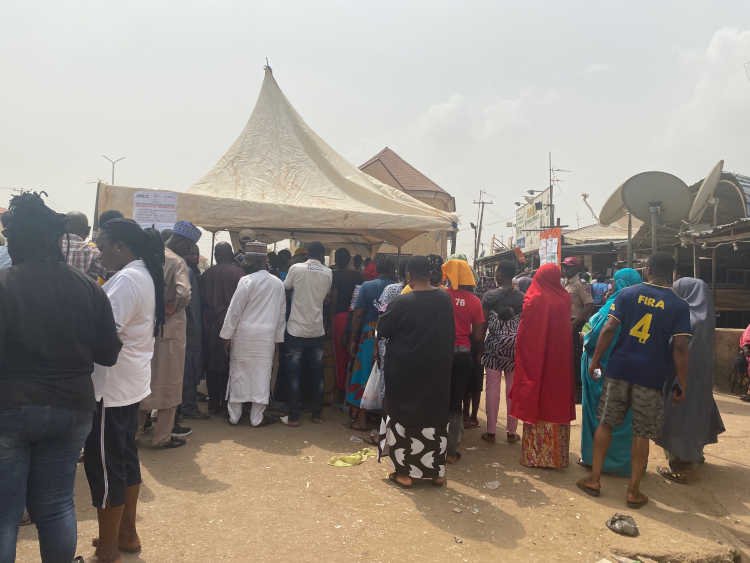
Nigeria’s political parties may call them ‘primaries’, but across many states of the federation, the contest often begins and ends with whoever can distribute the highest amount of cash to delegates before voting begins.
Development Diaries reports that civil society monitors said they observed widespread delegate vote-buying during the recent All Progressives Congress (APC) Senate, House of Representatives, and State Assembly primaries held, with reports of cash distributions, delegate busing, and direct financial inducements surfacing across several states.
One delegate at an APC Senate primary in the southwest reportedly admitted to receiving N150,000 before casting his vote.
He was part of a political culture that has gradually normalised the idea that party nominations are something to be bought like market goods rather than earned through ideas, competence, or public trust.
In many Nigerian primaries today, delegates no longer arrive asking which aspirant has the best plans for education, healthcare, or jobs. Too often, the question quietly becomes who came with the ‘highest encouragement package’ before accreditation closes.
The disturbing part is that this practice has become so normalised that delegates, aspirants, party officials, and even ordinary citizens often expect it to happen, treating political bribery during primaries the same way many Nigerians treat generator noise in their neighbourhoods.
According to reports from election monitoring groups such as the Yiaga Africa and the Nigeria Civil Society Situation Room, multiple aspirants distributed money to delegates during the primaries, while aspirants with the strongest access to government influence, patronage networks, and financial resources usually emerged victorious.
What many delegates may not fully consider in that moment is that the vote they are selling does not belong to them alone, as the legislator who emerges from that transaction will go on to make laws, approve budgets, supervise ministries, and influence public spending decisions affecting millions of Nigerians who were nowhere near the primary venue.
That is why the damage caused by vote-buying during primaries does not end when delegates leave the hall.
A politician who spent heavily to secure delegates often enters office carrying political debts that must somehow be repaid, and those repayments usually happen through inflated contracts, manipulated budget allocations, constituency project fraud, committee compromises, or political loyalty to powerful financiers instead of ordinary citizens.
In simple terms, the corruption citizens later complain about inside government often begins long before the general election campaign posters appear on the streets.
Nigeria’s laws already prohibit vote-buying, with the Electoral Act 2026 criminalising both buying and selling votes, while agencies such as the Independent Corrupt Practices Commission (ICPC) and Independent National Electoral Commission (INEC) possess legal powers connected to electoral malpractice enforcement.
But the problem is that enforcement around party primaries remains extremely weak.
It is also understood that political parties often manage their primaries with limited independent monitoring, while many delegates or losing aspirants avoid filing formal complaints because challenging powerful party figures can quickly destroy future political opportunities.
By the time investigations slowly begin, the political cycle has already moved forward and the winners have settled comfortably into office.
And the result is a strange democratic arrangement where citizens proudly line up during the general election believing they are choosing candidates freely, even though the real selection process may already have been decided quietly inside hotel rooms, party offices, and primary venues where cash moved faster than political ideas.
Women face even deeper disadvantages in this system because primary-day vote-buying rewards aspirants with larger financial war chests and stronger elite networks, areas where female politicians often face structural barriers.
The painful irony is that political parties sometimes announce discounted nomination forms for women and young people while ignoring the far more expensive underground economy operating on primary day itself.
Citizens now have an important responsibility beyond social media outrage. Nigerians should begin studying and documenting reports released by election monitoring groups, identifying constituencies where vote-buying was observed, and submitting formal complaints to anti-corruption agencies demanding investigations into specific cases.
At the institutional level, INEC must develop stronger monitoring systems for party primaries before the 2027 general election cycle fully gathers momentum, while anti-corruption agencies must publicly commit to prosecuting electoral bribery cases connected specifically to primaries rather than waiting until general elections alone.