




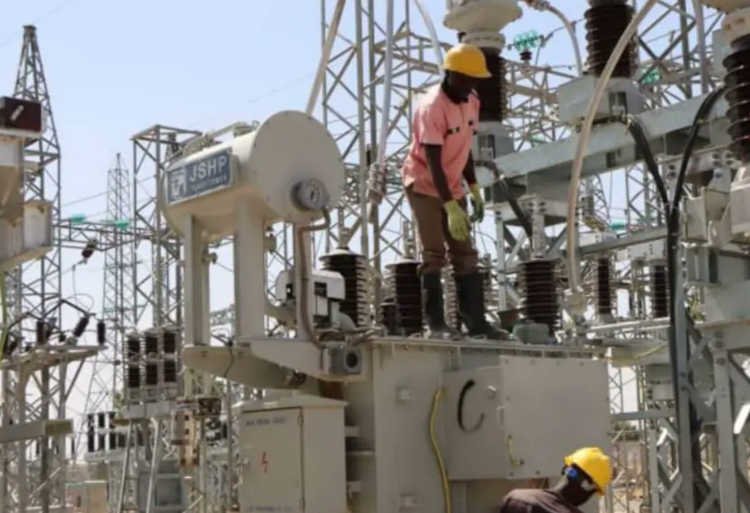
Nigeria’s electricity reform has ended the way many Nigerians already feared it would, with billions of dollars spent, official milestones recorded, and generators still doing much of the work the national grid was supposed to be doing.
Development Diaries reports that the World Bank-backed Power Sector Recovery Programme, which committed about $1.51 billion to Nigeria’s electricity sector, has now been formally closed after the federal government cancelled the remaining $717.7 million in undisbursed funds.
It is understood that despite nearly $796 million being spent on electricity reform, households and small businesses across the country still rely on generators, candles, rechargeable lamps, and an unstable power supply to survive.
For example, in Ibadan, a seamstress still spends between N15,000 and N25,000 monthly on petrol to keep her sewing machines running because electricity in her area behaves like a relative who visits only when it is convenient for them and leaves before anyone can ask why they came.
Some days she gets four hours of electricity, while other days she gets six, and in many cases, the power arrives in the middle of the night when residents are asleep, only to disappear again by the time people wake up to actually use it.
Despite the poor supply, she still pays electricity bills every month alongside generator expenses because, in Nigeria, citizens often pay for darkness almost as faithfully as they pay for light.
What happened to the money
The Power Sector Recovery Programme was approved by the World Bank in 2023 to strengthen Nigeria’s electricity supply system, improve the financial health of the sector, and make power distribution more efficient.
The programme combined funding from the International Bank for Reconstruction and Development and the International Development Association, bringing the total commitment to roughly $1.51 billion.
But in March 2026, Nigeria requested the cancellation of the remaining $717.7 million that had yet to be disbursed. The World Bank agreed, and the programme was closed more than one year earlier than originally planned.
According to the World Bank’s restructuring documents, the naira’s sharp depreciation after the 2023 foreign exchange liberalisation significantly increased electricity generation costs in a sector heavily dependent on gas-fired plants, with many operational, maintenance, and technical expenses tied partly to the dollar.
As the naira weakened, generation costs rose sharply. But electricity tariffs for most Nigerians did not rise at the same speed because government authorities feared the political backlash that would follow another major tariff increase in an already struggling economy.
As a result, electricity companies earned far less than the actual cost of generating and distributing power, investment slowed, maintenance suffered, supply remained poor, and the reform eventually joined a familiar queue of Nigerian interventions that promised transformation but ended up negotiating with the same old problems.
The tariff trap nobody wants to explain honestly
Nigeria’s electricity crisis has remained tied to the fact that the actual cost of generating stable electricity is far higher than what most citizens can afford to pay.
Gas-fired plants powering most of the national grid operate with major costs linked partly to foreign exchange, and once the naira weakened sharply after the 2023 liberalisation policy, electricity generation became significantly more expensive.
But tariffs for most residential consumers remained largely unchanged even as distribution companies argued that the existing pricing structure could no longer sustain generation, transmission, maintenance, and infrastructure investment.
Only Band A customers, mostly wealthier residential areas and commercial users receiving more than 20 hours of electricity daily, faced major tariff increases in 2024, while the majority of Nigerians in Bands B to E continued under lower tariff structures that electricity operators insist do not cover operational costs.
The result has been a cycle in which distribution companies invest less, infrastructure deteriorates, supply worsens, generator dependence grows, and households quietly become their own power companies while still receiving electricity bills from someone else.
Successive governments have still not publicly explained what a realistic cost-reflective electricity tariff would look like, which categories of citizens would receive subsidies, how those subsidies would be funded, and how long Nigerians should realistically expect to wait before a stable electricity supply becomes normal rather than accidental.
Who is responsible
The Federal Ministry of Power carries responsibility for managing the programme and for failing to publish clear, accessible outcome data showing what specific improvements followed each disbursement tranche.
The Nigerian Electricity Regulatory Commission (NERC) also faces accountability questions over tariff structures that repeatedly fail to balance affordability with the actual financial realities of electricity generation and distribution.
Distribution companies equally face scrutiny because many citizens still struggle to identify visible supply improvements despite years of reforms, privatisation, tariff debates, and infrastructure financing.
The World Bank itself is not completely free from criticism because the programme design relied heavily on economic assumptions that became unrealistic once Nigeria’s exchange rate crisis deepened after 2023.
As for the National Assembly that approved the programme and received reports tied to disbursements, there was little visible legislative scrutiny focused on a basic accountability question of how many additional hours of electricity Nigerians actually gained from each major release of funds.
Citizens’ rights
Electricity affects far more than comfort because it determines if students can study at night, small businesses can survive, hospitals can preserve vaccines properly, and citizens can participate meaningfully in an economy increasingly dependent on digital services.
When nearly $800 million is spent on reform without measurable improvements visible in the daily lives of citizens, the issue moves beyond technical policy failure and becomes a governance and accountability problem affecting basic social and economic rights.
Gender and equity lens
Women operating small businesses inside Nigeria’s informal economy remain among the hardest hit by unreliable electricity supply.
Hairdressers, food vendors, tailors, frozen food sellers, and small retailers often spend large portions of their income fueling generators because their businesses cannot survive without electricity.
Many of these women operate with very small profit margins, meaning generator costs consume income that could otherwise support household feeding, school fees, healthcare, or business expansion.
Rural communities equally remain largely disconnected from the benefits of electricity reform because many areas outside major urban centres continue to depend on off-grid energy arrangements or have no stable access to electricity at all.
What Nigerians should start asking
Citizens can begin to demand clearer accountability by filing Freedom of Information requests to the Federal Ministry of Power seeking detailed records of programme disbursements, certified reform milestones, and electricity supply data across distribution company areas during the reform period.
Communities can also begin to independently document daily electricity supply hours because citizen-generated records often expose realities that official reports avoid discussing publicly.
For institutions, the National Assembly Committee on Power should conduct a public investigative hearing focused specifically on the Power Sector Recovery Programme, compelling the Ministry of Power, NERC, and distribution companies to explain what measurable improvements followed the disbursed funds.
NERC should also publish a clear and accessible document explaining what electricity truly costs in Nigeria, what level of tariff is required for sustainability, which households would qualify for subsidy protection, and how government plans to balance affordability with stable supply.
Until that conversation happens, many Nigerians will continue paying electricity bills while privately financing generators that increasingly function as the country’s unofficial national grid.
Photo source: TCN