




The controversy surrounding a viral audio clip allegedly involving President Bola Tinubu has exposed a critical gap in Nigeria’s digital governance because artificial intelligence is already reshaping political communication while the country’s laws remain largely unprepared for the realities of AI-generated disinformation.
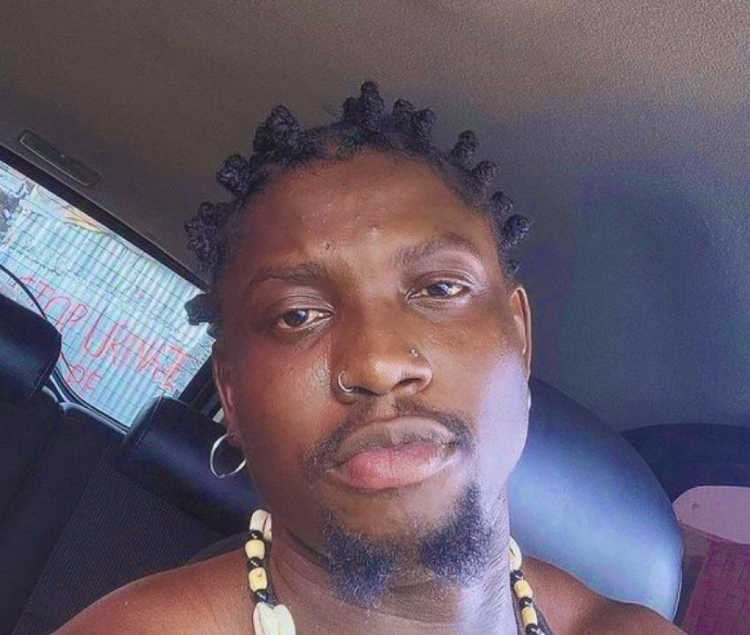
Development Diaries reports that the viral audio recording attributed to President Tinubu circulated widely on social media on 27 May, after it was shared by social media critic Martins Otse, popularly known as VeryDarkMan (VDM).
Questions quickly emerged about the authenticity of the recording, with some social media users alleging that the audio was generated using artificial intelligence.
The presidency later described the recording as fabricated, while presidential spokesperson Bayo Onanuga called for VDM to face what he described as the full weight of the law.
The presidency also warned that AI-generated content and religious disinformation pose serious threats to national unity ahead of the 2027 elections.
On that point, there is little disagreement.
However, the main concern is what happens when governments respond to genuine disinformation threats without first establishing clear legal boundaries between those who create manipulated content and those who merely share it.
The controversy has therefore opened a wider conversation about whether Nigeria is ready for the deepfake era or whether authorities are preparing to use old laws to regulate a new problem they have yet to properly define.
AI Disinformation reality Nigeria is walking into
Artificial intelligence has dramatically lowered the cost of creating convincing false content, and Nigeria is entering an election season in which technology can now place words in people’s mouths, alter voices, generate fake videos, and produce misleading content at a scale that would have been impossible only a few years ago.
Research from Dubawa shows that a large majority of Nigerians encounter misleading information online regularly, while many admit that they have believed or acted on false information shared through digital platforms.
Civic technology organisations have repeatedly warned that the country’s digital space is becoming increasingly saturated with AI-generated content, creating a situation where citizens may struggle to distinguish fact from fabrication.
The risks become even more serious when viewed through Nigeria’s complex social landscape of hundreds of languages, ethnic identities, and religious communities, presenting fertile ground for actors seeking to exploit existing tensions.
For instance, a fabricated video targeting a specific ethnic group in Plateau State, a manipulated audio clip aimed at religious communities in Kaduna State, or an AI-generated message designed to inflame political tensions in Lagos State does not need to convince the entire country to create damage.
The 2023 elections already demonstrated how quickly false narratives could spread and deepen social divisions, and by 2027, those same tactics will be supported by technologies capable of producing content that appears increasingly authentic.
The legal gap
Nigeria’s Cybercrime Act was drafted before AI-generated political content became a serious governance concern. As a result, the law does not clearly distinguish between the person who deliberately creates manipulated content and the citizen who receives that content and shares it, believing it to be genuine.
A person who creates a deepfake to mislead voters is committing a deliberate act of political deception, while a person who shares it after being misled is not. So treating both as the same offence risks criminalising ordinary political participation and discouraging citizens from engaging with political information altogether.
The speed with which calls for prosecution emerged before any publicly available forensic evidence identifying the creator of the audio clip has also raised concerns among digital rights advocates.
One of the concerns is that once citizens begin to believe that sharing political content could expose them to criminal liability regardless of intent, public debate itself starts shrinking.
That is particularly dangerous in an election season because democratic participation depends on citizens feeling free to discuss, question, challenge, and share political information without fear that every mistake could become a criminal offence.
Religious disinformation may be bigger threat
A manipulated video showing a respected religious leader making inflammatory comments or a fabricated recording suggesting an attack on a faith community could spread through WhatsApp groups overnight and generate real-world consequences before verification mechanisms catch up.
That is why technology experts increasingly argue that media literacy campaigns delivered through churches, mosques, community associations, schools, and local-language radio stations may be as important as legal reforms.
Unfortunately, Nigeria has invested far less in public education on AI-generated misinformation than the scale of the threat now requires.
System analysis
The controversy has revealed that several institutions responsible for digital governance remain behind the pace of technological change.
National Information Technology Development Agency (NITDA) oversees key aspects of Nigeria’s digital ecosystem, while the Ministry of Communications, Innovation and Digital Economy plays a central role in technology regulation.
For its part, the National Assembly writes and amends the laws governing digital spaces, even as media organisations establish professional standards for information verification.
But despite repeated warnings about AI-generated misinformation, none of these institutions has produced a comprehensive public framework explaining how Nigeria intends to regulate AI-generated electoral content ahead of the 2027 elections.
Without such a framework, authorities risk making enforcement decisions on a case-by-case basis, creating uncertainty for citizens and raising legitimate concerns about selective application of the law.
Citizens’ rights
Nigeria’s constitution protects freedom of expression and guarantees citizens the right to receive and share information. Regional human rights frameworks to which Nigeria is a signatory provide similar protections.
The challenge for policymakers is finding a balance that punishes deliberate manipulation without criminalising ordinary political participation.
That should be a framework that targets creators of malicious deepfakes while protecting citizens acting in good faith to strengthen democracy.
Gender and equity lens
Women face some of the most serious dangers in the emerging deepfake environment, as across several countries, female politicians, journalists, activists, and public figures have increasingly become targets of AI-generated sexual imagery designed to humiliate, intimidate, or discredit them.
At the same time, rural communities and populations with lower levels of digital literacy remain particularly vulnerable to AI-generated disinformation because much of their information arrives through forwarding chains on WhatsApp and other messaging platforms where verification tools are less accessible.
In fact, the communities most vulnerable to manipulation are often the communities with the fewest resources to detect it.
What must happen next
Citizens cannot afford to become passive consumers of information in an AI-driven political environment. Every Nigerian must ensure they verify suspicious content before sharing it.
The Ministry of Communications, NITDA, and the National Assembly also need to move faster than they have so far. Nigeria requires a clear regulatory framework that distinguishes between creating manipulated political content and sharing it, establishes transparent investigative standards, protects good-faith users, and provides legal certainty ahead of the 2027 elections.
The debate triggered by the VDM controversy is therefore about whether Nigeria will enter the next election with rules that can address AI manipulation without turning political expression itself into a legal risk.