





Nigeria’s debt conversation is beginning to resemble a family argument where everyone is shouting at the neighbour who approved the loan while ignoring the relative who collected the money, spent it, and cannot explain where it went.
Development Diaries reports that the reaction came ahead of the World Bank’s consideration of a proposed $1.25 billion facility for Nigeria, expected to go before its board on 26 June.
The development has renewed questions about Nigeria’s borrowing strategy, accountability for existing loans, and whether citizens are directing their pressure at the institution approving the loans or at the government responsible for requesting, spending, and accounting for them.
The debt arithmetic citizens need to understand
Nigeria’s public debt reached N159.27 trillion by the end of 2025, rising sharply from N87.379 trillion recorded when former President Muhammadu Buhari left office in May 2023.
During the same period, the Tinubu administration secured approximately $9.35 billion in World Bank approvals covering sectors such as power, education, healthcare, agriculture, and economic reforms.
President Bola Tinubu has already confirmed that Nigeria will spend about $11.6 billion servicing debt in 2026, with the 2026 federal budget allocating more than N15 trillion to debt servicing alone, consuming roughly half of expected government revenue.
Every naira committed to servicing existing loans is money unavailable for schools, hospitals, roads, security operations, and social protection programmes. What remains difficult to verify is how billions of dollars already borrowed have translated into completed projects and measurable improvements in citizens’ lives.
That remains difficult to ascertain because while the Debt Management Office regularly publishes debt figures, there is no publicly accessible dashboard showing the physical outcomes linked to billions of dollars already borrowed.
The result is that Nigerians can easily find figures showing how much has been borrowed but often struggle to find equally clear records showing what the borrowing has delivered. It is a bit like receiving a long restaurant bill while the food itself never arrives at the table.
The petrol price reduction that changes little
The same week also brought headlines from the downstream petroleum sector after Dangote Petroleum Refinery reduced its gantry price from N1,275 to N1,250 per litre.
While the reduction attracted public attention, the actual decrease represented about two percent of the overall price. For many households already stretched by transport costs, the difference felt less like relief and more like being handed a teaspoon of water after crossing a desert.
A more important governance question emerged weeks earlier when the World Bank’s April 2026 Nigeria Development Update recommended reopening petrol imports, arguing that domestic fuel prices were above import-parity benchmarks. Following objections from Dangote Industries, the recommendation disappeared from the report published on the World Bank’s website.
The episode raised questions about transparency because a recommendation appeared, triggered a public disagreement, and then disappeared without a detailed explanation. For citizens trying to understand how fuel prices are determined, it looked like watching an argument through a closed window and then being asked to trust that everything was settled properly.
Citizens deserve clarity on whether fuel prices are being determined by transparent market realities, effective regulation, or negotiations occurring outside public scrutiny.
What system is failing
New loans often arrive before citizens have received a clear account of what previous loans achieved. It creates the impression of a contractor asking for money to build the next floor of a house while nobody has been allowed to inspect the foundation.
The Debt Management Office provides debt stock figures, but it does not publish project-level utilisation data that allows citizens to track implementation in their communities.
The National Assembly also lacks a dedicated mechanism focused exclusively on monitoring the utilisation of external loans across multiple sectors and lenders.
A similar transparency challenge exists within the fuel sector, as the absence of a consistently published benchmark explaining domestic fuel pricing leaves citizens dependent on competing narratives from government agencies, refiners, and international institutions.
Rights and accountability
Section 16 of Nigeria’s constitution commits the state to managing the economy in a way that promotes the welfare and well-being of citizens.
When debt servicing absorbs a substantial share of government revenue while citizens continue to face inadequate healthcare, education challenges, insecurity, and infrastructure deficits, questions about economic management become legitimate public concerns rather than partisan arguments.
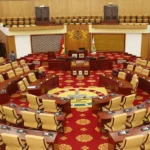
The National Assembly’s constitutional oversight role also extends beyond approving borrowing requests to include ensuring that borrowed funds produce outcomes capable of improving citizens’ lives.
Gender and equity lens
When public resources become constrained, girls are often among the first to leave school in households facing financial pressure. Maternal healthcare services become harder to access when health budgets are inadequate, while women carrying primary caregiving responsibilities absorb many of the social costs created by weak public services.
Energy affordability also affects women disproportionately, as rising cooking gas prices continue to push many households back towards firewood and other traditional fuels, exposing women and children to greater health risks associated with indoor air pollution.
What citizens should demand
The pressure Nigerians directed at the World Bank reflects genuine frustration, but the primary accountability target remains the institutions responsible for borrowing, spending, and overseeing public funds.
Citizens should demand publicly accessible project-by-project records showing what has been delivered through the approximately $9.35 billion in World Bank loans approved since June 2023.
The Debt Management Office should publish a detailed loan utilisation dashboard covering project locations, implementation status, disbursement records, and beneficiary data, while the National Assembly should establish a dedicated oversight structure focused specifically on external loan utilisation.
As for the Nigerian Midstream and Downstream Petroleum Regulatory Authority, it should publish regular fuel pricing benchmarks that allow citizens to understand how domestic prices compare with international market realities.
Until Nigerians can trace borrowed money from approval to delivery, every new loan announcement will sound less like news of development and more like another alert from a bank account that keeps recording withdrawals without showing what was purchased.