



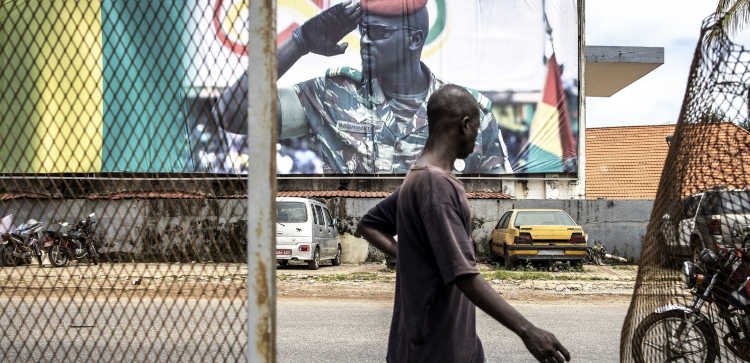
Guinea’s military transition may be nearing its official end, but there are concerns about whether the country is returning to democracy or simply changing from soldiers in uniform to politicians controlling the same concentrated power from behind a different office desk.
Development Diaries reports that Guinea will hold legislative and municipal elections on 31 May, months after President Mamady Doumbouya won the country’s presidential election with 86.72 percent of the vote in December 2025.
The elections are expected to complete the Economic Community of West African States (ECOWAS) transition timetable agreed after the 2021 military coup that removed former President Alpha Condé from power.
But across West Africa, elections producing figures above 80 percent in multi-candidate contests usually raise the same uncomfortable conversation because competitive democracies rarely produce those kinds of margins unless opposition parties are operating inside an environment where the playing field is already tilted before voting even begins.
Whether the pressure comes through weak media access, intimidation, registration barriers, fear, or state influence over institutions, such numbers often tell a larger governance story than the official victory speech admits publicly.
For many Guineans, the concern is whether the institutions coming out of those elections can genuinely challenge executive power or whether Guinea is simply moving from military rule into another version of heavily centralised civilian control.
What the May elections can and cannot complete
This month’s elections formally complete Guinea’s transition roadmap under the ECOWAS agreement reached after the coup. Compared to several other coup-origin governments in West Africa, Guinea’s authorities have shown more consistency in sticking to an electoral timetable and returning the country to constitutional rule.
The elections will produce a new 147-seat National Assembly to replace the unelected Transitional Council that has served as parliament during the transition period.
A Senate will also be created under the new political arrangement.
But one concern is that one-third of the Senate members will be appointed directly by the president himself. That arrangement immediately raises questions about independence because oversight becomes difficult when part of the institution expected to supervise executive power owes its existence directly to the same executive office.
In many African democracies, citizens already joke that some parliaments behave less like independent institutions and more like extended family WhatsApp groups where everybody waits to see what the boss will say before speaking.
Guinea’s emerging political structure is now raising fears of a similar outcome, with analysts from the Institute for Security Studies warning that long-term stability in Guinea will depend less on election ceremonies and more on whether citizens are genuinely heard inside governance systems and whether political participation becomes broader than loyalty to powerful individuals.
Historical pattern the numbers evoke
Guinea’s 86.72 percent presidential result did not emerge in a political vacuum, and across parts of Africa, post-coup elections have repeatedly followed a familiar script.
Under regional pressure, military-led governments often agree to elections that are eventually conducted under conditions still heavily controlled by the same authorities managing state institutions.
That usually leaves opposition parties to compete inside uneven political environments that frequently produce overwhelming victory margins for ruling authorities, after which regional bodies certify the transition, international recognition follows, and the underlying governance problems that triggered the crisis in the first place remain largely unresolved.
That pattern has appeared in different forms across countries like Guinea-Bissau, Gabon, and Togo over the years. The concern now is whether Guinea’s institutions will develop enough independence to break away from that cycle.
The strength of Guinea’s parliament, judiciary, media, and civil society will matter far more in the long run than the official completion date of the transition calendar.
System analysis
The institution most under test in Guinea today is the legislature itself. The new National Assembly will quickly reveal whether lawmakers can independently question executive decisions or whether party loyalty and political pressure will quietly weaken parliamentary oversight from the beginning.
The judiciary also faces scrutiny because courts in Guinea have historically struggled to maintain independence from political influence. Civil society groups and independent journalists equally require enough operational freedom to investigate and publicise cases of abuse, intimidation, or executive overreach if democratic accountability is to survive beyond election season speeches.
ECOWAS itself also faces a credibility question because regional organisations often maintain pressure during transition negotiations but gradually reduce scrutiny once elections are completed and diplomatic normalcy returns.
For many citizens across West Africa, this has created a growing perception that regional bodies sometimes focus more on whether elections happened than on whether democracy itself actually functions afterward.
Citizens’ rights
Article 13 of the African Charter on Human and Peoples’ Rights guarantees citizens the right to participate freely in the government of their country.
With that right, citizens must be able to choose between genuine political alternatives inside an environment where opposition participation is possible, dissent is safe, and elected institutions possess enough independence to hold leaders accountable after elections are over.
But many governance observers argue that Guinea’s current political environment has yet to fully demonstrate those conditions.
Gender and equity lens
Women’s representation inside Guinea’s new legislature will become one of the clearest indicators of how inclusive the transition truly is, with the country historically recording low levels of female parliamentary participation, and many women in rural communities still facing barriers linked to voter registration, transportation, economic hardship, and limited access to independent political information.
In many remote areas, political messaging continues to flow mainly through state-controlled or dominant government-aligned channels, making it harder for citizens to access diverse viewpoints before elections.
Young voters are also watching closely because Guinea’s transition was heavily shaped by youth frustration with the previous political order. Many young citizens who initially welcomed the coup as an opportunity for reform are now trying to determine whether the transition is genuinely redistributing democratic power or simply reorganising it.
How citizens and institutions should respond
Citizens participating in the May elections should document their voting experiences carefully, including accessibility conditions at polling units, intimidation, irregularities, and whether officially announced results match figures displayed locally at polling stations.
ECOWAS should also maintain active monitoring beyond election day instead of treating the completion of the transition timetable as the end of democratic oversight.
Guinea’s democratic test will happen after the elections when lawmakers begin to debate executive policies, journalists investigate government actions, and civil society organisations attempt to operate freely without intimidation.
That is usually the stage where many transitions across Africa stop sounding like democracy and start behaving like power protecting itself again.
Photo source: John Wessels/AFP via Getty Images