





Nigeria has digital accountability platforms meant to help citizens track government activities, but for millions of Nigerians living with disabilities, many of those platforms still behave like offices with locked doors.
Development Diaries reports that no major Nigerian government accountability platform has publicly released a formal accessibility compliance audit despite the country’s Disabilities Act requiring accessible public services.
Platforms like the Open Contracting Portal, the Nigerian Communications Commission’s Consumer Affairs Bureau, and even civic accountability websites used by anti-corruption organisations continue to operate without publicly verified accessibility standards for citizens with visual, hearing, or motor impairments.
The issue goes far beyond technology because what many Nigerians call ‘digital inclusion’ sometimes simply means putting information online and assuming everybody can automatically reach it.
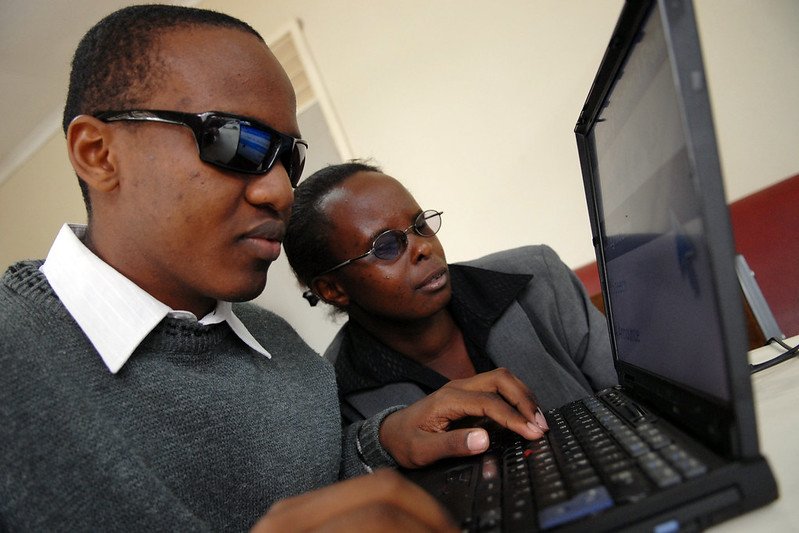
But a citizen with a visual impairment who uses a screen reader cannot access a platform properly if the website was not designed to work with assistive technology. Another citizen with hearing impairment cannot follow audio explanations without captions or transcripts, while the person who cannot use a mouse may struggle completely if a website cannot be navigated through keyboard controls.
These are globally recognised accessibility requirements already captured in the Web Content Accessibility Guidelines and reflected in Nigeria’s own technology policy discussions.
More importantly, the requirements connect directly to the Discrimination Against Persons with Disabilities (Prohibition) Act 2018, which legally requires accessible public services in the country.
Why this is bigger than disability rights
The issue is often discussed only as a disability conversation, but it is actually about accountability and citizenship. When BudgIT publishes federal spending breakdowns or when procurement information appears on the Open Contracting Portal, government and civil society organisations celebrate transparency.
But transparency that millions of citizens cannot independently access is only partially transparent.
A citizen who cannot navigate the accountability platform funded with public money is effectively excluded from the accountability process itself. The irony becomes even more painful because many persons with disabilities are among the citizens most affected when public services fail, as they rely heavily on functioning healthcare systems, accessible schools, transportation systems, and social protection programmes.
Nigeria’s National Population Commission estimated in 2021 that more than 25 million Nigerians live with some form of disability. At that scale, digital accessibility stops being a ‘special interest issue’ and becomes a national governance issue affecting millions of taxpayers and citizens.
Accessibility gaps Nigerians rarely discuss
The NCC Consumer Affairs Bureau, where citizens are expected to report poor network quality and telecom complaints, primarily depends on online form submission through web interfaces whose accessibility compliance has not been publicly audited.
For many citizens with visual impairment or citizens using basic assistive technology, that process may already create barriers before the complaint is even submitted.
A simpler system like USSD complaint filing, which would work better across different devices and accessibility conditions, is still missing. So an affected citizen struggling with poor network service may ironically face another accessibility struggle while trying to report the first one.
The Open Contracting Portal also presents similar challenges, as procurement information may technically be available, but navigating complex spreadsheets and downloadable datasets through screen readers is far from straightforward.
So while citizens are repeatedly told that government procurement is now transparent, many with disabilities still cannot independently interact with the information in meaningful ways.
Nigeria, therefore, risks creating a strange kind of democracy where citizens are encouraged to ‘hold government accountable online’ while millions are quietly excluded from the digital room where accountability conversations now happen.
System analysis
What appears to be failing is Nigeria’s broader governance approach to inclusive digital infrastructure, as government agencies continue to develop digital systems without binding accessibility requirements attached to procurement and approval processes.
The result is predictable because each institution builds platforms according to its own technical preferences, while accessibility becomes optional instead of mandatory.
Questions, therefore, return to institutions like National Information Technology Development Agency (NITDA), the Bureau of Public Procurement (BPP), and the Ministry of Humanitarian Affairs because accessibility standards cannot remain policy language without becoming enforceable government requirements.
Citizens’ rights
The Disabilities Act already guarantees accessible public services for Nigerians living with disabilities. But the exclusion of citizens from digital accountability systems, because platforms are inaccessible, creates technical, governance, and rights problems at the same time.
Nigeria also ratified the UN Convention on the Rights of Persons with Disabilities, which specifically requires equal access to information and communication technology.
Government accountability platforms that citizens with disabilities cannot independently use raise serious questions about whether these commitments are being implemented beyond official documents and conference speeches.
Gender and equity lens
Women living with disabilities often face even deeper exclusion because disability barriers combine with lower digital access, weaker internet connectivity, economic inequality, and lower smartphone ownership rates in many communities.
Women caring for relatives with disabilities also experience indirect exclusion when they struggle to access public accountability systems on behalf of family members whose interests they are trying to protect. The burden, therefore, spreads beyond individuals and affects entire households navigating already difficult social and economic realities.
Needed response
Disability rights organisations and civil society groups should begin to demand formal accessibility audits for major government digital platforms, especially those directly connected to public accountability and citizen participation.
NITDA should also establish binding digital accessibility standards for all citizen-facing government platforms instead of leaving compliance to institutional goodwill.
If government platforms are truly meant to serve citizens, then millions of Nigerians with disabilities cannot continue to be treated like afterthoughts in the country’s digital governance architecture.
Photo source: Tony Roberts