




Uganda has been forced to confront a question it has avoided for too long following the killing of four toddlers inside the Ggaba Early Childhood Development Programme school in Makindye Divisiona, Kampala.
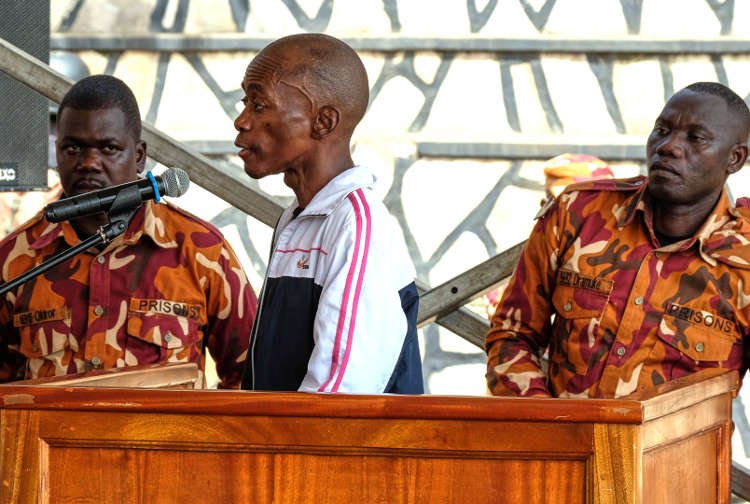
Development Diaries reports that the trial of the man accused of killing the children on 02 April began on Monday in a tent close to where the crime was committed.
It is understood that Odeke Ryan was one and a half years old, Gideon Eteko was two and a half, Keisha Alungat was two, and Ignatius Sseruyange was also two and a half.
These were children just beginning to learn how to count, speak clearly, and hold a pencil without dropping it, as their classroom became the last place they would ever see.
Reports say the accused, Christopher Onyum, came in with knives and a machete, and in a matter of minutes, four children were gone while ten others were left injured, carrying wounds that go beyond what any hospital can treat.
The Ggaba attack was not the only incident, as in the same week, students at Apac Seed Secondary School in northern Uganda were violently assaulted.
When the UNICEF Representative to Uganda, Dr Robin Nandy, spoke out, he said what should not even need to be said, that schools are supposed to be safe places where children can learn and grow without fear.
What Uganda is dealing with is a policy gap sitting in plain sight, and there is no binding national school safety framework that schools must follow.
Also, there are no mandatory access control measures, standard requirement for visitor identification, and compulsory safeguarding training for teachers or even gatekeepers.
In many places, the person opening the gate is simply trusting that whoever is walking in means no harm.
In the middle of this grief, public anger has found direction in calls for tougher punishment, with youth advocate Nyanzi Luther proposing the Uganda Proportional Justice Bill 2026, pushing for stricter, eye-for-eye sentencing for crimes against children.
You can understand where that is coming from because when people feel like justice has been slow or insufficient in past cases, the instinct is to demand something stronger, especially a response that feels like it matches the pain.
But making punishment harsher after a crime has happened does not stop the next person from walking through an unguarded gate, with research showing that what deters crime is not how severe the punishment is, but how certain it is.
So while the country debates how to punish, the more urgent question is how to prevent because if nothing changes at the gate, then the courtroom will keep getting busy.
There is also the question of who is most exposed when systems fail like this. It is the small, community-run, low-cost early childhood centres where many low-income families send their children.
These are parents who are already doing their best with what they have, trusting that once their children are inside a school, they are safe. The mothers of these four children did what any responsible parent would do because the state, in return, owed them a safe environment.
The Ministry of Education and Sports must move with urgency to establish clear, enforceable school safety standards that every early childhood centre must follow, not guidelines that sit on paper.
The Uganda Police Force also has a role to play, because school safety cannot exist without structured risk assessment and response systems.
For citizens, especially parents, this is the moment to ask uncomfortable but necessary questions. What safety measures exist in your child’s school? Who is allowed in and how is that decision made? What training do staff have to respond to threats?
The killing of those children in a school should not become one of those stories people remember briefly before moving on.
Photo source: AP