



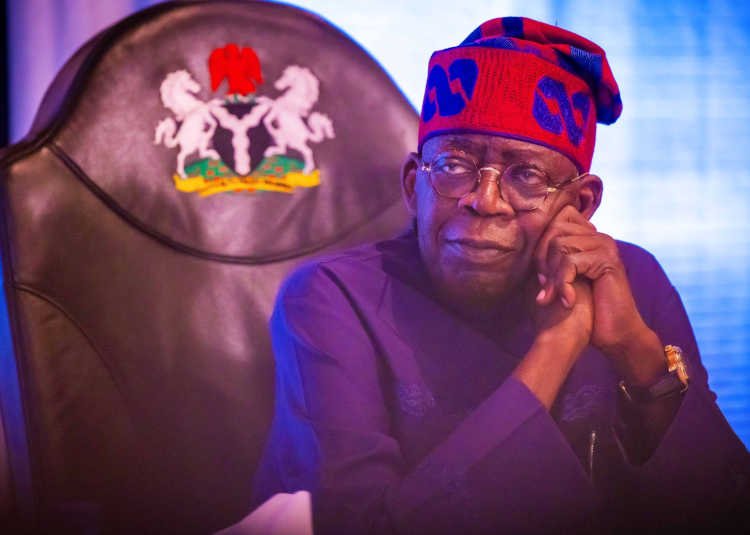
President Bola Tinubu has once again missed an opportunity to genuinely reassure Nigerians about the government’s response, as citizens continue to grapple with rising food and fuel prices and the daily struggle to make ends meet.
Development Diaries reports that during a visit to Bayelsa State, the president tried to reassure Nigerians facing rising hardship by suggesting they should be thankful they are not dealing with what citizens in Kenya are going through.
It sounded like comfort in the moment, the kind leaders offer when things are tough, but Nigerians did what Nigerians usually do: they checked.
Within hours, comparisons, led by opposition voices including Peter Obi, began to fly, and the numbers did not quite support the reassurance.
On key development indicators, Kenya appears to be doing better. From life expectancy to education outcomes and even electricity access, the country Nigeria was asked to look down on was quietly ahead in several areas that matter to everyday life.
This is where the conversation stopped being about one comment and started becoming about something deeper. When a government asks people to compare their suffering with someone else’s, it is usually trying to shift the question.
It is like telling someone whose roof is leaking to be grateful the neighbour’s house has collapsed.
The reality is that Nigeria’s challenges are not abstract, as they show up in how long people live, how much they pay for food, whether their children stay in school, and whether there is light in their homes at night.
A decade difference in life expectancy is the difference between systems that are working and systems that are struggling because when electricity supply remains unreliable in a country that produces oil, it raises questions that gratitude cannot answer.
To be fair, Kenya is not a perfect example of success, as the country has its own issues, from unemployment to economic pressure and political tensions.
What Nigerians are dealing with today is tied to specific policy choices. The removal of fuel subsidy, the floating of the naira, and the rising cost of living did not fall from the sky.
Those were decisions, and decisions come with consequences. So the real responsibility of government is to show clearly what is being done to reduce hardship at home.
When citizens are told to be grateful instead of being given answers, it begins to look like communication is replacing accountability, and around the same period, questions were also being raised about missing public funds, delayed electoral processes, and security incidents affecting civilians.
Each of these issues carries weight on its own, and together, they paint a picture of a system that is speaking more than it is explaining.
For ordinary Nigerians, especially those already stretched thin, these are not debates for television panels, as the mother trying to feed her family is not comparing Nigeria to Kenya, but today’s prices to last year’s income.
The farmer is not looking at global trends either as he is looking at whether he can afford fuel to run his equipment., while the young person without a job is not comforted by statistics from another country.
This is why the conversation must return to where it matters. Citizens should ask about what policies have been implemented to cushion the impact of rising fuel prices, who has actually received the promised palliatives, and what measurable improvements have been recorded since these economic decisions were made.
Institutions also have a role to play. The National Assembly cannot afford to sit quietly when citizens are demanding clarity, while ministries responsible for planning and economic management must go beyond speeches and begin to publish clear, verifiable data that shows what is working and what is not.
In the end, Nigerians are asking to be served, not compared.