



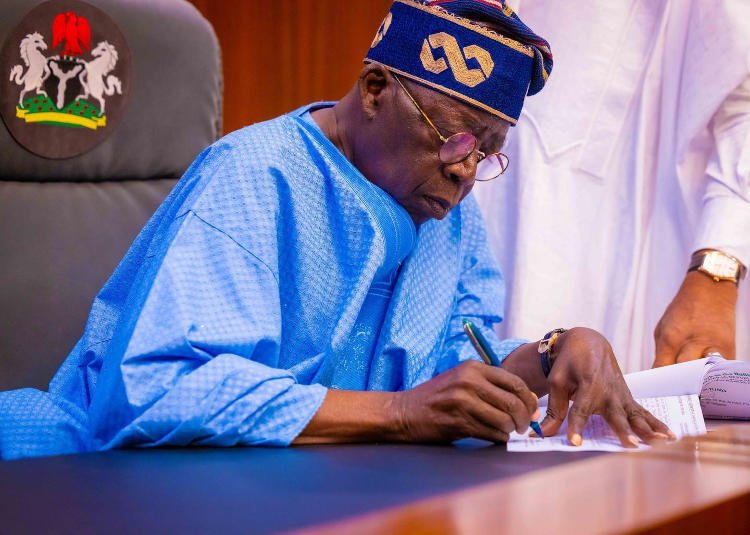
President Bola Tinubu has approved a N68.32 trillion 2026 budget, but beyond the record figure lies a familiar concern about Nigeria’s repeated failure to translate public spending into real improvements in people’s lives.
Development Diaries reports that the president, who signed the 2026 Appropriation Bill on Friday, also extended the implementation of the 2025 budget to 30 June, 2026, to allow for the completion of ongoing capital projects.
The numbers sound impressive, with nearly half of the budget allocated to capital projects, which should translate into completed roads, functional hospitals, better-equipped schools, and infrastructure that makes everyday life easier.
But a look at previous national budgets tells a different story, where ambitious announcements are often followed by weak implementation, and what eventually reaches the people feels like only a fraction of what was promised.
A major worry is the nearly N16 trillion set aside for debt servicing. This is like earning a salary where most of it goes into paying old debts, leaving just enough to survive but not enough to move forward.
For ordinary Nigerians, that translates into fewer public services, slower infrastructure delivery, and a government that is constantly managing constraints rather than solving problems.
The impact shows up in everyday life, including how much people pay for food, whether there is electricity in their homes, how long it takes to travel on roads that should have been fixed years ago, and whether young people can find jobs in an economy that keeps promising growth but struggles to deliver it.
Nigeria’s revenue performance adds another layer to the story. While the government reported over N28 trillion in revenue in 2025, experts are already questioning whether the projections for 2026 are realistic enough to fund such a large budget.
If the revenue does not come in as expected, the government will either borrow more or quietly scale back implementation; either way, the burden finds its way back to citizens.
This is why Nigerians need to focus more on the credibility of budget execution rather than its size, as the country has consistently struggled with implementation, with reports over the years showing that capital spending often falls short of projections.
So, while the presidency sets the tone and direction, the ministries, departments, and agencies have their work cut out for them as these are the institutions that award contracts, release funds, supervise projects, and decide whether timelines are respected or ignored.
The National Assembly is also expected to track implementation, question delays, and ensure that public funds are used for the purposes they were approved.
As for everyday citizens, here are critical questions to ask: What projects have been funded in your communities? What is the timeline for completion? How much of the capital allocation will actually be released and when? Which agencies are responsible for delivering specific outcomes, and what happens if they fail?
Civil society and the media also have a role to play in keeping the process visible, as budgets lose their meaning when they disappear into technical documents that ordinary people cannot track.
At the end of the day, a budget is only meaningful when it changes something in the life of the person who wakes up every day trying to make ends meet.